
Livraison le jour même ou le lendemain

Qualité garantie

Débloquez vos offres de bienvenue: Livraison GRATUITE | Jusqu'à -80 % | 30 jours d'essai gratuits à JoyPlus
Téléchargez l'application
An enamelled cast iron casserole dish can sear, braise, stew, roast or even be used to prepare soup. But its weight, capacity and compatibility with different hobs vary considerably from one model to another. A flattering product description alone isn’t enough to make the right choice, especially if you cook on an induction hob or are short on cupboard space.
Before placing an order, three common mistakes keep cropping up:
Enamelled cast iron combines a heavy body with a vitrified surface. It stores heat for a long time and is particularly well suited to slow cooking, such as a braised beef, a stew or a soup. The enamel usually means you don’t need to season the casserole dish, unlike some raw cast iron pieces.
Ceramic, used on certain enamelled cast iron casserole dishes or slow cookers, also offers good thermal inertia. However, you need to check its compatibility with your hob. The COOKER KING 3.5-litre pot featured in this selection, for example, is listed as non-magnetic and therefore cannot be used directly on an induction hob. A separate induction disc is required.
Stainless steel is lighter and often versatile, but it doesn’t quite replace a cast iron casserole dish for long, slow cooking. A stainless steel cookware set can nevertheless complement a casserole dish with saucepans of different sizes.
To choose a casserole dish compatible with induction, make sure the product description clearly states this. A flat base isn’t enough. Electric, ceramic, halogen and gas hobs don’t impose the same constraints.
Also remember to check:
The BUYDEEM CP521 is advertised as compatible with gas, induction, electric, halogen and ceramic hobs. It is also described as an oven-safe casserole dish, with an 18/8 stainless steel lid knob. However, always check the maximum temperature in the product description or manual before using it.
A 3-litre casserole dish is generally suitable for two or three people for a stew, soup or side dish. For four to six guests, a larger model will often be more practical, but the weight increases quickly, especially when the casserole dish is full.
The enamel makes cleaning easier, but it remains vulnerable to impact. To preserve the surface:
The dishwasher may be allowed depending on the model. That said, hand washing helps to preserve the appearance of the enamel and lid for longer.
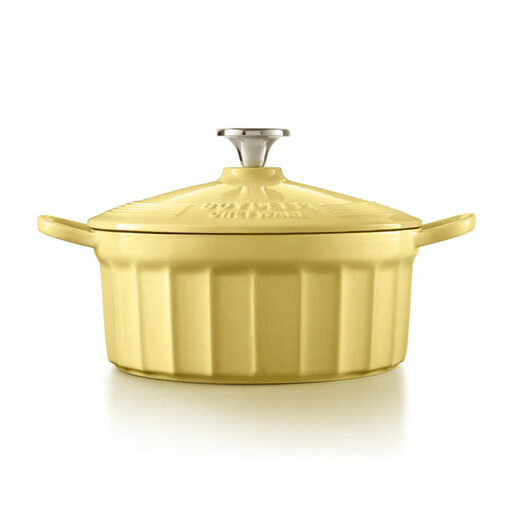
Why this choice suits this profile: Its 2.9-litre size is ideal for everyday meals for a couple or a small family. It lets you discover slow cooking without needing lots of different utensils.
The description states compatibility with induction and several other hob types, plus an enamelled interior designed for easy care.
Enamelled cast iron, well-fitting lid with 18/8 stainless steel knob, listed as oven and dishwasher compatible.
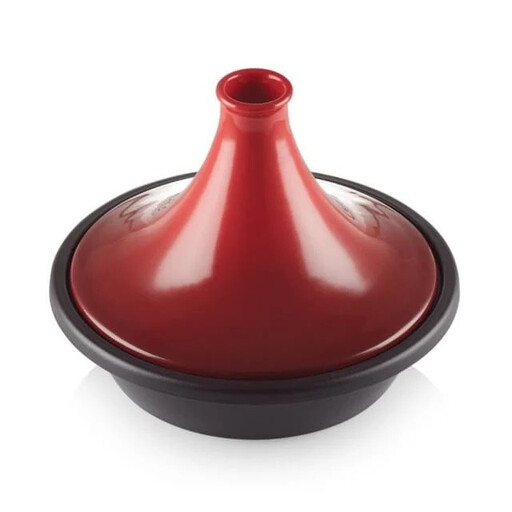
Why this choice suits this profile: Its cast iron base and conical stoneware lid will appeal to those looking for a beautiful cooking piece that can go straight to the table for shared meals.
The description specifies that the base is compatible with induction, gas, electric, ceramic and halogen hobs. The lid, however, should remain reserved for its covering role.
31 cm diameter, oven use stated up to 260°C, enamelled interior and exterior, base and lid listed as dishwasher safe.
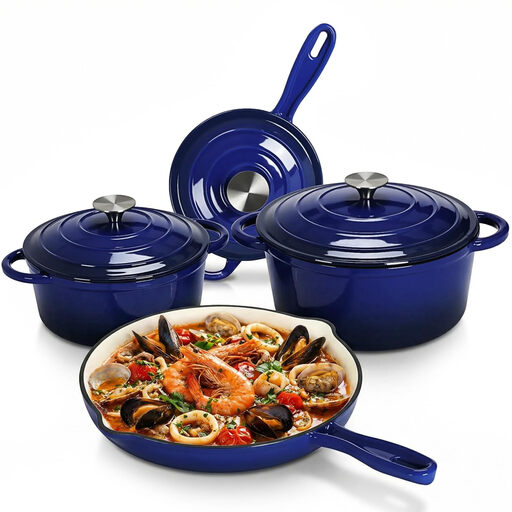
Why this choice suits this profile: With several volumes, including 1.89 litres, 2.84 litres and 4.73 litres, this set makes it easy to adapt your cooking to the quantities you are preparing.
The set format avoids buying separate pieces that might not be compatible with each other. The description mentions use on hobs, excluding the microwave, as well as oven use up to 260°C.
Seven pieces in enamelled cast iron, multiple capacities and a blue enamelled surface, as indicated by the product name.
We have put together a comprehensive, real-time updated selection of products that meet these demanding criteria and European safety standards.
A casserole dish with a lid should be handled with oven gloves: both the cast iron and the knob can become extremely hot. When you lift the lid, tilt it away from your face to avoid the steam.
For regular use, opt for a gradual increase in temperature. Do not slide the casserole dish across a ceramic or induction hob: its weight could scratch the surface. After washing, dry it thoroughly before storing it away.
Yes, provided the manufacturer explicitly states this compatibility. Cast iron is generally magnetic, but some ceramic models or those with a particular base are not. Always check the information in the product description.
A capacity between 2.5 and 3 litres is generally suitable for two people, particularly for a soup, a stew or a small braised dish. A 3.5 to 5-litre casserole dish offers more leeway for entertaining or cooking several portions.
Its lifespan depends on the quality of manufacture, frequency of use and care. The enamel can be damaged by impacts, metal utensils and rapid temperature changes. Gradual heating and gentle cleaning will help to preserve the casserole dish for many years.