
Livraison le jour même ou le lendemain

Qualité garantie

Débloquez vos offres de bienvenue: Livraison GRATUITE | Jusqu'à -80 % | 30 jours d'essai gratuits à JoyPlus
Téléchargez l'application
An enamelled cast iron casserole dish can do it all: searing, braising, slow-cooking, roasting and baking in the oven, before going straight to the table. However, some purchases can quickly disappoint: a model that's too heavy, the wrong capacity, an impractical lid, or induction compatibility that's vaguely stated.
Before you decide between several colours or brands, take the time to check three often-overlooked points.
A round casserole dish of 24 or 26 cm may look spacious, but the actual volume available also depends on the shape of the pot, its height and the thickness of the cast iron. For a single person or a couple, a capacity of 2 to 3 litres may be enough. A family of four to six people would be better off aiming for 4 to 6 litres, depending on their batch cooking habits and portion sizes.
Cast iron generally works on an induction hob, but do check the product specifications and the diameter of its base. A ceramic or glass casserole dish, even if marketed as versatile, may require a magnetic adapter disc. This is an important detail to avoid slow, uneven or even impossible heating.
Enamelled cast iron retains heat for a long time, but it remains heavy, especially once the lid and food are in place. Large handles make it easier to take out of the oven, provided you have enough storage space. The enamel also requires some care: avoid thermal shock, metal utensils and abrasive cleaning products.
Enamelled cast iron is particularly well-suited to long, even cooking: beef bourguignon, daube, curry, braised vegetables or bread. The enamel generally eliminates the need for seasoning, which is necessary with raw cast iron, and makes cleaning easier.
An enamelled cast iron saucepan or a cast iron stockpot offers excellent thermal inertia, but its weight can make everyday handling less enjoyable. Ceramic is better suited to oven cooking and serving at the table, although some models do not work on induction.
A borosilicate glass casserole dish allows you to monitor the cooking without removing the lid. However, it does not replace an enamelled cast iron casserole dish: you must respect the maximum temperature stated and avoid sudden temperature changes.
Look for precise information regarding:
A casserole dish that is compatible with both induction and the oven simplifies two-stage recipes: you brown the food on the hob, then continue cooking slowly in the oven. For regular use, also check that the lid knob can withstand the stated temperature.
A cast iron casserole dish with a lid that fits properly limits evaporation and helps stewed dishes retain their moisture. The round shape adapts easily to hobs and everyday recipes. The oval shape offers more length for cooking poultry or a roast.
The volume should match your cooking habits:
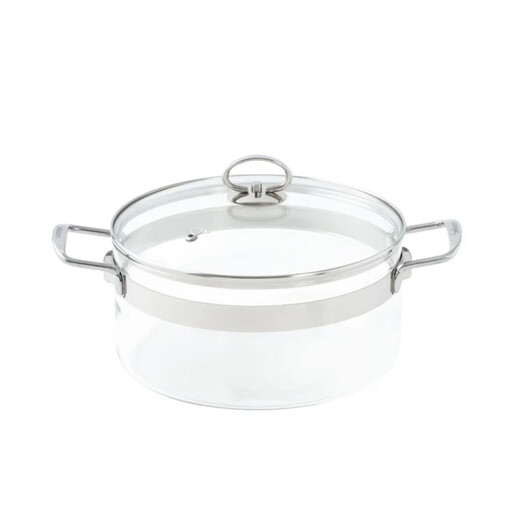
Why this choice suits this profile: With its family-sized capacity and transparent design, this casserole dish lets you keep an eye on soups, pasta and vegetables without lifting the lid. The specifications state compatibility with gas and electric hobs, as well as an adapter disc for induction.
The 4.2 L capacity is clearly stated, and induction use is not presented as direct: a compatible disc is required.
Non-porous borosilicate glass according to the product sheet, integrated pouring spout and oven use up to 180 °C.
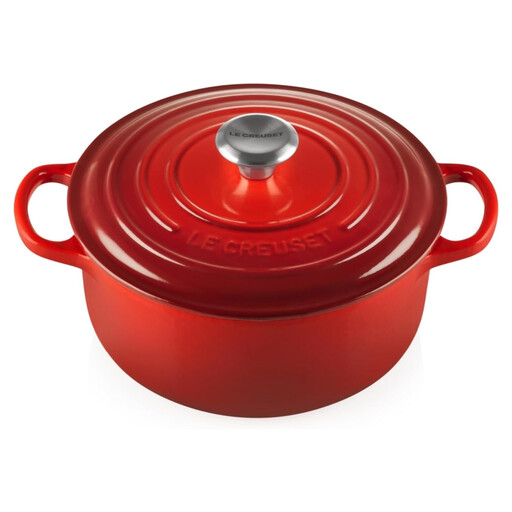
Why this choice suits this profile: Its 2.4 L volume is ideal for stews, soups, braises and dishes to serve straight to the table. It is stated to be made from enamelled cast iron.
The specifications detail the volume, the materials of the pot and lid, as well as compatibility with induction, gas, electric hobs, halogen and the oven.
20 cm size, stainless steel knob and light-coloured enamel interior, according to the product description.
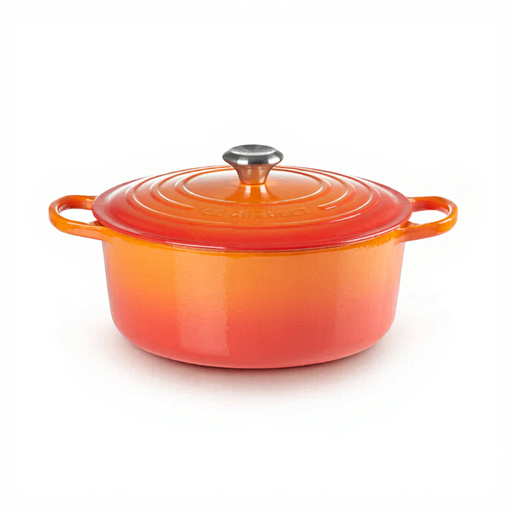
Why this choice suits this profile: With its stated volume of 5.3 L, this casserole dish is suitable for family meals, large-quantity cooking and dishes that go straight from the hob to the oven.
The diameter, volume, weight and heat sources are all stated, allowing you to anticipate the size and handling.
Enamelled cast iron, lid included, stated compatibility with induction, oven and grill, as well as dishwasher-safe cleaning.
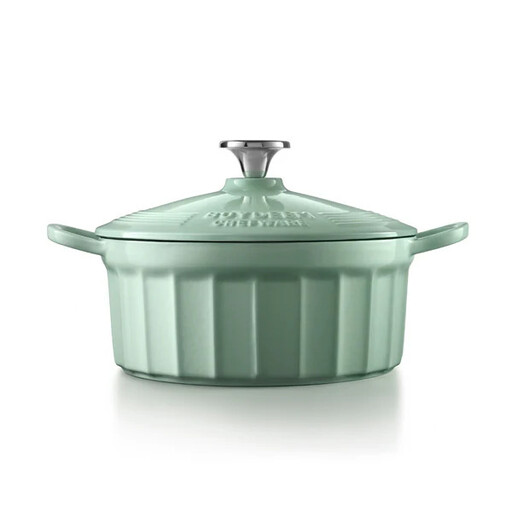
Why this choice suits this profile: With its 2.9 L capacity, this cast iron stockpot is ideal for braises, stews and slow cooking in smaller quantities, without taking up as much space as a large family-sized model.
The capacity is clearly specified and the specifications mention gas, induction, electric, halogen and ceramic hobs, as well as the oven.
Well-fitting domed lid, 18/8 stainless steel knob and enamelled interior, according to the information provided.
We have put together a comprehensive selection, updated in real time, of products that meet these strict criteria and the requirements of European safety regulations.
To preserve the enamel and limit any unpleasant surprises:
Enamelled cast iron does not require the same care as raw cast iron, but it is still sensitive to impact. Its weight is also worth considering before filling it or taking it out of the oven.
Yes, many models are designed to work on induction. However, check the product specifications, the base diameter and the manufacturer's recommendations. Glass and some ceramics do not work directly on an induction hob and may require an adapter disc.
For four to six people, a capacity of 4 to 6 litres provides a versatile base. A 2 to 3 litre model will be more suitable for small portions, side dishes or a couple. Also remember to allow enough space to store the casserole dish and its lid.
It all depends on how often it is used, any knocks it receives and how it is looked after. Handled well, a casserole dish can accompany your everyday cooking for many years, but no universal lifespan can be guaranteed. Avoid sudden temperature changes, scratches and knocks to the enamelled edges.