
Livraison le jour même ou le lendemain

Qualité garantie

Débloquez vos offres de bienvenue: Livraison GRATUITE | Jusqu'à -80 % | 30 jours d'essai gratuits à JoyPlus
Téléchargez l'application
An enamelled cast iron casserole dish is just as good for preparing soup, stew or bread in the oven as it is for simmering a dish that you can bring straight to the table. But not all models are created equal: material, capacity and compatibility with different heat sources can vary considerably. A casserole dish that looks appealing on paper can quickly become a nuisance if it is too heavy, incompatible with induction hobs or fiddly to maintain.
Here are the main criteria to check before you buy, along with a selection of models suited to different needs.
An enamelled cast iron casserole dish has a heavy metal body, usually coated with a layer of enamel. It stores heat and releases it gradually. It is often compatible with induction, gas and the oven, subject to the manufacturer’s instructions.
A ceramic saucepan or a terracotta pot does not react to heat in the same way. Some models can be used on gas, but not on induction. The B.Duck 3.5-litre ceramic pot, for example, is designed for gas hobs and needs a magnetic induction disc to work on an induction hob. So it is best to read the product details carefully rather than relying on the product’s appearance.
A 22 cm casserole dish can hold 3 litres or more, depending on its height and shape. The diameter alone is not enough to estimate the number of portions. For a single person or a couple, a 20 cm casserole dish with a 2.4-litre capacity can be a good compromise. For a family, a 24 cm casserole dish will generally be more suitable, especially for braised dishes, soups and oven recipes.
Also remember to measure the space available on your hob and in your cupboards. The weight of the pot and lid is also worth considering, particularly when cleaning or serving at the table.
Enamel is resistant to corrosion, but it can be damaged by thermal shock, metal utensils and abrasive cleaning products. Avoid plunging a hot casserole dish into cold water. Let it cool down, then clean it with a soft sponge and a standard washing-up liquid.
The “dishwasher-safe” label should be checked for each model. Some enamelled cast iron casserole dishes can go in the dishwasher, while several ceramic models must be washed by hand.
Enamelled cast iron is particularly well suited to slow cooking. Its substantial weight promotes a gradual rise in temperature and excellent heat retention. It is ideal for soups, stews, braised dishes and other slow-cooked recipes. On the downside, it requires more care when handling and storing.
Ceramic can withstand heat within the limits set by the manufacturer, but it remains more sensitive to knocks and sudden temperature changes. It can be a good choice for oven cooking, individual presentation or gentle heat cooking, provided you follow the usage instructions carefully.
To choose a casserole dish compatible with induction hobs, look for a magnetic base or an explicit statement of compatibility with induction hobs. Mentions of “gas”, “electric”, “oven” and “grill” do not automatically mean the utensil will work on induction.
Also check the maximum oven temperature, the material of the lid knob and whether the casserole dish can be placed directly on the table. The handles and lid become very hot: oven gloves are essential.
A casserole dish with a well-fitting lid can also double as a lidded stockpot, provided its weight and diameter are compatible with your cooking space.
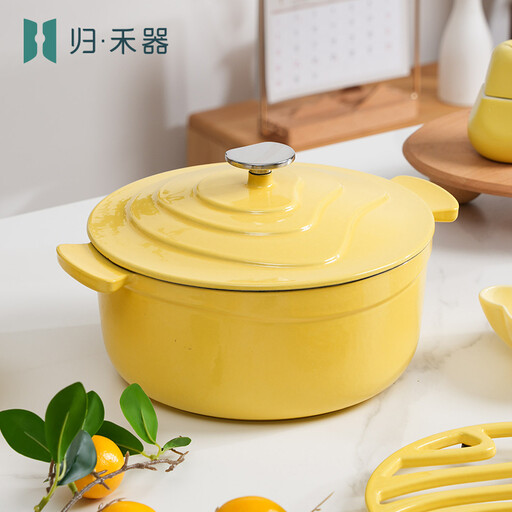
Why this choice suits this profile: With its 22 cm diameter and stated 3.3-litre capacity, this model is a good starting point for preparing soups, stews and slow-cooked dishes for several guests. The product page states it is compatible with induction hobs.
The capacity and heat source compatibility are clearly stated, making it easy to compare with a small casserole dish or a standard saucepan.
Enamelled cast iron, flat base, 22 cm diameter and yellow colour as stated on the product page.
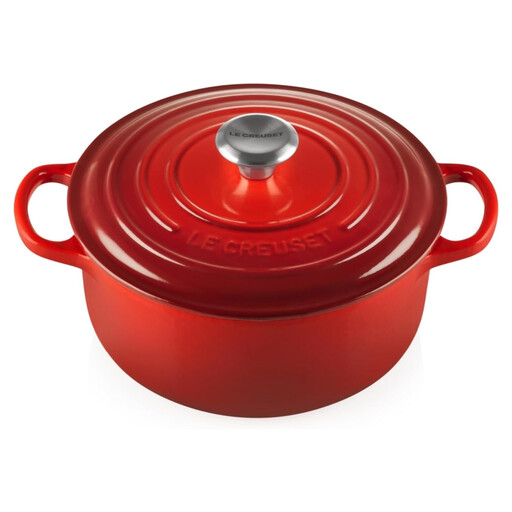
Why this choice suits this profile: This 20 cm, 2.4-litre casserole dish is stated to be made in France, compatible with induction hobs and suitable for the oven. Its cherry red colour also makes it perfect for serving straight at the table.
The diameter is linked to a precise capacity, and the main heat sources are detailed on the product page.
Enamelled cast iron, lid included, light interior and care stated as dishwasher safe.
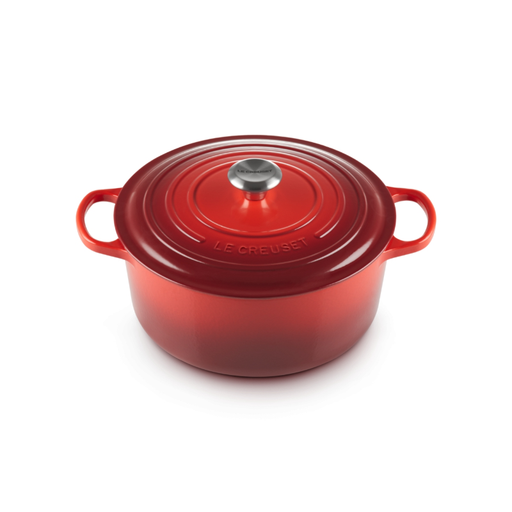
Why this choice suits this profile: Its 24 cm diameter and included lid make it ideal for family meals, roasts, bread and oven preparations. The product page states compatibility with induction, gas, electric hobs, the oven and the grill.
The intended uses and compatible heat sources are listed, reducing the risk of choosing a vessel that is too small or unsuitable.
24 cm diameter, enamelled cast iron, snug-fitting lid and stated compatibility with several cooking appliances.
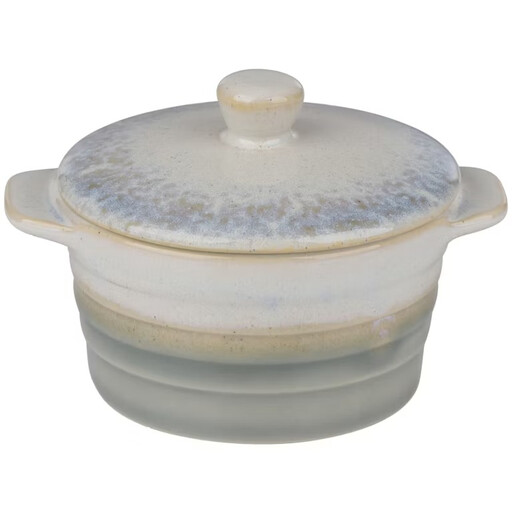
Why this choice suits this profile: These two ceramic casserole dishes are designed for individual portions, side dishes and desserts. They are oven and microwave safe and can be placed directly on the table, but must not be used on a hob.
The restriction regarding hobs is clearly stated. So there is no risk of confusing a serving dish with a cast iron casserole dish.
Set of two, matching lids, oven use and care stated as dishwasher safe.
We have put together a comprehensive, real-time selection of products that meet these demanding criteria and European safety standards.
To limit wear on an enamelled casserole dish, a few simple habits are all you need:
The lifespan depends on how often you use it, the quality of manufacture and whether you follow the instructions. No coating is indestructible: significant chipping, cracking or warping means you should stop using the utensil.
Yes, if the manufacturer explicitly states this compatibility. Cast iron is generally magnetic, but you also need to check the shape of the base and the diameter your hob accepts. A non-magnetic ceramic casserole dish will not work directly on an induction hob.
For family meals, a 24 cm diameter generally offers more space than a 20 or 22 cm casserole dish. However, check the actual capacity, the total weight and the size of your hobs. A 3 to 3.5-litre casserole dish is a versatile base for preparing soups, stews and slow-cooked dishes.
Many enamelled cast iron models are designed for oven use, but the maximum oven temperature and the material of the lid knob should be checked on the product page. Ceramic casserole dishes can also be suitable for the oven, while sometimes being incompatible with hobs. Avoid transferring a dish straight from the fridge into a very hot oven to reduce the risk of thermal shock.