
Livraison le jour même ou le lendemain

Qualité garantie

Débloquez vos offres de bienvenue: Livraison GRATUITE | Jusqu'à -80 % | 30 jours d'essai gratuits à JoyPlus
Téléchargez l'application
An enameled cast iron dutch oven can do almost everything: simmer a beef bourguignon, braise vegetables, roast poultry, or prepare soup for several people. But not all models are created equal, and more importantly, they don't all meet the same needs. A flattering diameter, a trendy color, or simply the mention "all stovetops" is not enough to choose with confidence.
Here are the main pitfalls to avoid, the technical specifications to check, and a selection of models suited to different uses in France.
Two 24 cm dutch ovens can offer very different volumes depending on their height, lid shape, and cast iron thickness. Diameter alone does not tell you if the model will suit a family of four.
To compare two references, always look at their capacity in liters, their dimensions including handles, and their weight. A 5.3-liter family dutch oven is not intended for the same use as a small 2.4-liter saucepan, even if their diameters seem similar.
Induction compatibility primarily concerns the magnetic base and stability on the cooktop. It does not necessarily inform you about the maximum oven temperature supported, the knob's resistance, or ease of handling.
An induction-compatible dutch oven must also have a sufficiently flat base and a diameter suited to the cooking zone. If you plan to use it in the oven, check the manufacturer's instructions regarding the lid, knob, and maximum temperature.
Enamel simplifies the use of a raw cast iron dutch oven, but it remains sensitive to thermal shock, metal utensils, and abrasive products. Pouring cold water into a still-hot dutch oven can crack or chip the coating.
Even if a model is dishwasher-safe, hand washing with a soft sponge will help preserve its finish and color over time.
Cast iron stores heat and releases it gradually: exactly what is needed for slow, even cooking. The enamel coating facilitates the use of acidic ingredients, like tomato or wine, and generally eliminates the need for seasoning required with raw cast iron.
Choose a cast iron dutch oven with a lid that fits properly. A heavy, well-fitted lid limits evaporation, an advantage for stews, soups, and braised dishes. Also check the knob material: stainless steel often withstands oven use, but the model's manual remains the reference.
A round dutch oven is particularly versatile on the stovetop and suitable for everyday cooking. An oval shape offers more length to accommodate poultry or a roast.
Before ordering, check the exact list of compatible heat sources: induction, gas, electric, ceramic, halogen, and oven. An oven-safe dutch oven should always be handled with oven mitts: the pot, lid, and handles accumulate heat intensely.
Cast iron is heavy. Wide, well-spaced handles make it easier to carry to the table, but ensure the whole unit fits in your oven and does not block other cooking levels.
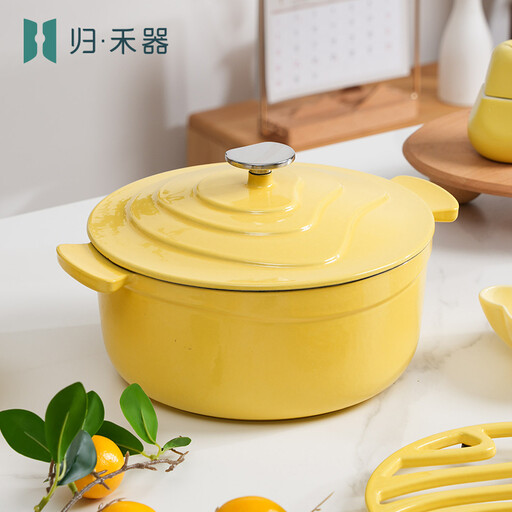
Why this model fits: its intermediate size suits everyday meals, soups, and stewed dishes for a small household.
The product page states a capacity of 3.3 liters and a flat base compatible with induction: two pieces of information far more telling than a vague mention of versatility.
22 cm format, lid included, and use stated on induction cooktop. Consult the manual before placing it in the oven.
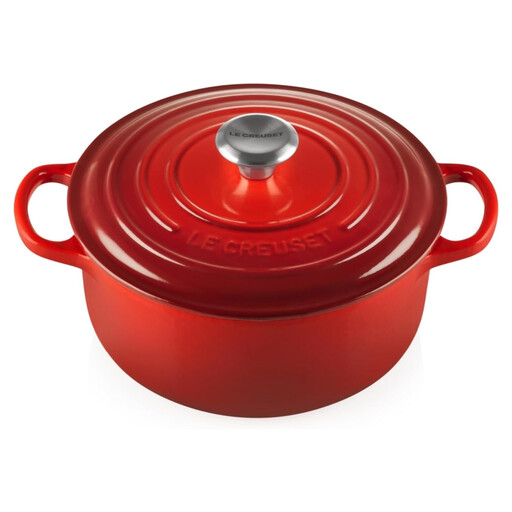
Why this model fits: it is designed for those who want to cook and then serve directly at the table, in a 2.4-liter format.
The product page details the materials, diameter, capacity, heat sources, and stated origin: enough to compare models on concrete bases.
Compatible with induction and oven, it features a light interior and wide handles. Dishwasher-safe, but hand washing is still preferable to preserve the finish.
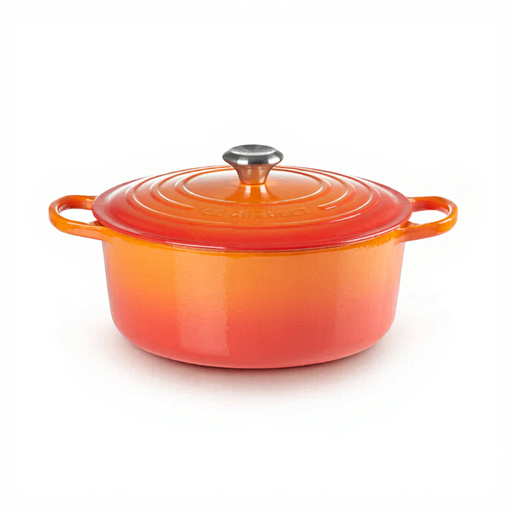
Why this model fits: its stated volume suits meals for five to six people and allows preparing several portions in advance.
The 5.3-liter capacity is clearly stated, as is the weight of 5.14 kg: you know what to expect for storage and handling.
Use stated on induction, in the oven, and under the broiler, with lid and lifetime warranty according to the product page. If full, plan to lift it with both hands.
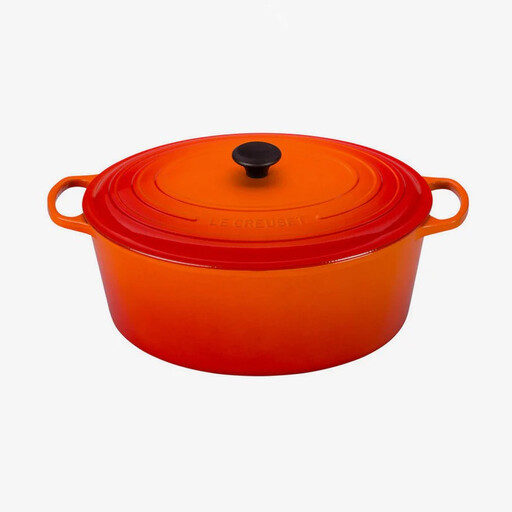
Why this model fits: its stated volume of approximately 14 liters targets large poultry, roasts, gratins, and meals for a big gathering.
The shape, dimensions of 49.5 × 32.5 × 23 cm, and stated volume are detailed: you can verify it will fit in your oven and cabinets.
Compatible with cooktops, oven, and broiler according to the product page. Its size, however, requires sufficient storage space and handling suited to its weight.
We have compiled an updated selection of dutch ovens meeting these criteria, with different capacities, colors, and configurations.
To preserve your durable cooking utensil, a few simple habits make all the difference:
Enameled cast iron requires no special consumables, but its mass sometimes requires more energy to heat up. Once hot, it retains heat for a long time: moderate power is often enough to maintain a simmer, depending on your cooktop settings.
Yes, many models are designed for induction, but this must be confirmed on the product page. Also check the base diameter and its compatibility with your cooking zone. A flat base improves stability and contact with the cooktop.
There is no universal lifespan. Longevity depends on manufacturing quality, frequency of use, and care. Avoiding thermal shock, metal utensils, and abrasive products helps limit wear on the coating.
For two or three people, a capacity of 2.4 to 3.3 liters may suffice. For four to six people, opt for a model of 4 to 5.3 liters. If you regularly prepare large quantities or whole cuts, an oval dutch oven or a large enameled cast iron stockpot will be more suitable.