
Livraison le jour même ou le lendemain

Qualité garantie

Débloquez vos offres de bienvenue: Livraison GRATUITE | Jusqu'à -80 % | 30 jours d'essai gratuits à JoyPlus
Téléchargez l'application
An enameled cast iron casserole can be used to simmer beef bourguignon, roast poultry, bake bread or go straight from the oven to the table. However, not every model is equally suitable for every use. Choosing the wrong one can quickly leave you with cookware that is bulky, difficult to handle or incompatible with your hob.
Before choosing a cast iron casserole, an enameled cast iron saucepan or a cast iron stockpot, it is therefore worth looking beyond the colour and brand name.
A large casserole may seem versatile, but its weight increases with its diameter and the amount of cast iron used. A 5 to 6 litre model is generally suitable for family meals, while a capacity of 2 to 3 litres is more practical for two to four people.
The shape also matters. An oval casserole accommodates a whole chicken or a long roast more easily. More compact, a round shape sits more easily on a small hob and promotes even heat distribution across the base.
The simple mention of “cast iron” does not guarantee compatibility with every hob. Check clearly that the model works with induction, gas, electric and ceramic hobs. Some ceramic dishes and traditional saucepans cannot be used directly on an induction hob.
Also remember to check oven compatibility, the maximum permitted temperature and the lid design. A well-fitting casserole with lid is particularly useful for long cooking times: it limits evaporation and helps food stay tender.
Cast iron retains heat for a long time, but it is heavy. Sufficiently wide side handles are therefore essential, especially when the casserole is full. Enamel makes cleaning easier and generally does not require seasoning, but it remains sensitive to thermal shock and metal utensils.
Avoid immersing a casserole that is still hot in cold water. Let it cool naturally, then clean it with a non-abrasive sponge. Even when a manufacturer states that its product is dishwasher-safe, hand-washing will often help preserve the appearance of the enamel.
For easy reference:
The diameter should also match that of your hob. A casserole that is too wide may extend beyond the heating zone, while a base that is too small will not make good use of a large induction hob.
The enamel interior creates a smooth surface suited to acidic foods such as tomatoes or wine, while also making cleaning easier. On delivery, check that the finish is even and free from chips or cracks. If the cast iron is visible beneath the enamel, stop using the cookware and contact the seller.
To protect the surface, choose accessories made from wood, silicone or heat-resistant nylon. Metal scouring pads and abrasive products may scratch the enamel.
A heavy, well-fitting lid helps retain moisture during slow cooking. The handles should provide a stable grip, including when using oven gloves. For an oven casserole, also check the material of the lid knob and the maximum permitted temperature.
A casserole compatible with induction can generally be used on several heat sources, but always consult the product specifications before buying. Enameled cast iron is particularly suitable for simmering, braising, roasting and certain oven-cooking methods.
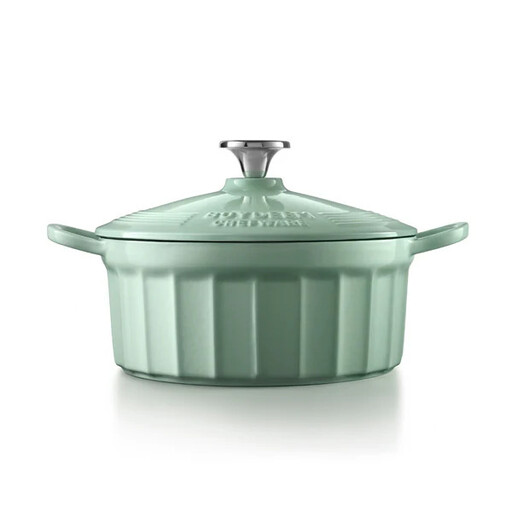
Why this choice suits this profile : With its 2.9 litres, it is suitable for first attempts at slow cooking, soups and small family meals, without committing straight away to a large cast iron stockpot.
The capacity is clearly stated, and the specifications confirm compatibility with induction, gas, electric, halogen, ceramic hobs and the oven.
Enameled cast iron, domed lid, 18/8 stainless steel knob and cleaning specified as dishwasher-safe.
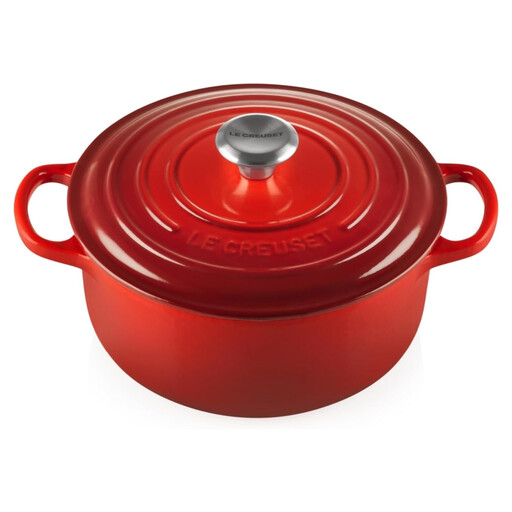
Why this choice suits this profile : Its 2.4 litre size suits kitchens looking for compact cookware that can go from the hob to the table, for both slow-cooked dishes and everyday meals.
The specifications distinguish between the diameter, capacity, lid and knob materials, as well as the different compatible heat sources.
Enameled cast iron, light-coloured interior, wide handles, induction and oven compatibility, and manufacture stated as French.
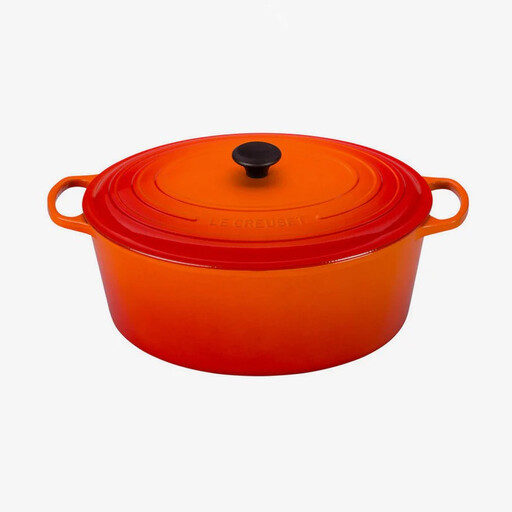
Why this choice suits this profile : With its oval shape and capacity of around 14 litres, it is aimed at large families, big gatherings and dishes requiring a sizeable bird or roast.
The dimensions and volume are provided, helping you plan for storage space and the weight of a full dish. Compatibility with induction, the oven and the grill is also stated.
Large oval shape, side handles, enameled cast iron, use on several heat sources and cleaning specified as dishwasher-safe.
To preserve your durable cooking utensil, a few simple habits are all you need :
A cast iron tagine can complement a traditional casserole for recipes that require slow cooking and a conical presentation. Conversely, a large-capacity cast iron roaster is primarily intended for poultry, roasts and meals served to larger numbers of guests.
We have put together a complete, real-time updated list of products that fully meet these demanding selection criteria and European safety regulations.
Yes, many models are compatible with induction, but this feature must be clearly stated in the product specifications. Also check that the base diameter matches the heating zone and avoid sliding the casserole across the hob.
For three or four people, a capacity of 3 to 5 litres is generally a good compromise. For six people or more, a 5 to 7 litre casserole offers more room. Very large models, such as an oval roaster of around 14 litres, are better suited to large gatherings and substantial cuts of meat.
Its lifespan depends on the quality of manufacture, the knocks it receives and how well it is cared for. Enamel can be damaged by sudden temperature changes, metal utensils and abrasive products. Gradually increasing the temperature, handling it carefully and storing it safely will help your casserole remain in good condition for many years.