
Livraison le jour même ou le lendemain

Qualité garantie

Débloquez vos offres de bienvenue: Livraison GRATUITE | Jusqu'à -80 % | 30 jours d'essai gratuits à JoyPlus
Téléchargez l'application
An enameled cast iron casserole can sear, simmer, roast, go in the oven and even be taken straight from the oven to the table. Yet some purchases soon end up at the back of a cupboard. If a casserole is too heavy, it becomes awkward to handle. With a poorly fitting lid, moisture escapes. And when the capacity is not right, everyday meals become a real headache.
Before choosing a colour or jumping at a special offer, it is worth focusing on a few practical features. Here are the main pitfalls to avoid, the points to check and a selection of models suited to different uses in France.
An enamelled cast iron casserole consists of a heavy cast iron body covered with a vitrified coating. Unlike bare cast iron, it generally does not need seasoning and is more resistant to acidic foods.
By contrast, an aluminium or cast aluminium non-stick saucepan heats up more quickly and weighs considerably less. However, it is not necessarily oven-safe. For example, the product details for the BUYDEEM Cast Aluminum Nonstick Saucepan 1,9 QT state that it must not be placed in the oven unless otherwise indicated. So “easy to clean” does not necessarily mean “versatile”.
A large-capacity cast iron stockpot can already weigh several kilos when empty. A 5-litre casserole or larger is ideal for family meals and batch cooking, but it requires enough storage space and a sufficiently large hob.
For two people, a 2- to 3-litre model is often easier to handle. For four to six guests, a 4- to 5.3-litre family casserole provides more room for a chicken, a boiled dinner or a slow-cooked dish.
The “all hobs” claim is worth checking in the product details. If you use an induction hob, look for an explicit indication that it is compatible with this type of cooking. For an oven-safe casserole, the maximum temperature, the knob material and the manufacturer’s recommendations are just as important.
A model compatible with induction can generally be used on a gas, electric, ceramic or halogen cooker. Even so, you should still consult the product’s detailed specifications.
Cast iron stores heat and then releases it gradually. It is therefore particularly well suited to slow cooking, braised dishes, soups and sauces that need to cook gently. It takes longer to heat up than aluminium, but the heat remains much more stable once the casserole is hot.
The enamel creates a non-porous surface, makes cleaning easier and, on most models, avoids the seasoning required for bare cast iron. To help prevent scratches and chips, it is still best to use wooden, silicone or heat-resistant plastic utensils.
An enamelled cast iron casserole with a lid should have a properly fitting lid. This retains steam and helps prevent meat, vegetables and pulses from drying out. A domed lid can also help condensation run back towards the food.
For an enamelled cast iron Dutch oven intended for soups or saucy dishes, also check the strength of the handles, whether it is easy to grip with oven gloves and the total weight, including the lid.
Before ordering, also measure the diameter of your induction hob zone and the width available in your oven.
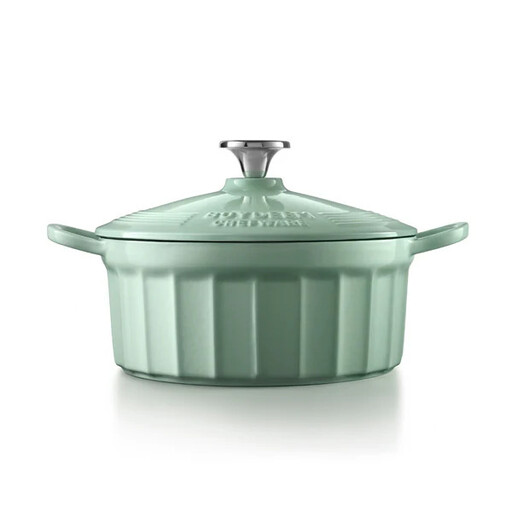
Why this choice suits this profile: With its 2.9 litre capacity, this model is suitable for couples and small families who want to discover enamelled cast iron without having to accommodate an oversized stockpot.
The product details state that it is compatible with induction, gas, electric, halogen and ceramic hobs, as well as oven use. However, the weight and temperature limits must still be observed.
Enamelled cast iron, domed lid with an 18/8 stainless steel knob, 2.9 litre capacity and stated dishwasher-safe cleaning.
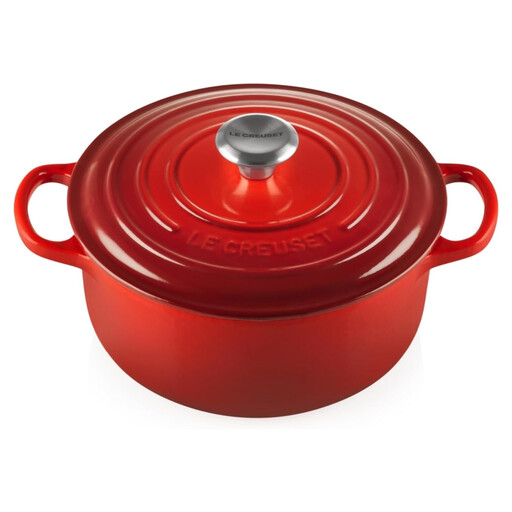
Why this choice suits this profile: With its 2.4 litre capacity, this model combines cooking with serving at the table. A smart choice for households looking for a durable, versatile piece of cookware.
The product details set out its suitability for induction, gas, electric, halogen and oven use, as well as the knob material. This lets you check its versatility rather than relying solely on its appearance.
Enamelled cast iron made in France according to the product details, a light-coloured scratch-resistant interior and a matching lid with a stainless steel knob.
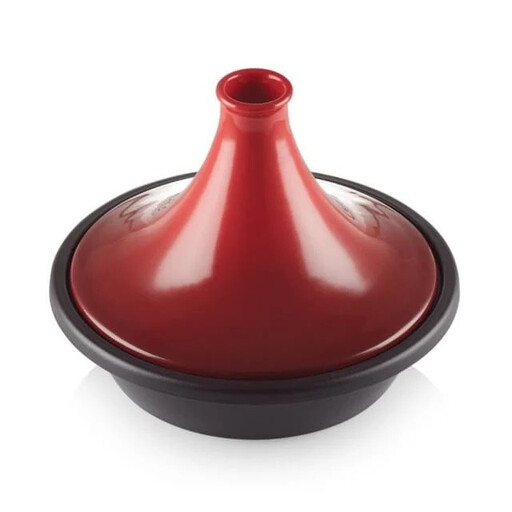
Why this choice suits this profile: Its cast iron base and conical stoneware lid are ideal for fans of tagines, braised dishes and recipes designed to share.
The product details clearly distinguish between the base, which is compatible with several types of hob, and the stoneware lid, which must not be used on its own on a hob.
31 cm diameter, enamelled cast iron base, conical lid and stated oven use up to 260 °C.
We have put together a complete, real-time selection of products that meet these demanding criteria while complying with European safety regulations.
To keep your enamelled cast iron casserole in good condition:
Cast iron retains heat for a long time. The handles, lid and knob can therefore remain extremely hot after switching off the hob or taking the casserole out of the oven. Suitable oven gloves are essential.
Yes, many models are compatible with an induction hob, but this must be clearly stated in the product details. Also check that the base diameter matches your hob zone and avoid sliding the casserole across a ceramic hob.
For two people, 2 to 3 litres is enough for most soups, sauces and slow-cooked dishes. For four to six people, a capacity of 4 to 5.3 litres offers greater convenience. A large oval model, such as a 14-litre cast iron roaster, is better suited to large gatherings and substantial cuts of meat.
Its lifespan depends on the quality of the enamel, how often it is used and how well it is maintained. Avoiding thermal shock, metal utensils and abrasive products helps preserve the surface. However, longevity cannot be inferred from a simple marketing claim: check the warranty terms and the instructions specific to each model.