
Livraison le jour même ou le lendemain

Qualité garantie

Débloquez vos offres de bienvenue: Livraison GRATUITE | Jusqu'à -80 % | 30 jours d'essai gratuits à JoyPlus
Téléchargez l'application
An enamel cast iron casserole can be used to simmer a beef bourguignon, prepare soup, braise vegetables or bake bread in the oven. But not all casseroles are created equal, and they don't all suit the same purposes. A poorly chosen capacity, a supposed induction compatibility or a weakened enamel can turn an appealing purchase into an impractical everyday utensil.
Here are the criteria to examine before choosing a cast iron casserole, along with a selection of models suited to different types of cooks.
An enamel cast iron casserole has a heavy cast iron body covered with a vitrified layer. It differs from a ceramic pot, which is generally lighter and more sensitive to thermal shock, as well as from a metal utensil simply coated with a non-stick layer.
Cast iron retains heat for a long time, while the enamel simplifies cleaning and eliminates the need for seasoning that raw cast iron requires. However, chipped or cracked enamel should prompt you to stop using the utensil.
A casserole compatible with induction must have a suitable ferromagnetic base. This compatibility should be clearly stated in the product description, along with any limitations for oven use or on a ceramic hob.
Some glass or ceramic casseroles require an adapter disc. They are therefore not directly comparable to an enamel cast iron casserole that is compatible with induction.
Cast iron is heavy, especially when the casserole is full. A large family-sized casserole can be very practical for several guests, but can become difficult to move between the hob and the oven. Conversely, a small model of 1 to 2.5 litres is more suitable for individual portions or a couple.
Also remember to check the actually usable capacity: a casserole should not be filled to the brim, particularly when it contains a liquid preparation.
For an enamel cast iron casserole, look for a product description that clearly mentions enamel cast iron for both the body and the lid. A light-coloured interior makes it easier to monitor the colouring of food. A well-fitting lid helps to retain moisture during long cooking times.
Choose utensils made of wood, silicone or heat-resistant nylon. Metal accessories risk scratching or damaging the enamel.
A casserole compatible with gas, electric, ceramic and induction hobs offers great flexibility of use. For oven cooking, check the maximum temperature stated as well as the material of the lid knob.
An oven-compatible casserole can go directly from the hob to the oven, but it must be heated gradually. Avoid sudden temperature changes, such as plunging a still-hot casserole into cold water.
As a guide:
A casserole with a lid is particularly useful for braising and stewed dishes. If you are looking for a cast iron pot for regular use, also check the width of the handles and the total weight.
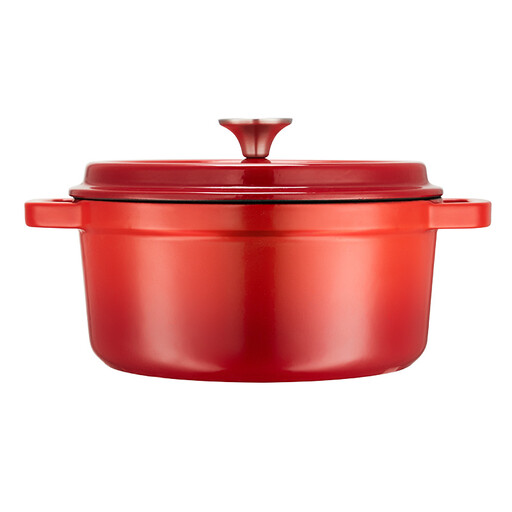
Why this choice suits this profile: its 24 cm format is ideal for everyday stewed dishes and allows you to discover enamel cast iron without immediately moving to a very large pot.
The description mentions an enamel cast iron construction, which helps you avoid confusing a simple decorative casserole with one designed to retain heat.
A 24 cm format with a stated enamel finish. However, check the exact compatibility with your hob before purchasing.
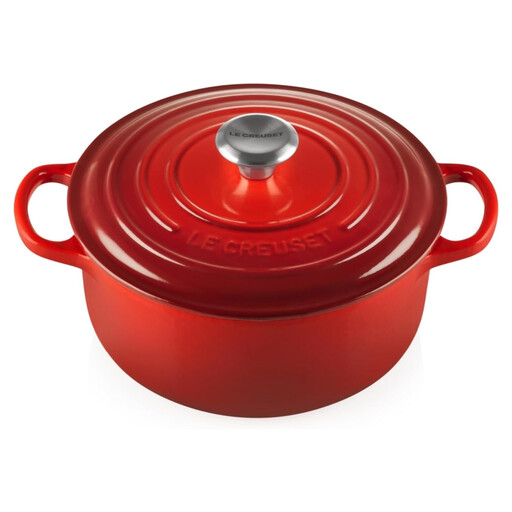
Why this choice suits this profile: its stated 2.4 litre capacity is suitable for stewed dishes, soups and preparations to be served directly at the table in a small household.
The description specifies compatibility with induction, gas, electric, halogen and oven hobs. It also indicates the presence of a light-coloured enamel interior.
A matching lid, a stainless steel knob and wide handles. Dishwasher washing is permitted, although hand washing is recommended to preserve the finish.
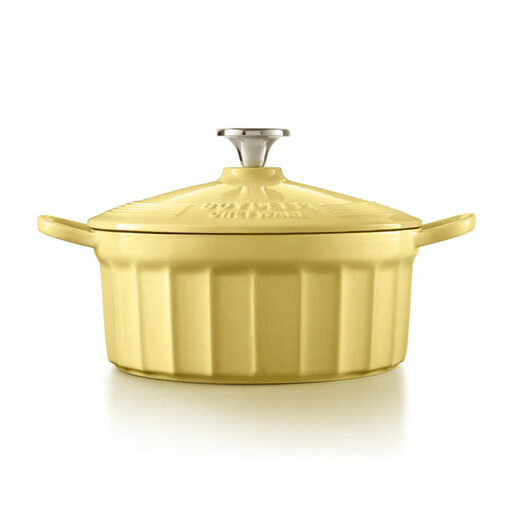
Why this choice suits this profile: its stated 2.9 litre capacity is suitable for repeated cooking of braised, stewed or roasted dishes, particularly on an induction hob.
The description details the compatible heat sources, oven use and the well-fitting domed lid. It also reminds you not to heat the casserole when empty.
Enamel cast iron, an 18/8 stainless steel knob and a 2.9 litre capacity. Dishwasher washing is permitted, with some precautions to limit wear on the enamel.
We have compiled a comprehensive list, updated in real time, of products that meet these demanding selection criteria and European safety regulations.
To keep your cooking utensil in good condition for a long time:
An electric slow cooker such as the Crock-Pot CSC111X can be an alternative for slow cooking, but it does not automatically replace an enamel cast iron casserole that can be used on a hob or in the oven. Similarly, a cast iron saucepan or an enamel cast iron stockpot should be chosen based on its capacity and heat sources, rather than just its appearance.
Yes, provided the manufacturer explicitly states this compatibility. Also check that the base diameter matches the cooking zone and avoid sliding the casserole on a ceramic hob to minimise the risk of scratches.
For three to four people, a capacity of around 3 to 4 litres is a good benchmark. If you regularly entertain or prepare large quantities of soup, a larger model could be worthwhile, provided you are happy with its weight and size.
Its lifespan depends on the quality of manufacture, frequency of use and care. The enamel does not require seasoning, but it remains sensitive to impacts, sudden temperature changes and metal accessories. Regular inspection allows you to spot the first signs of deterioration quickly.