
Livraison le jour même ou le lendemain

Qualité garantie

Débloquez vos offres de bienvenue: Livraison GRATUITE | Jusqu'à -80 % | 30 jours d'essai gratuits à JoyPlus
Téléchargez l'application
An enamel cast iron casserole dish is just as good for slow-cooking a beef bourguignon as it is for braising vegetables, roasting a chicken or baking bread in the oven. But its weight, capacity and compatibility with your appliances can quickly turn an appealing purchase into a cumbersome everyday utensil.
Before you settle on a colour or get swayed by a promise of durability, it’s worth checking the features that really matter. Here are the main pitfalls to avoid, the criteria to examine and a selection of models suited to different cooking needs.
A diameter of 24 or 26 cm alone won’t tell you how much food you can actually prepare. The height, the shape of the lid and the thickness of the walls can sometimes significantly reduce the real available volume. A family-sized 5-litre casserole dish is suitable for several portions, while a 2 to 3-litre model will be more comfortable for smaller quantities or a household of one to three people.
Cast iron retains heat remarkably well, but it is heavy. A large casserole dish becomes particularly difficult to move once it’s filled with a dish, liquid and its cast iron lid. Look closely at the shape of the handles, how much clearance they offer and whether you can lift the whole thing while wearing oven gloves.
The phrase “suitable for all hobs” deserves to be checked in the technical specifications. For an induction-compatible casserole dish, the manufacturer must explicitly state that the utensil can be used on an induction hob. Also check the maximum oven temperature, compatibility with the grill and the cleaning instructions. These limits can vary depending on the material of the knob and the finish of the lid.
Enamel cast iron combines a heavy body with a vitrified surface. Unlike raw cast iron, it generally doesn’t require seasoning and is suitable for dishes containing tomatoes, wine or other acidic ingredients. However, the enamel is vulnerable to thermal shock, metal utensils and abrasive cleaning products.
An enamel cast iron saucepan or a small casserole pot can be very practical for soups and sauces. For long, slow cooking, choose a casserole dish with a well-fitting lid that can limit evaporation. The lid should be heavy enough to stay firmly in place without making handling difficult.
As a rough guide:
A round casserole dish distributes ingredients easily on a circular hob. An oval shape will be better suited to a chicken or a long roast. In any case, measure the surface of your hob and the space available in your oven.
A casserole dish that is oven-safe must display a precise maximum temperature. The handles and knobs may impose a lower limit, even if the cast iron body can withstand more. For induction, check that the base is perfectly flat and that its diameter matches the cooking zone.
After use, always let the casserole dish cool down before washing it. Avoid pouring cold water onto a utensil that is still hot to reduce the risk of thermal shock. Use a soft sponge and wooden or silicone utensils, then dry any exposed metal edges thoroughly.
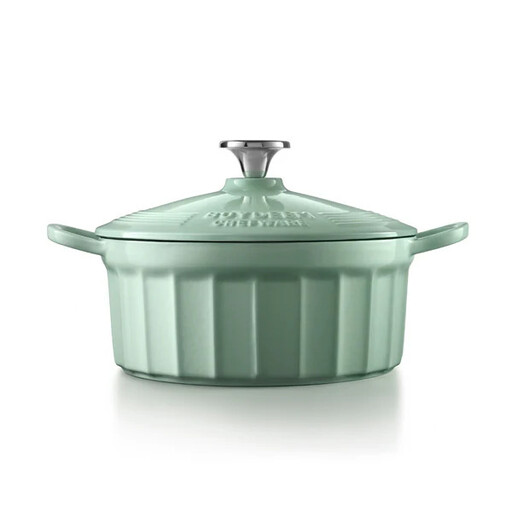
Why this choice suits this profile: its 2.9-litre capacity is ideal for getting started with stews, braises or roasts without taking over the hob.
The capacity and compatibilities are clearly stated: gas, induction, electric, halogen, ceramic hob and oven.
Domed lid with 18/8 stainless steel knob, enamelled interior and dishwasher-safe cleaning stated.
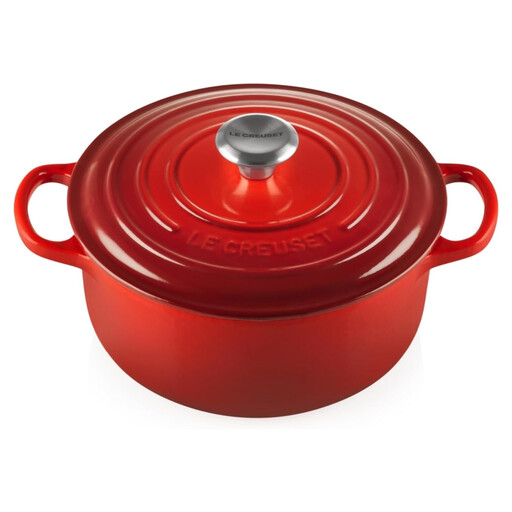
Why this choice suits this profile: this 2.4-litre model goes straight from the hob to the table and is perfect for soups, bread, roasts and stewed dishes alike.
The product page specifies compatibility with induction, the oven and several hob types, along with instructions for gradual preheating.
Enamel cast iron, light-coloured interior, wide handles and stainless steel knob; manufacture stated as France.
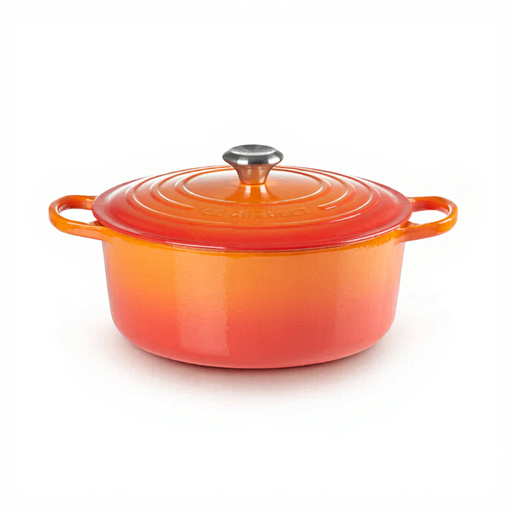
Why this choice suits this profile: with its 5.3 litres, it offers plenty of room for six people, roasts and large-quantity cooking.
The volume, 26 cm diameter and 5.14 kg weight are all stated, making it easier to assess the space needed and the handling.
Compatible with all hobs, the oven and the grill; lid included and dishwasher-safe cleaning stated.
We have put together a comprehensive, real-time updated selection of products that meet these demanding criteria, while complying with European safety regulations.
Yes, many models are compatible with induction, but this feature must be confirmed on the product page. The base must remain perfectly flat and its diameter must match the heating zone. On a ceramic hob, avoid sliding the casserole dish to reduce the risk of scratches.
It all depends on how often you use it and how you look after it. Cast iron is particularly durable, but the enamel can chip after a knock, a drop or a sudden change in temperature. Gentle washing, gradual heating and storing it so that heavy utensils aren’t placed on the surface will help preserve the finish.
Cast iron heats up more slowly than thinner materials, but it then retains heat for a long time. To keep energy consumption down, start on a moderate heat, use a well-fitting lid and turn the heat down once the temperature is reached. Slow cooking doesn’t always require a high power setting.