
Livraison le jour même ou le lendemain

Qualité garantie

Débloquez vos offres de bienvenue: Livraison GRATUITE | Jusqu'à -80 % | 30 jours d'essai gratuits à JoyPlus
Téléchargez l'application
Does your four-legged friend devour their food in record time?? This bad habit, known as gulping or bolting, often leads to bloating, regurgitation, and digestive issues. At the same time, poor posture during meals—especially for large or older dogs—can put a serious strain on their joints. The elevated slow-feeder bowl emerges as the perfect two-in-one solution to promote better digestion and a healthier posture.
But be warned: not all models are created equal. Before you make a decision, learn how to avoid the common pitfalls that can quickly turn a good purchase into a regret.
To make an informed choice, here are the key technical points that make all the difference in terms of effectiveness, durability, and hygiene.
The key to a great bowl stand?? Its adjustability. A height-adjustable bowl is essential to perfectly match your pet's build, both now and in the future.
The bowl material is a non-negotiable factor for your pet's health.
Beyond its primary function, the bowl should fit seamlessly into your daily routine. A collapsible bowl can be an excellent option if you're short on space or travel with your pet. Want to automate mealtimes?? A programmable automatic pet feeder can take over. By portioning out meals, it perfectly complements the action of a slow-feeder bowl.
Rather than a long list, we've matched products to user profiles. The goal?: to help you find the perfect fit for you and your companion.
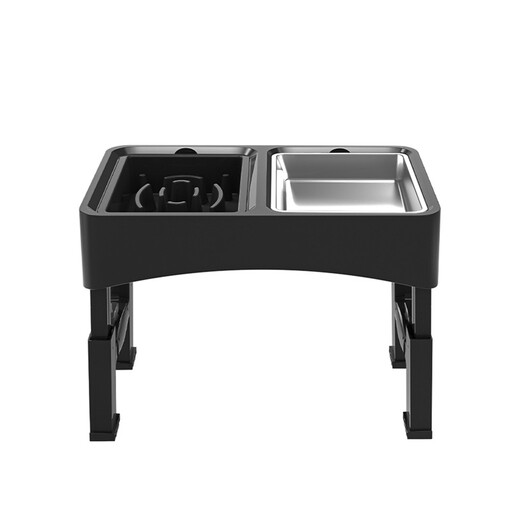
Why it stands out : It checks all the boxes. It combines a slow-feeder bowl and a stainless steel water bowl, all on a stand that's adjustable to four different heights. It's ideal for accommodating a growing puppy or adapting to different medium-to-large pets. Its collapsible design is a real bonus for storage or travel.
It counters the fixed-height trap with its four adjustment levels (from 10 to 31 cm). Its structure, though collapsible, provides a stable base to prevent tipping.
The slow-feeder and stainless steel bowl duo, 4 adjustable heights, and its collapsible design.
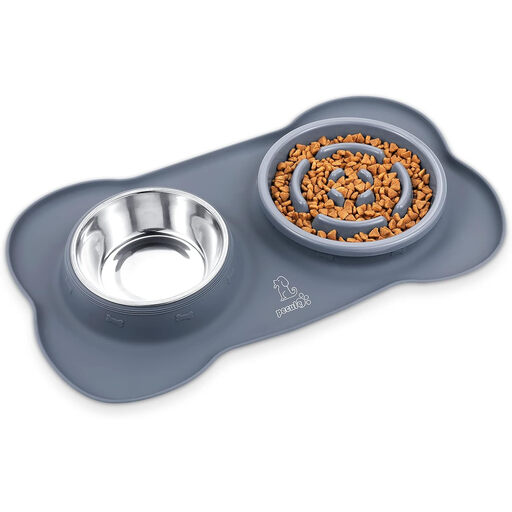
Why it stands out : For cats or small dogs, elevation isn't always a priority. This model gets straight to the point : slowing down fast eaters and keeping the feeding area pristine. It includes a slow-feeder bowl, a stainless steel bowl, and a spill-proof silicone mat, all at an affordable price.
It focuses on an effective slow-feeder design and a stable base, thanks to the non-slip silicone mat. The materials (food-grade silicone and stainless steel) are hygienic and durable.
The 3-in-1 concept with its spill-proof mat. Healthy materials (food-grade silicone and stainless steel) and easy maintenance (dishwasher-safe).
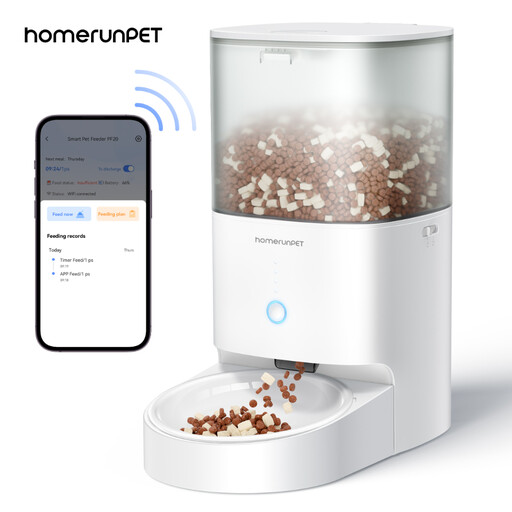
Why it stands out : For owners with a hectic lifestyle, this smart feeder is a game-changer. It doesn't slow down a single portion; instead, it portions out meals throughout the day. Programming via the mobile app gives you complete control over quantities and schedules. It's a more high-tech way to combat gulping.
It doesn't bother with a potentially ineffective maze. Here, technology takes over : portion control via the app is a foolproof method for regulating appetite and meal pacing.
App-controlled feeding, a hygienic ceramic bowl, and the anti-jam system.
We've curated a full selection of products that meet our quality criteria and safety standards.
The golden rule?: adjust the height so the top rim of the bowl is level with the bottom of your dog's chest. They shouldn't have to lower their head or raise it excessively to eat. Observe their posture?: their neck should remain a natural extension of their spine.
Yes, absolutely?! Although gulping is often associated with dogs, many cats also eat too quickly, which can lead to vomiting. A slow-feeder bowl, even one that isn't elevated, can help them eat more slowly and digest better. For cats, smaller and shallower models are often more suitable.
Ideally, choose a dishwasher-safe model. If washing by hand, soak the bowl in hot, soapy water for a few minutes to loosen any residue. Then, use a small brush (a dish brush or even an old toothbrush will do the trick) to get into every nook and cranny. Rinse thoroughly.