
Livraison le jour même ou le lendemain

Qualité garantie

Débloquez vos offres de bienvenue: Livraison GRATUITE | Jusqu'à -80 % | 30 jours d'essai gratuits à JoyPlus
Téléchargez l'application
Watching your dog bend awkwardly to reach a bowl on the floor might seem normal. However, this posture is often uncomfortable, especially for large dogs, seniors, or those with sensitive digestion. An elevated dog bowl is a simple and effective solution to improve their daily well-being by providing a more natural position for eating and drinking.
But with the overwhelming number of models available, how do you make the right choice? This guide breaks down the essential criteria to help you find the perfect feeding station for your four-legged friend.
Before you start shopping, let's review the key points that will make all the difference.
The primary benefit of an elevated bowl is, of course, providing an ergonomic eating height. A height-adjustable dog bowl proves to be a particularly smart choice: it grows with your puppy, can be adjusted if you have multiple pets of different sizes, or adapts to the specific needs of an ageing dog.
The golden rule? The bowl should be level with the bottom of your dog's chest. Your dog should neither have to lift its head nor bend down completely to eat.
Feeding stations come in several versions to meet every need:
A good dog bowl stand must remain perfectly stable, even against the most enthusiastic eaters. The choice of materials is therefore crucial:
To save you time, we've scoured the market and selected three models that stand out for their ingenuity, versatility, and positive user reviews.
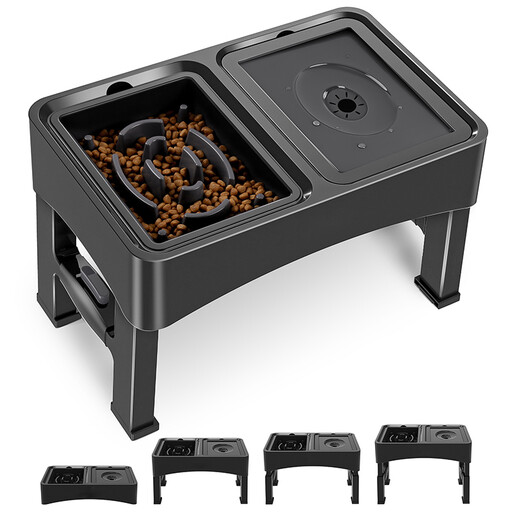
Why this model stands out
This Blinkit model is a true Swiss Army knife. It includes an elevated slow-feeder bowl to curb voracious appetites and a clever floating water bowl to prevent spills. Foldable and adjustable to four heights, it's a champion of versatility and practicality.
Pros
Who is it for? This is the perfect model for small to medium-sized dogs (and cats) that tend to eat too quickly. It's also ideal for those who want a complete solution that's easy to store or take on the go.
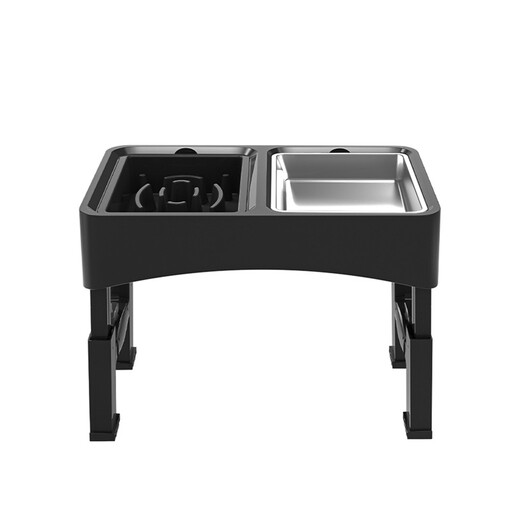
Why this model stands out
A cousin of the previous model, the Blinkit 0159-3 swaps the floating water bowl for a classic stainless steel bowl. This choice offers even more flexibility: you can use the stainless steel bowl for water or a regular meal, and reserve the slow-feeder bowl for kibble.
Pros
Who is it for? For those who want the best of both worlds: a slow-feeder solution and an ultra-durable standard bowl. Its modularity makes it a very effective all-around choice.
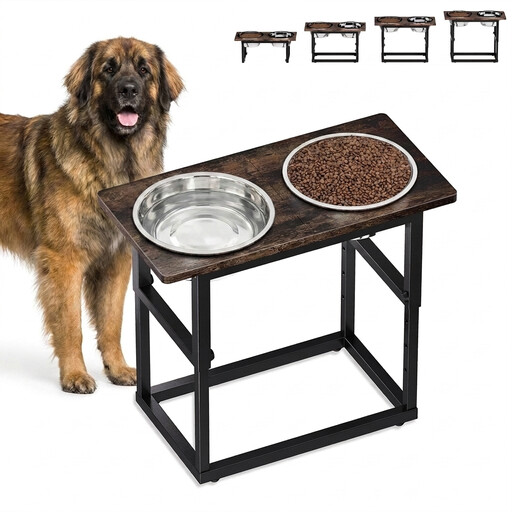
Why this model stands out
This VVM feeding station was designed for the heavyweights! Built for large and extra-large dogs, its metal and wood frame provides rock-solid stability. Its five adjustment levels allow for precise customisation, and the two generous 1.6?L stainless steel bowls will satisfy the biggest appetites.
Pros
Who is it for? This is the top choice for owners of Labradors, German Shepherds, Golden Retrievers, and other large breeds. Its sturdiness and XXL capacity are perfectly calibrated for their needs.
Our selection has given you a glimpse, but the choice is vast. To discover other styles, materials, or features, feel free to explore our full range.
? Discover our full range of elevated and adjustable bowls
An ergonomic dog bowl primarily improves their posture during meals. By eating at a comfortable height, the dog puts less strain on its neck and joints. This position promotes better swallowing and easier digestion, a real plus for elderly, arthritic, or large dogs.
It's simple: measure your dog while it's standing, from the floor to the bottom of its chest (just above the front legs). The top of the bowl should be at this height. The idea is that your dog can eat by just slightly lowering its head, without having to arch its back or stretch.
While it is particularly beneficial for large dogs and seniors, many medium-sized dogs also find it comfortable. However, be cautious: for breeds predisposed to gastric dilatation-volvulus (GDV), or bloat, the use of an elevated bowl is debated. When in doubt, and for any medical questions, the best course of action is to consult your veterinarian.