
Livraison le jour même ou le lendemain

Qualité garantie

Débloquez vos offres de bienvenue: Livraison GRATUITE | Jusqu'à -80 % | 30 jours d'essai gratuits à JoyPlus
Téléchargez l'application
Choosing your dog's bowl might seem trivial, yet a good feeding station has a direct impact on their comfort and digestive health. The adjustable elevated bowl is often highly recommended for improving posture during meals, especially for large dogs, seniors, or those with joint problems.
However, the market is flooded with models making tempting promises, and it's easy to be misled. Before you invest, it's best to understand the design flaws that can turn a good purchase into a real hassle, or even a danger to your pet.
The 3 Pitfalls to Avoid When Buying an Elevated Bowl:
To make the right choice, focus on objective technical criteria. These are the true guarantors of the product's quality and suitability for your companion.
A good dog bowl stand must be rock-solid, even if your companion tends to devour their meal. Look closely at the base design:
The bowl is in direct contact with food, so the choice of material is paramount for hygiene.
An ergonomic bowl must be at the right height: the bottom of the bowl should be level with the bottom of your dog's chest (sternum). This allows them to eat without bending their head too much, relieving strain on their neck and shoulders. Check the offered adjustment range. A model with 4 or 5 well-spaced height levels will be much more versatile. It can accompany a large-breed puppy through its growth or adapt to a senior dog whose mobility is changing.
Rather than an endless list, here is a selection of products that meet specific needs while respecting our quality and functionality criteria.
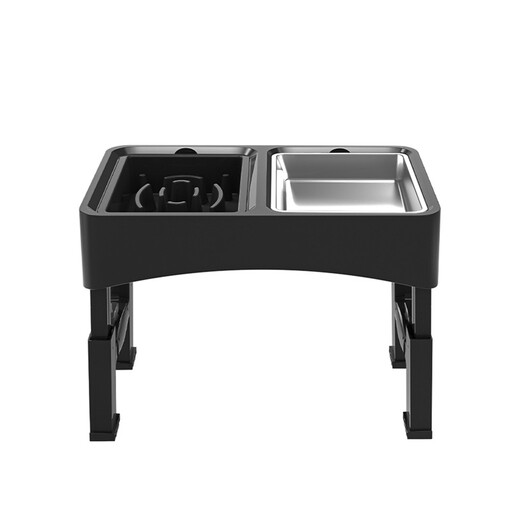
The Ideal Profile: Perfect for owners of medium to large-sized puppies. The station grows with the pet, saving you from buying multiple bowls over the months. Its foldable design is also a real plus for storage or weekend trips.
It avoids the "deceptive adjustment" pitfall with its four distinct height levels (10, 23, 27, and 31 cm), offering true versatility.
Its versatility, featuring both a slow-feeder bowl and a stainless steel bowl. Its foldable structure makes storage easy.
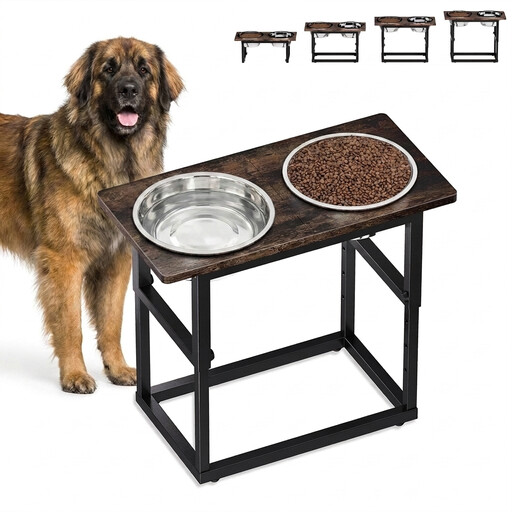
The Ideal Profile: Designed for large and giant breed dogs. Its massive structure and large capacity make it the ideal solution for powerful dogs who tend to knock everything over.
It directly tackles the instability pitfall. Its reinforced metal stand and wooden platform ensure rock-solid stability, even against a 50 kg mastiff.
Its record-breaking adjustment range with 5 heights (up to 44 cm) and its two extra-large capacity (1600 ml) stainless steel bowls, perfect for giant-sized portions.
We have curated a complete range of products that meet our selection criteria and current safety standards.
The rule of thumb: position the stand so that the bottom of the bowl is level with the bottom of your dog's chest (sternum). The animal should be able to eat by lowering its head slightly, without straining its neck to reach the bottom of the bowl or bending in half. For a puppy, simply adjust the height as it grows.
While it is particularly recommended for large dogs, seniors with arthritis, or those with megaesophagus, an elevated bowl can improve comfort for most dogs by promoting a more natural posture during meals. If in doubt, and especially if your dog is at risk for bloat (gastric dilatation-volvulus), always ask your veterinarian for advice. It's better to be safe.
Easy cleaning is the key to hygiene. Removable stainless steel bowls are ideal: they are usually dishwasher-safe. For the stand, a simple wipe with a damp sponge and mild detergent is sufficient. Avoid harsh cleaning products. Cleaning the bowls after each meal and the stand once a week is enough to prevent bacteria buildup.