
Livraison le jour même ou le lendemain

Qualité garantie

Débloquez vos offres de bienvenue: Livraison GRATUITE | Jusqu'à -80 % | 30 jours d'essai gratuits à JoyPlus
Téléchargez l'application
Whether you're a seasoned mechanic or a passionate DIYer, one thing is certain: improper torque can have costly, or even dangerous, consequences. An incorrectly tightened cylinder head bolt, a wheel nut working itself loose… the nightmare scenarios are all too common. The electronic torque wrench has established itself as the ultimate precision tool, but the market is flooded with models of vastly different quality.
As product experts at Joybuy, our mission is to help you cut through the noise. Let's skip the marketing jargon and get straight to the point. Here are the 3 most common pitfalls to avoid when making your purchase:
To make an informed decision, it's essential to understand a few fundamental technical criteria.
Choosing a torque wrench is about more than just its design. Three elements are crucial to ensuring the safety and quality of your work.
The torque range, expressed in Newton-metres (Nm), defines the tightening force the tool can measure and apply. Before any purchase, list the manufacturer-recommended torque specs for the jobs you perform most often.
The drive square is the male end that the socket fits onto. Its size (in inches) is directly related to the torque range:
For a digital torque wrench, accuracy is the name of the game. It's expressed as a percentage of error (for example, ±2%). A wrench with a ±4% error applied to a target torque of 100 Nm could tighten to anywhere between 96 Nm and 104 Nm. For critical parts like a cylinder head, ±2% accuracy is a non-negotiable requirement.
Alert systems are just as crucial. High-performance models combine three signals when the target torque is reached:
Rather than an endless list, here are models that cater to specific user profiles, based on the performance and reliability criteria we've just covered.
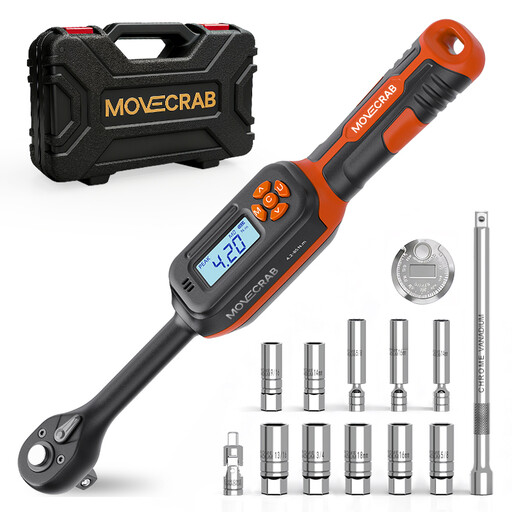
Why we chose it: The ideal solution for those who handle a variety of jobs on their car or motorcycle. This set offers a complete solution: its 4.2-85 Nm range and 3/8" drive cover the majority of common needs, from changing spark plugs to engine work.
It sidesteps the trap of limited versatility by providing a ready-to-use kit with spark plug sockets, a universal joint, and an extension, eliminating the need for additional purchases.
±2% accuracy and a complete kit for out-of-the-box usability across multiple applications.
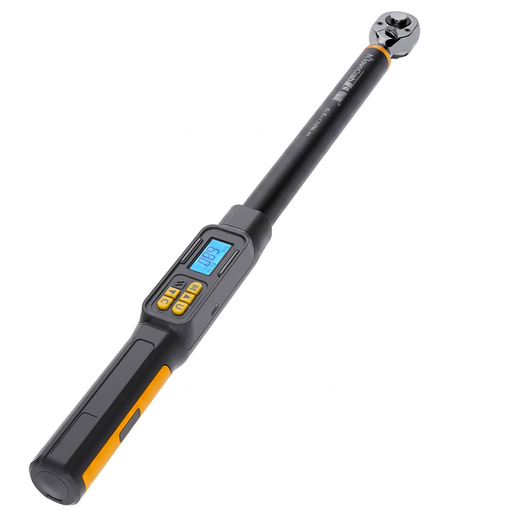
Why we chose it: Perfect for work on the chassis, wheels, or suspension. This is the tool for those who make no compromises on alert clarity, even in a noisy workshop.
It solves the problem of ineffective alerts with its triple alert system (vibration, sound, LED), which ensures you never accidentally exceed the target torque.
The combination of ±2% accuracy and a multi-sensory alert makes it a trustworthy tool for the most critical tightening jobs.
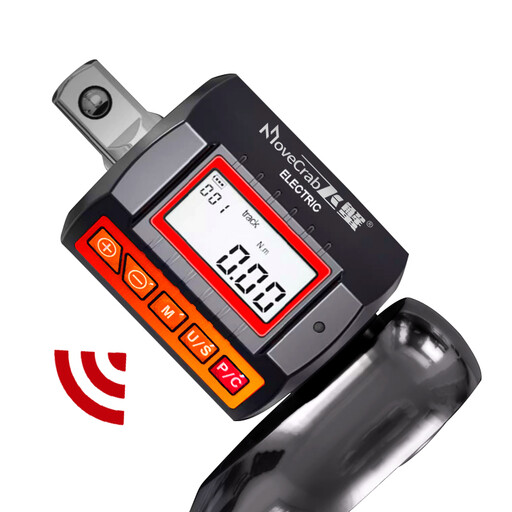
Why we chose it: For the savvy DIYer who already owns a good set of ratchets. This adapter adds precise torque measurement to your existing toolset, without the bulk or expense of a complete wrench.
It offers a very wide torque range (6-200 Nm) and comes with adapters for 1/4" and 3/8" drives. An ultra-versatile solution that saves you from buying multiple specialized tools.
Transforms any ratchet into a digital torque wrench, with ±2% accuracy and impressive versatility.
We have compiled a comprehensive, up-to-date list of products that meet these strict selection criteria and safety standards.
This is a common point of confusion, but the difference is fundamental. A torque wrench is a precision tool designed to apply an exact, controlled amount of tightening force (torque). Conversely, an impact wrench is a power tool made for rapidly tightening and loosening nuts and bolts using high-speed impacts. Using an impact wrench for final torquing is a classic mistake that risks damaging threads or components.
Unlike mechanical "click-type" wrenches that must be reset to zero after each use, electronic models are less demanding. However, to preserve their lifespan and accuracy, a few best practices are essential:
Yes, provided you choose a well-made model. A quality torque adapter offers a level of accuracy comparable to a complete wrench (typically ±2%). Its reliability depends on being used with a standard manual ratchet: it should never be attached to an impact wrench, as the impacts would damage its electronic sensor. It's a very credible alternative that is often more compact and versatile.