
Livraison le jour même ou le lendemain

Qualité garantie

Débloquez vos offres de bienvenue: Livraison GRATUITE | Jusqu'à -80 % | 30 jours d'essai gratuits à JoyPlus
Téléchargez l'application
Whether you're a seasoned mechanic or a dedicated car/motorcycle maintenance enthusiast, torque tightening is a critical step to ensure the safety and longevity of your components. An electronic torque wrench promises exceptional precision, but the market is flooded with models featuring spec sheets that can be misleading. As a product expert at Joybuy, my mission is to help you cut through the noise and find the perfect tool for your needs, far from the marketing hype.
Before you dive in, be aware of the common pitfalls that lead to a purchase you'll regret, or even a dangerous one.
To make an informed choice, focus on the features that have a real impact on your work.
This is the absolute starting point. The torque range, in Newton-metres (N·m), must cover the values recommended by the manufacturer for the jobs you perform most often.
The electronic torque wrench outperforms its mechanical counterpart in user comfort and signal reliability. A certified accuracy of ±2% or ±3% is an excellent hallmark of quality. The most effective models offer a triple alert system (audible, visual via LED, and vibration) that ensures you never exceed the target torque, even in a noisy or dark workshop. This is a decisive advantage for a perfect tightening, every time.
Rather than aiming for a "one-size-fits-all" tool that's mediocre at everything, it's better to choose a model that excels for your user profile.
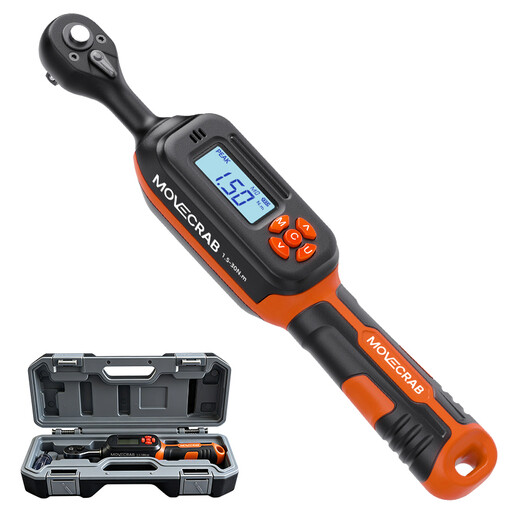
Ideal User Profile: Perfect for cycling or motorcycle enthusiasts who work on fragile components (carbon, aluminum) requiring very low torque settings and surgical precision to prevent damage.
Its ultra-low torque range (0.6-12 N·m) is tailor-made for these tasks, avoiding the use of an oversized and therefore inaccurate tool at low torque.
±2% accuracy and a triple alert system (sound, light, vibration) for absolute control, even on the smallest fasteners.
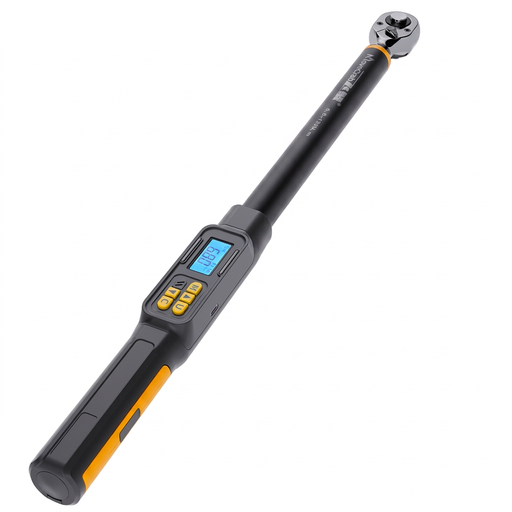
Ideal User Profile: The perfect tool for the DIYer who handles most of their car's maintenance, from oil changes to brake pad replacements, as well as work on the engine or running gear.
Its 6.8 to 135 N·m range covers the vast majority of automotive needs, so you don't have to juggle between two different wrenches for low and medium torque jobs.
The 1/2" drive is the standard for wheel sockets. The preset modes and onboard memory simplify repetitive tasks.
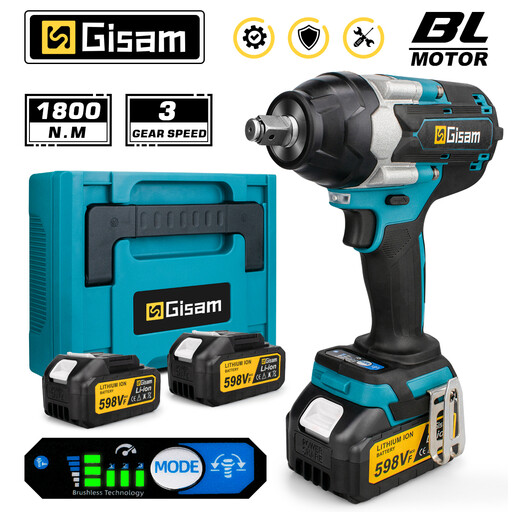
Ideal User Profile: A must-have for pros or advanced DIYers facing wheel, suspension, or chassis bolts seized by rust. Here, brute force takes precedence over precision.
This tool highlights the fundamental difference between an impact wrench and a torque wrench. It's a loosening monster, not a tightening instrument.
A maximum torque of 1800 N·m to tackle the most stubborn bolts. Its brushless motor ensures a longer lifespan.
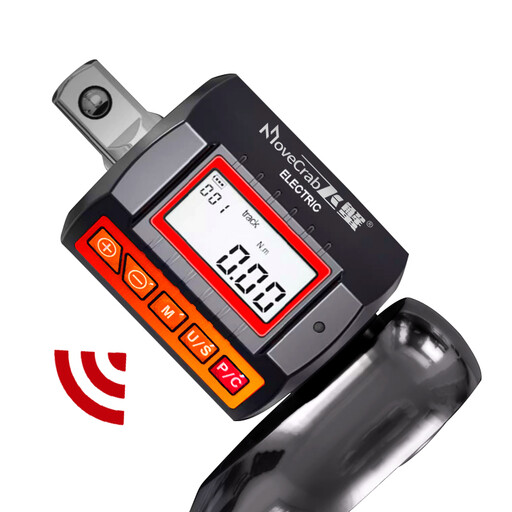
Ideal User Profile: For those who already own a good set of ratchet wrenches and want to add torque functionality without adding bulk or breaking the bank. Optimization at its finest.
This digital torque adapter transforms a standard ratchet into a precision tool, offering a cost-effective and ultra-compact solution.
A very wide torque range (10.2-340 N·m) and included adapters for 1/4" and 3/8" drives, providing maximum versatility with a single device.
We've put together a complete selection of torque wrenches that meet our standards for quality and safety.
Yes, like any measuring instrument, periodic recalibration is recommended to maintain its accuracy. For hobbyist or semi-professional use, a check every 1 to 2 years or after being dropped is good practice. Electronic models are more stable over time than mechanical versions, but it's still wise to follow the manufacturer's recommendations.
The difference is night and day, and it's crucial not to confuse them. A torque wrench is a precision tool designed to apply an exact, controlled tightening force (torque). A cordless impact wrench is a power tool designed to deliver rapid, powerful impacts to loosen very tight or rusted fasteners. Using an impact wrench for final tightening is a critical mistake that can damage threads and components.
Yes, that's the whole point of a digital torque adapter. It fits between your standard ratchet (or breaker bar) and the socket. You just need to ensure the drive size matches (usually 1/2", but reducers for 3/8" and 1/4" are often included). Be careful: it must never be used with an impact wrench, as the impacts would permanently damage its internal sensor.