Which factors should you prioritise?
To decide which appliance to replace first, consider how it works and how you use it, then compare models with a suitable capacity. ADEME and the European Commission distinguish between annual energy use for refrigeration and figures based on washing cycles.
| What matters |
What to check |
Who it matters to |
| Continuous refrigeration |
Energy use in kWh/year and the fridge and freezer capacities. |
If my old appliance stays plugged in day and night, I want to know whether replacing it should be a priority. Around 42% of consumers would put this need first. |
| Frequent washing cycles |
kWh per 100 cycles and capacity, considered alongside how many cycles you run and your usual loads. |
When I run appliances often, I need to compare the standard figures with how I actually load them. This would be the main concern for around 33% of consumers. |
| Choosing the right appliance or repairing |
The capacity you need and whether your current appliance can be repaired before you buy. |
If my appliance can still be used, I’d rather avoid replacing it too soon or choosing one that’s too large. This would be a priority for around 25% of consumers. |
Brands to consider
There are no brand profiles to display in this section.
Appliances to compare on Joybuy
These fridge-freezers and this dishwasher offer two options to consider for replacement: an appliance that runs continuously or one that you use in cycles. Before deciding to buy, compare their capacity and energy label figures with those of your current appliance.
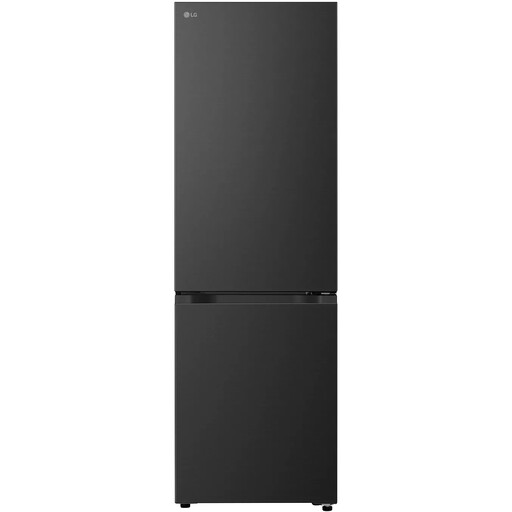 Image unavailable
LG GBBS312AEV, 333 L fridge-freezer
Worth considering if you’re thinking of replacing an appliance that runs continuously. The product title lists a capacity of 333 L, No Frost technology and an A energy rating; check the label for the exact model and make sure the capacity suits your household.
View on Joybuy
 Image unavailable
Samsung DW80H72YBB0U1, integrated dishwasher
Consider this if you use a dishwasher often and want to check whether its capacity suits your usual loads. The title lists a width of 60 cm, space for 13 place settings and a B energy rating; check the fitted dimensions and figures per cycle on the label for the exact model.
View on Joybuy
 Image unavailable
Candy CFQQ5T817EPS, 467 L fridge-freezer
Before replacing a fridge-freezer, check that its capacity matches your household’s actual storage needs. The title lists four doors, 467 L, Total No Frost technology and an E energy rating; check the annual energy use on the label for the exact model.
View on Joybuy
 Image unavailable
Samsung RF50C530EB1, 495 L multi-door fridge
Compare this with your current appliance if you’re looking for this much storage space. The title lists a capacity of 495 L and an E energy rating; check the kWh/year figure, dimensions and compartment layout for the exact model before deciding whether this capacity is right for you.
View on Joybuy
 Image unavailable
Sonlu CC-520WE, 444 L fridge-freezer
Worth considering if a capacity of 444 L suits your storage needs. The title lists an E energy rating, frost-free technology and a noise level of 40 dB; check the annual energy use, external dimensions and capacity of each compartment before buying.
View on Joybuy
Frequently asked questions
Why shouldn’t you compare a fridge and a washing machine directly by their kWh figures?
Because their energy labels show consumption over different periods of use. The European Commission specifies an annual figure for fridges and freezers, while washing machines and dishwashers show a figure per 100 cycles. How often you wash therefore matters when making your decision.
Is the energy rating enough to decide whether to replace an appliance?
No. Also compare the consumption figure in the unit used for that appliance and choose a capacity that suits your household. Depending on the category, ADEME also recommends checking features such as noise levels, water use and the duration of the standard programme.
Which programme are the figures for a washing appliance based on?
For washing machines, the European Commission bases energy efficiency and water-use requirements on the Eco 40-60 programme; for dishwashers, the label is based on the Eco programme. If you use other programmes, the standard figures won’t necessarily reflect each of your cycles.
Does a repairability or durability index tell you whether to repair an appliance?
No. The index provides information about a new model, not about the fault or whether repairing your current appliance is worthwhile. In France, information from the ministries responsible for the ecological transition distinguishes between the durability index for washing machines and the repairability index for dishwashers. A diagnosis is still needed to assess a specific fault.


