
Livraison le jour même ou le lendemain

Qualité garantie

Débloquez vos offres de bienvenue: Livraison GRATUITE | Jusqu'à -80 % | 30 jours d'essai gratuits à JoyPlus
Téléchargez l'application
Whether you’re carrying out an electrical installation, a repair or maintenance work, your electrician’s tools need to be suited to the task, easy to transport and tough enough to withstand regular use. But beware: some features highlighted in product descriptions can hide practical limitations.
Before you buy a tool bag, wire strippers or an electrician’s knife, it’s worth checking a few concrete details: dimensions, actual capacity, material quality, ergonomics and the conditions you’ll be working in.
A waterproof tool bag isn’t just about thick fabric. Protection also depends on the base, the stitching, the closure and how the bag sits on a damp floor. A rigid, washable base generally offers better protection for your contents against splashes and site grime.
A bag with lots of pockets can quickly become impractical if they’re too narrow or poorly arranged. When carrying electrical installation tools, you need to distinguish between spaces designed for pliers, screwdrivers, cables, measuring instruments and small electrician’s accessories.
Wire strippers or cable cutters must be used with the wire gauges and materials specified by the manufacturer. An unsuitable opening risks damaging the insulation, deforming the conductor or accelerating wear on the jaws. Compatibility details are therefore far more useful than a general promise of versatility.
For pliers and cable cutters, choose ones made from chrome-vanadium steel or a material clearly stated in the technical specifications. Corrosion protection also matters when your tools regularly move from the workshop to the van and then onto the job site.
For knives, a hardened steel blade can offer good wear resistance, but that doesn’t mean you can use it carelessly. A cable knife should be stored closed, inspected regularly and always used with the blade pointing away from your body.
A non-slip TPR handle, an adjustable strap or a wide opening all have a direct impact on everyday comfort. For repetitive tasks, check the following in particular:
Pliers intended for stripping must specify the gauges or wire sizes they accept. The WORKPRO model shown below states compatibility with 10, 12, 14 and 16 AWG wires, as well as a cutting capacity of up to 2.0 mm for solid wires. These details should be compared with your actual needs.
When working on an electrical circuit, always check the safety markings and applicable labels. A standard pair of pliers should not be treated as an insulated tool for live work just because it has a coloured handle. If specific protection is required, look for an explicit statement of compliance with the relevant standard, such as EN IEC 60900, and always follow de-energisation procedures.

Why this choice suits this profile: These pliers combine stripping and cutting in a single 200 mm tool, so you don’t need to carry extra accessories in your toolbox.
The stripping gauges and cutting capacity are clearly stated, making it easy to check compatibility before you buy.
Chrome-vanadium steel, non-slip TPR handles and cutting capacity up to 2.0 mm for solid wires.
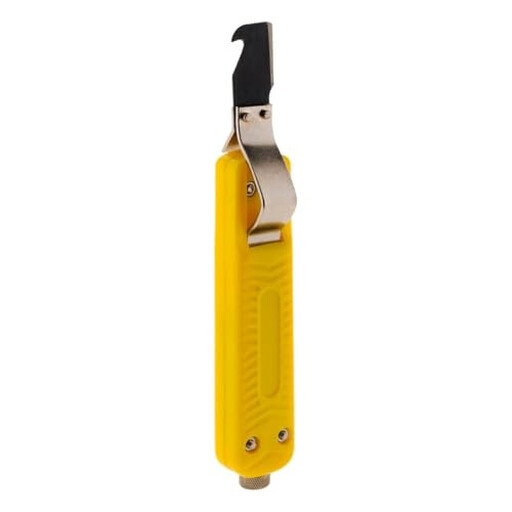
Why this choice suits this profile: This cable stripping knife is ideal for tasks that require precise adjustment of the cutting depth, especially during repetitive work.
The adjustment screw lets you set the depth to match the insulation thickness, rather than cutting at a fixed depth every time.
165 mm length, hardened steel blade and high-visibility yellow ergonomic handle.
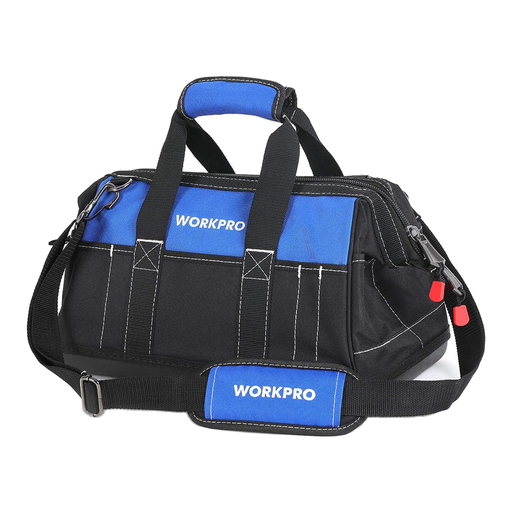
Why this choice suits this profile: Its capacity and numerous storage options make it ideal for users who carry a full set of equipment: pliers, screwdrivers and electrician’s accessories.
The rigid, water-resistant base limits contact with the ground, while the wide opening makes it easier to spot your tools quickly.
8 internal pockets, 13 external pockets, 8 fasteners and a stated capacity of 15 kg.
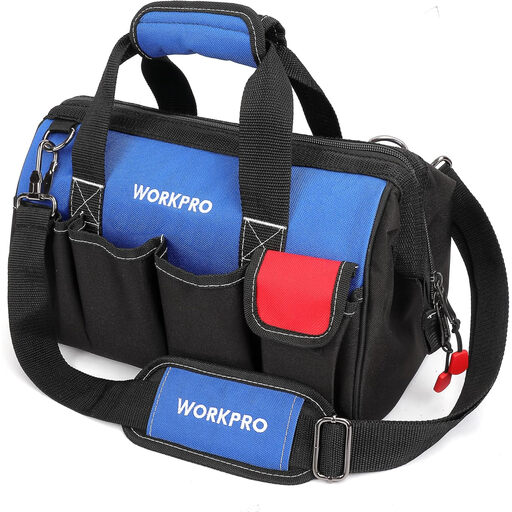
Why this choice suits this profile: With dimensions of 35 × 24 × 19 cm, this bag offers a good balance between storage capacity and mobility for call-outs to private homes or different job sites.
The detailed breakdown of internal and external compartments lets you plan your tool organisation before you fill the bag.
500D × 500D polyester, 6 internal pockets, 7 external pockets, non-slip base and adjustable strap.
We’ve put together a comprehensive, real-time updated selection of products that meet these demanding criteria as well as European safety regulations.
A basic kit typically includes wire strippers, cable cutters, suitable screwdrivers, an electrician’s knife, a tape measure, an appropriate detector and protective equipment. The choice depends on the nature of the work and the cable sizes you use.
Wire strippers remove the insulation around the conductor using an opening designed for specific diameters. Cable cutters sever the cable or conductor. A multifunctional pair of pliers can combine both functions, but you must stick to the capacities stated in the product specifications.
Clean the jaws after each use, dry any tools exposed to moisture and store blades closed. Avoid exceeding the specified diameters, and regularly inspect the handles, cutting edges, closures and stitching of your professional tool bag. Replace any tool that shows cracks, unusual play or a damaged blade.