
Livraison le jour même ou le lendemain

Qualité garantie

Débloquez vos offres de bienvenue: Livraison GRATUITE | Jusqu'à -80 % | 30 jours d'essai gratuits à JoyPlus
Téléchargez l'application
Whether you're a professional electrician or a weekend DIY enthusiast, choosing an electrical insulation tape should not be taken lightly. The wrong tape can not only sabotage your work but also pose a serious safety hazard. Faced with shelves full of products that all look the same, it's easy to fall into the trap. We're here to break down the common mistakes that can prove costly, or even dangerous.
This is the most frequent mistake, and by far the most dangerous. A simple grey repair tape (the famous duct tape) or a masking tape is NOT electrical insulation tape. These products simply do not have the required dielectric properties to block an electrical current. Worse, they are often flammable and cannot withstand voltage, creating a direct risk of fire or electrocution.
An unusually low price often hides a complete lack of certifications. An insulation tape without the CE marking or, for more specialised uses, the VDE certification, has not undergone any reliability testing. The VDE standard, in particular, is a true seal of quality and safety in Europe?: it guarantees that the tape has been tested against voltage, heat, and fire. Using a non-certified product is simply playing Russian roulette with your installation and your safety.
Not all tapes are created equal when it comes to temperature variations. A low-quality PVC adhesive tape will become brittle in the cold, while its adhesive can melt and slip in the heat, leaving live wires exposed. This is why it is crucial to check the manufacturer's recommended operating temperature range to ensure long-lasting insulation.
To help you see clearly and make the right choice, here are the few technical points that truly make all the difference.
Polyvinyl chloride, or PVC, is the go-to material for electrical cable tape. Its excellent flexibility allows it to conform perfectly to the shape of cables and connections, even on complex surfaces. It also offers outstanding electrical insulation properties and good resistance to moisture, abrasion, and certain chemicals. It's the cornerstone of any decent insulation tape.
Safety is non-negotiable. Here's what to check for?:
The different tape colours aren't just for decoration; they are used to identify conductors according to current electrical standards?:
Using the correct colour code is an essential safety habit, whether for a new installation or a simple repair. Black electrical tape remains the classic choice for general insulation and fixes.
To guide you, here is our selection of adhesive tapes suited for every profile and every need.
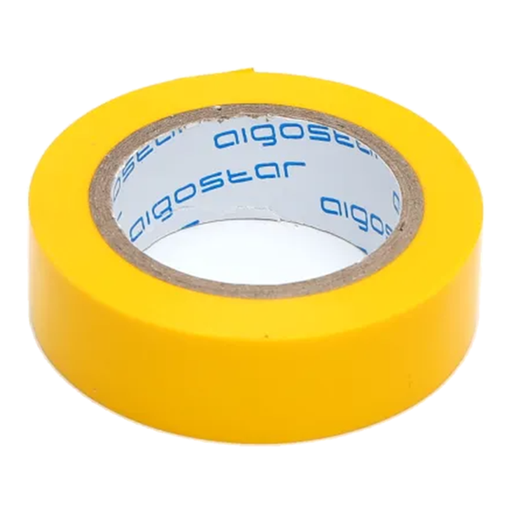
Why we chose it : Perfect for small projects around the house, this tape not only insulates but also allows for easy marking and identification of circuits thanks to its bright colour, in compliance with the regulatory colour code.
This is a true PVC insulation tape with CE certification. It provides reliable safety for low-voltage jobs, unlike a simple adhesive tape which is completely unsuitable.
Its yellow colour is ideal for identifying the ground wire, a fundamental safety measure, even for occasional DIYers.
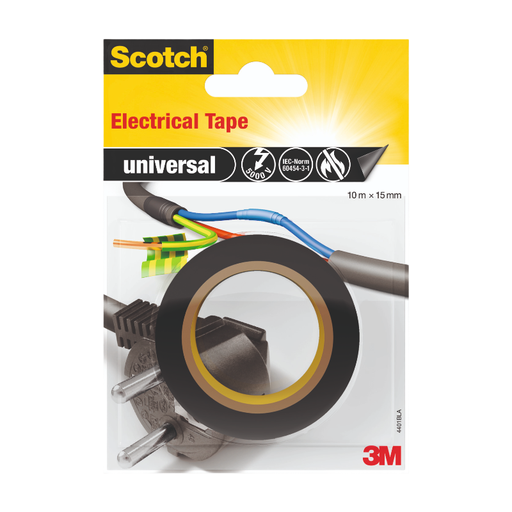
Why we chose it : For professionals, reliability is non-negotiable. This tape from the Scotch brand is a trusted name in the market, offering flawless performance for insulating, repairing, and bundling wire harnesses.
With VDE certification and flame-retardant properties, it eliminates any risk associated with using a low-quality product on a job site or sensitive installation.
Protection up to 6,000 V and resistance to temperatures up to 90°C. This guarantees rock-solid safety and longevity.

Why we chose it : For all repairs that have NOTHING to do with electricity. Patching a leak, holding parts together, reinforcing a box... This duct tape is the perfect ally for situations that demand maximum adhesion and rock-solid durability.
By choosing it for purely mechanical tasks, you avoid using it by mistake for an electrical application—a dangerous misuse for which it is absolutely not designed.
Waterproof, ultra-strong, and tearable by hand, it's the perfect tool for purely mechanical emergency repairs.
Once your cables are properly insulated, move on to the next step. Ensure the precision of your installations with our selection of measuring tools and essential equipment.
Its longevity heavily depends on exposure conditions (UV, heat, humidity, chemicals). Indoors and in a stable environment, a quality tape can last for many years. However, it's a good idea to visually inspect old repairs from time to time. If the tape looks dry, brittle, or if the adhesive has "bled" or oozed out, it's high time to replace it.
Absolutely not! Only tapes explicitly sold as "electrical insulation tape" or "electrician's tape" should be used. Others (duct, masking, packaging) offer no guarantee of insulation and can be conductive or flammable, which is extremely dangerous.
Historically, the carbon black pigment used in black electrical tape gave it better UV resistance, making it more durable outdoors. Today, reputable manufacturers offer tapes in various colours with equivalent performance. Black simply remains the universal colour for general insulation, while other shades are primarily used for identification (phase, neutral, ground).