
Livraison le jour même ou le lendemain

Qualité garantie

Débloquez vos offres de bienvenue: Livraison GRATUITE | Jusqu'à -80 % | 30 jours d'essai gratuits à JoyPlus
Téléchargez l'application
Buying electrical appliances can quickly become a real headache. Stated power output, so-called smart features, promises of energy savings… Manufacturers sometimes focus on details that matter less than compatibility with your installation, safety or everyday use. Whether you are a student, tenant, parent or professional, the right choice depends above all on your actual needs and the constraints of your home.
A 2,000 W appliance heats up quickly, but it also uses more energy when operating at full power. For a 2,000 W fan heater, check for several heat settings, an adjustable thermostat or an energy-saving mode. High power does not guarantee better heat distribution or controlled energy consumption.
In the kitchen, the power output must also be compatible with your electrical installation. A built-in ceramic hob rated at several thousand watts requires a suitable circuit and, depending on the model, connection by a qualified professional.
An adapter for an induction hob does not magically turn any utensil into a perfectly compatible pan. It sits between the hob and the cookware, which can slow down heating. Its diameter, stability and intended type of use should therefore be checked before buying.
The same applies to a built-in ceramic hob: it must match the exact cut-out dimensions of the worktop. A rough measurement can result in additional work or even make installation impossible.
A timer, remote control or LED display can make an appliance more convenient to use, but these features never replace basic safety precautions. For a ceramic electric heater, prioritise overheat protection, tip-over protection, a stable base and clear instructions.
For a professional hair dryer, the number of revolutions per minute alone is not enough to assess how well it performs in use. Temperature, airflow, weight, cord length and filter maintenance also make a very real difference every day.
Here are the key points to bear in mind for each category:
A heating appliance must be installed on a hard, level and unobstructed surface. Never cover it, block either the air inlet or outlet, or place it near curtains, fabrics or furniture. Overheat protection provides an additional safeguard, but it cannot make up for incorrect installation.
On a hob, a residual heat indicator, child lock and automatic switch-off are particularly useful. For a portable cooking appliance, dry-boil and overheat protection can also reduce risks when a container is empty.
Check the plug type, stated voltage and cord length before connecting the appliance. High-powered models should not normally be connected to a multi-socket extension lead. A built-in hob without a plug requires a suitable connection, generally carried out by a qualified electrician.
Maintenance deserves the same attention: regularly dust the grilles of a heater, clean the rear filter of a hair dryer and use a soft sponge on cooking surfaces. If your induction adapter is made of steel, dry the disc thoroughly before storing it to help reduce the risk of corrosion.
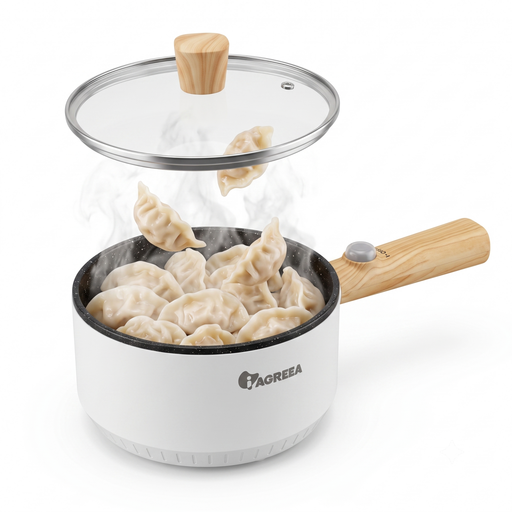
Why it suits this profile : Its 1.2 L capacity fits easily in a studio flat, student bedroom, office or travel bag. It can be used to prepare noodles, soup, a slow-cooked dish or a meal for one.
The two power settings, 500 W and 1,000 W, prevent it from running at full power all the time. Overheat and dry-boil protection add to the safety, provided you remain attentive while using it.
Non-stick coating, glass lid, detachable cord and a handle designed to remain relatively cool during cooking.
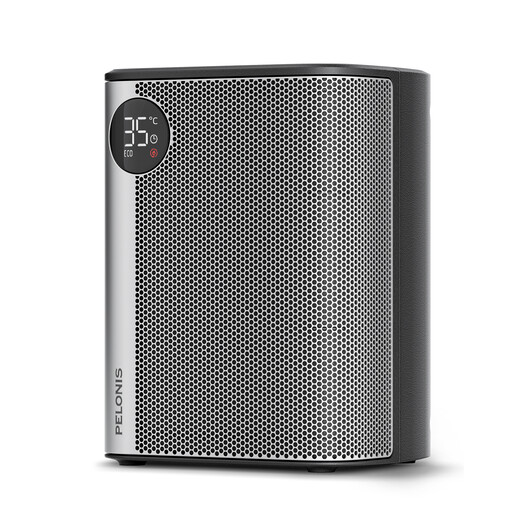
Why it suits this profile : This ceramic electric heater offers five modes, an adjustable thermostat, ECO mode and a 24 hour timer. That makes it easy to set the temperature precisely, whether you are at home or in the office.
The settings are not limited to the maximum 2,000 W mode. The adjustable thermostat and ECO mode allow operation to be adapted to the ambient temperature.
Overheat protection, tip-over protection, integrated handle and precise temperature display.
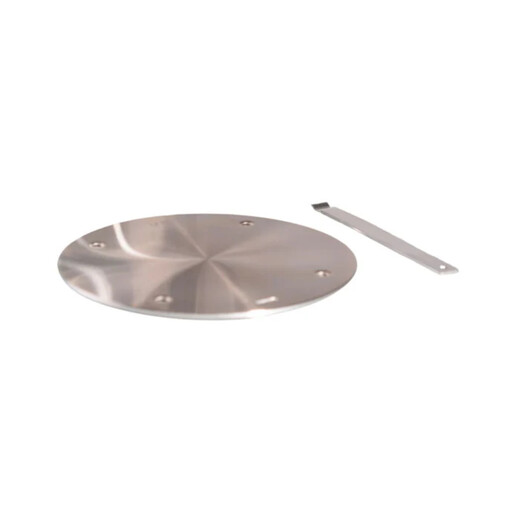
Why it suits this profile : This adapter is designed for households with an induction hob that want to continue using certain casserole dishes or frying pans that are incompatible with this technology.
It is only suitable for induction hobs. Remove the detachable handle before cooking and allow the disc to cool completely before cleaning it.
Steel construction, four feet to promote airflow and a detachable handle for positioning the disc without gripping it directly.
Discover our complete, real-time-updated selection of products that meet these demanding criteria and European safety standards.
A 2,000 W appliance uses up to 2 kWh per hour if it runs continuously at maximum power. The cost depends on your electricity provider’s tariff and the actual time it is used. A thermostat, timer or ECO mode can reduce the length of time the appliance runs, but they do not change its rated power.
It is better to plug it directly into a wall socket in good condition. Some manufacturers advise against, or even explicitly prohibit, using a multi-socket extension lead with their high-powered heaters. Check the instructions, avoid unsuitable extension leads and do not connect several energy-hungry appliances to the same circuit.
An induction hob mainly heats the compatible cookware using a magnetic field. A ceramic hob first heats its own surface, which then transfers the heat to the cookware. Compatible utensils and installation requirements therefore differ. Before ordering, check the hob type, built-in dimensions and required connection.