
Livraison le jour même ou le lendemain

Qualité garantie

Débloquez vos offres de bienvenue: Livraison GRATUITE | Jusqu'à -80 % | 30 jours d'essai gratuits à JoyPlus
Téléchargez l'application
Switching to an electric toothbrush is an excellent decision for your oral hygiene. But with an overwhelming number of options, marketing promises, and technical jargon, it's easy to get lost and regret your purchase. As the Head of Product Recommendations at Joybuy, my job is to separate fact from fiction and guide you to the model that's truly right for you.
The market is saturated with features that seem appealing but often prove to be irrelevant or costly in the long run. Here are the three most common traps.
To avoid making a mistake, let's get back to basics. Three technical criteria are all you need to determine 80% of the effectiveness and user comfort of your future toothbrush.
Brushing Technology: Sonic vs. Oscillating-Rotating There are two main types of electric toothbrushes. Oscillating-rotating technology, popularised by Oral-B, uses a small, round brush head that rotates and pulsates to dislodge plaque. Sonic toothbrush technology, used by brands like Philips Sonicare or Bair Care, vibrates the brush head at a very high frequency (over 30,000 strokes per minute). This action creates micro-bubbles that clean deep, even in interdental spaces. The latter is often considered gentler, which is a real bonus for sensitive gums.
Battery Life and Charging Method A good rechargeable toothbrush should have a Lithium-ion (Li-ion) battery, which offers better longevity and a slower discharge rate. Also, consider the charging system: a charging dock is perfect for home, but a simple USB cable becomes a major asset when travelling.
Compatibility and Price of Brush Heads Before you check out, take two minutes to verify the price and availability of replacement brush heads. It's a simple step that will save you a lot of frustration and ensure the longevity of your investment.
Rather than just listing features, we've matched models to specific user profiles to help you find the one that's right for you.
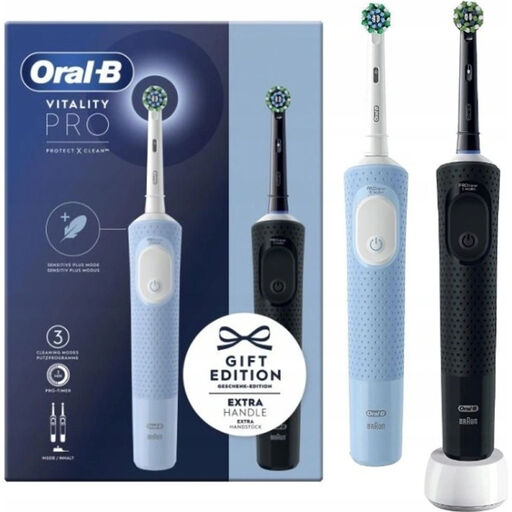
Why we chose it: Ideal for a couple or small family looking to get equipped without breaking the bank. This pack gets straight to the point: two handles with the essential features for an effective daily clean.
This pack focuses on the essentials: 3 genuinely useful brushing modes (Daily Clean, Sensitive, Sensitive Plus) without superfluous functions. Plus, Oral-B brush heads are easy to find and their cost remains reasonable.
Unbeatable value for a duo pack. The 2D oscillating-rotating technology is tried and tested, and the built-in timer helps you stick to the recommended 2-minute brushing time.
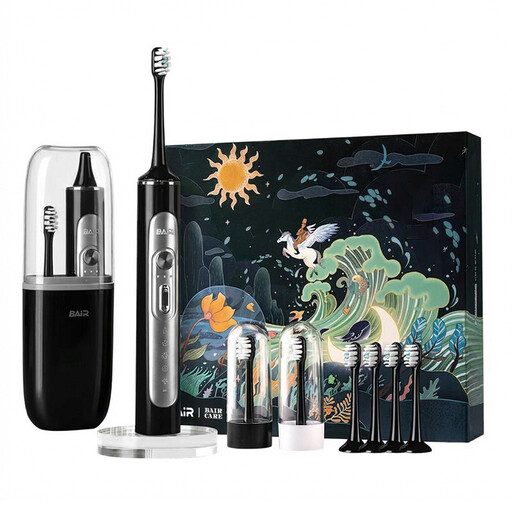
Why we chose it: The perfect solution for those on the go who don't want to be weighed down by a charger. Its record-breaking battery life and travel case make it the ideal travel companion.
Here, the battery life promise isn't just marketing fluff. A single charge lasts for several months of use, even when switching between the different modes. The overstated battery life pitfall is avoided.
Its extra-long battery life (up to 180 days) is its main asset. It comes with a high-quality travel case and offers 5 modes and 3 intensity levels for a customised brushing experience.
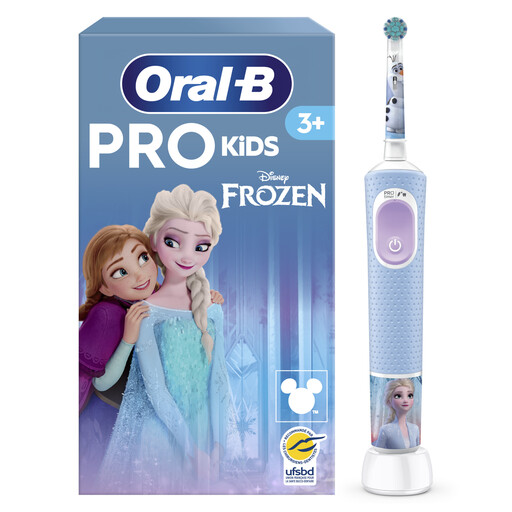
Why we chose it: A kids' toothbrush designed for ages 3 and up. Its fun design and adapted features turn the chore of brushing into a game.
Far from being a simple gadget, this model offers features truly adapted for young users: a smaller brush head, extra-soft bristles, and a "Sensitive" mode to protect their delicate gums.
Its Sensitive mode is perfectly calibrated for children. Most importantly, its compatibility with the Disney Magic Timer app motivates them to brush for the recommended two minutes, all while having fun.
Discover our complete selection of toothbrushes, tested and approved by our experts to meet strict quality and safety standards.
What is the lifespan of an electric toothbrush? The handle, which houses the motor and battery, has an average lifespan of 3 to 5 years. Much like a smartphone, the Li-ion battery will gradually lose capacity with each charge. The brush head, however, is a consumable. It is essential to replace it every 3 months to ensure perfect hygiene and effectiveness.
Sonic or oscillating-rotating: which one should I choose? Neither technology is inherently superior to the other; it's all a matter of personal preference and sensitivity.
How often should I change the brush head? Dentists and hygienists are unanimous: the brush head must be changed every three months, without exception. Beyond that, the bristles wear out, no longer remove plaque effectively, and become a breeding ground for bacteria. Good to know: some brush heads have indicator bristles that fade to signal when it's time for a replacement. Ignoring this rule simply negates all the benefits of your electric toothbrush.