
Livraison le jour même ou le lendemain

Qualité garantie

Débloquez vos offres de bienvenue: Livraison GRATUITE | Jusqu'à -80 % | 30 jours d'essai gratuits à JoyPlus
Téléchargez l'application
With the overwhelming number of electric toothbrushes on the market, it's hard to know where to start. Between competing technologies, a plethora of features, and price ranges that can vary threefold, making the right choice can sometimes be a real puzzle.
Our guide is here to help you make sense of it all. We'll break down the essential features, compare the technologies, and present a selection of models that stand out from the crowd. The goal: to help you find the toothbrush that perfectly meets your expectations and oral hygiene needs.
Before we dive into our selection, let's review the key points that will help you make the right choice.
The market is primarily dominated by two technologies:
The choice between the two will largely depend on your personal preferences and gum sensitivity.
Recent models integrate technologies that go far beyond simple brushing:
For those who travel often, a travel toothbrush is a real bonus. Check for a hard travel case, ideally one with a charging function. Battery life is also a crucial criterion: some models last more than two weeks on a single charge.
Here are the models that caught our attention, each catering to a specific user profile.

Why it stands out: The Oral-B iO series combines the movement of its dentist-inspired round head with gentle micro-vibrations. The iO9 model goes a step further with its smart coaching, which analyses and adjusts rotation and pressure in real time, offering a unique and personalised brushing experience.
Advantages:
Who is it for? For tech enthusiasts looking for a guided brushing experience who appreciate real-time coaching to perfect their daily technique.
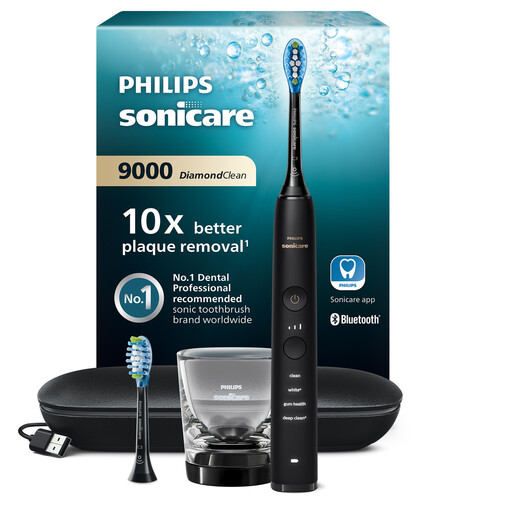
Why it stands out: The Philips Sonicare DiamondClean 9000 is the benchmark for sonic technology. With its 62?000 movements per minute, it generates a hydrodynamic action that cleans deep between the teeth. Its key strength: advanced customisation with 4 modes and 3 intensity levels, offering 12 possible settings for a tailor-made brushing experience.
Advantages:
Who is it for? Ideal for those who want total control over their brushing, with advanced options for whitening or gum care, all in a sleekly designed package.

Why it stands out: This sonic toothbrush model stands out as an ultra-complete solution at a very attractive price. Its main asset is its all-in-one package: it comes with 6 brush heads, a travel case, and a wireless charging station. Its record-breaking battery life, advertised at up to 60 days, makes it a champion for travel.
Advantages:
Who is it for? The perfect option for frequent travellers, families, or anyone looking for an ultra-complete starter pack so they don't have to worry about consumables for months.
If the models presented haven't completely won you over, or if your number one criterion is portability, many other electric toothbrushes are designed for life on the go.
Discover our complete selection of electric toothbrushes with travel cases to find the ideal travel companion.
The fundamental difference lies in the movement. An oscillating-rotating brush has a small, round head that rotates and pulsates for a precise, tooth-by-tooth clean. A sonic brush uses a more elongated head that vibrates at very high speed, generating a sweeping action that also cleans between the teeth. Ultimately, the choice depends mainly on your preferences and sensitivity.
Yes, it's even a must-have! Many of us brush our teeth too hard, which can damage enamel and irritate gums over time. The pressure sensor alerts you instantly, helping you correct your motion and protect your long-term oral health.
As a general rule, and this is the unanimous opinion of dentists and manufacturers, it is recommended to replace the brush head every three months. As they wear out, the bristles lose their effectiveness at removing plaque. Rest assured, most modern models include a reminder, via a light on the handle or a notification in the app, to let you know.