
Livraison le jour même ou le lendemain

Qualité garantie

Débloquez vos offres de bienvenue: Livraison GRATUITE | Jusqu'à -80 % | 30 jours d'essai gratuits à JoyPlus
Téléchargez l'application
Working all day in front of a screen, studying remotely or gaming for hours can quickly make a fixed desk feel impractical. A height-adjustable electric standing desk lets you switch between sitting and standing positions, thanks to a motor controlled from a control panel. However, not all models meet the same requirements for space, stability or usage.
Before you place an order, three pitfalls deserve your attention.
An adjustable electric desk must work well for both your sitting and standing positions. The models featured here typically offer a range between 72 and 118 cm or 72 and 120 cm. This figure should be considered alongside the height of your chair, your armrests and your posture in front of the screen.
For a home office desk, height memory saves you from manually finding the right setting every time you change position. Two or four presets let you save a sitting configuration, a standing configuration and, depending on the model, a setting suited to another user.
The 120 x 60 cm desk format suits small spaces, bedrooms or a workstation with a laptop and one monitor. It generally leaves enough room for a keyboard, mouse and a few documents.
A 160 x 70 cm desktop offers a more comfortable surface for two monitors, speakers, notebooks or gaming equipment. However, check the available depth in the room as well as the space needed behind the desk. The 140 x 60 cm format can be a good compromise for a study desk or a multi-purpose workstation.
A maximum capacity of 70 kg is sufficient for most common equipment: monitor, laptop, keyboard, lamp, books and accessories. However, it's better to keep some margin rather than working constantly at the stated limit.
The steel frame, adjustable feet and build quality all contribute directly to stability. The features to look at are equally concrete:
The CE mark indicates that the manufacturer declares the product meets the applicable European requirements. It does not replace the need to read the manual, load limits and assembly instructions. The JoySelect products shown below also mention certification to European standards in their product listing.
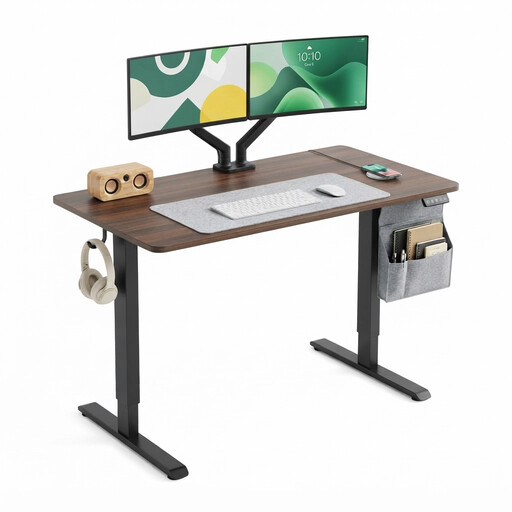
Why this choice suits this profile: Its compact desktop is ideal for a first office, study or home office setup. The digital control is simple to use and two heights can be saved.
The 120 x 60 cm dimensions keep the footprint small, while the stated 70 kg load capacity gives you a concrete benchmark for organising your equipment.
Adjustment from 72 to 118 cm, digital display, two presets, walnut finish desktop and two hooks included.
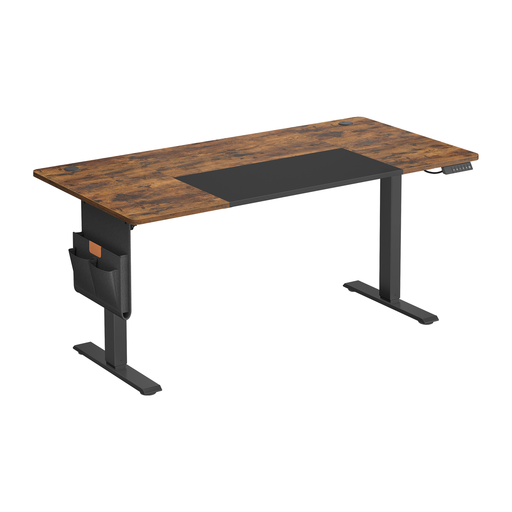
Why this choice suits this profile: Its large desktop is ideal for a complete workstation with multiple monitors, accessories and documents. It also incorporates storage features and a USB-C port.
The listing specifies the maximum static load of 70 kg, the adjustment range of 72 to 120 cm and the precautions relating to overheating protection.
160 x 70 cm format, height memory, USB-C port, motor described as quiet, organiser and three hooks.
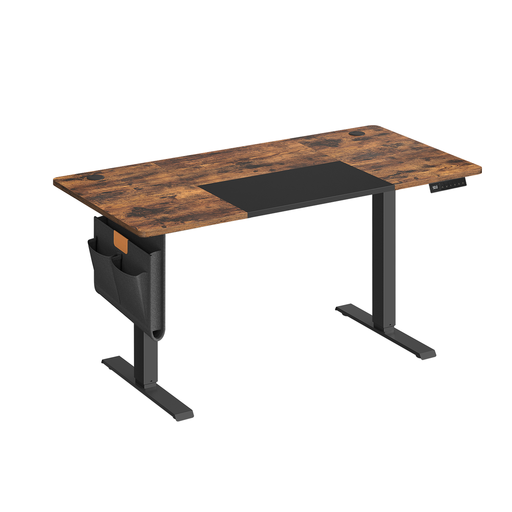
Why this choice suits this profile: Its intermediate size is ideal for those who want to set up a complete work or gaming setup without moving up to a 160 cm desktop.
The four presets reduce repeated adjustments. The listing also indicates overheating protection after two minutes of continuous movement.
Four storable heights, progressive adjustment from 72 to 120 cm, USB-C port, cable management and stated static load of 70 kg.
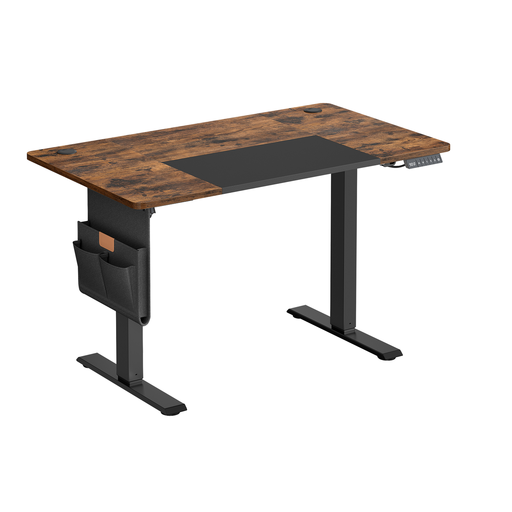
Why this choice suits this profile: This compact desk combines height memory, storage and connectivity in a format suited to a flat, bedroom or shared space.
The 120 x 60 cm desktop avoids choosing an unnecessarily bulky structure. The listing also reminds you not to exceed 70 kg and to keep electrical components away from liquids.
USB-C port, height memory, storage system, three hooks and stated adjustment from 72 to 120 cm.
After assembly, place the desk on as level a floor as possible and check every connection. Leave enough space between the desktop and the wall to avoid rubbing during raising or lowering. Cables must be able to follow the movement without getting pinched.
The manuals for several models indicate overheating protection if the desk is adjusted continuously for two minutes, with a waiting period before further use. This instruction must be followed. Also avoid placing liquids near the control box and mains adapter.
To keep the desk in good condition, use a slightly damp soft cloth and regularly check the tightness of the mechanical parts. A sit-stand desk does not replace good workstation organisation: screen positioned in front of you, keyboard within natural reach and regular alternation between positions remain essential for comfort.
When sitting, the keyboard should be at a height that allows your shoulders to stay relaxed. When standing, the desktop should come roughly to elbow level, without forcing you to hunch your shoulders. The right height depends on your own height, your chair and your peripherals. Use the presets as a starting point, then fine-tune the adjustment gradually.
Power consumption depends on the motor's wattage and how often you adjust it. The motor mainly runs during raising or lowering, not throughout your working time. To avoid unnecessary consumption, unplug the adapter during extended absences and activate energy-saving mode when available.
Assembly time depends on the model and how organised you are. The products shown are delivered in parts with a manual. Prepare a clear surface, identify the parts before you start and only plug the unit in once the frame is assembled. Then check the stability, the levelling of the desktop and the sensor function before installing your equipment.