
Livraison le jour même ou le lendemain

Qualité garantie

Débloquez vos offres de bienvenue: Livraison GRATUITE | Jusqu'à -80 % | 30 jours d'essai gratuits à JoyPlus
Téléchargez l'application
With the rise of remote work and the long hours spent in front of our screens, the importance of an ergonomic workstation has never been more apparent. Back pain, eye strain, dwindling concentration… do these warning signs sound familiar? To combat them, one solution is becoming increasingly popular: the electric standing desk.
The idea is simple: break up a sedentary lifestyle by alternating between sitting and standing throughout the day for better overall well-being. But with an overwhelming number of options on the market, how do you navigate them all? Our mission is to guide you with clear, concrete selection criteria to help you make the right choice, cutting through the marketing jargon.
Follow this guide to discover the key points to check before you buy, along with our selection of models that have caught our eye.
Before you take the plunge, let's review the technical specifications that will make all the difference in your daily routine. A good ergonomic desk should adapt to you, not the other way around.
The first step is to measure the space you have available. A desk that's too bulky can overwhelm a room, while a surface that's too small will prevent you from comfortably setting up your equipment (monitors, keyboard, etc.). Standard dimensions typically range from 120 cm to 160 cm in width.
Also, make sure the height adjustment range (usually between 70 cm and 120 cm) is suitable for your height, whether you are sitting or standing.
It's the technical details that distinguish a simple adjustable workstation from a truly high-performance tool.
The sturdiness of the frame is paramount. A steel frame ensures good stability, even in the highest position. Check the maximum static load supported by the desk. A capacity of 70 kg, for example, is more than enough for a standard office setup.
Some models also include an anti-collision system. This sensor detects obstacles as the desktop moves up or down and automatically stops the movement to prevent accidents and protect your equipment.
After analysing technical specifications and user feedback, here is a selection of desks that stand out for their features and value.
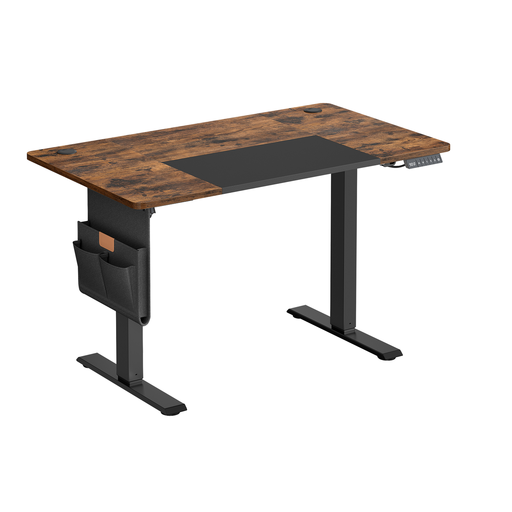
Why it stands out: This model is an excellent entry point into the world of ergonomic desks. Its compact dimensions make it ideal for apartments or multi-purpose rooms, without sacrificing essential features.
Key features:
Who is it for? Ideal for students, remote professionals in a small space, or anyone looking for a complete and affordable first ergonomic setup.
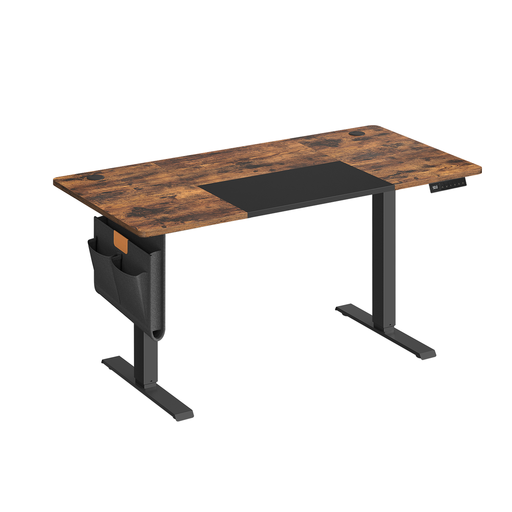
Why it stands out: With its wider desktop and two-tone design, this desk combines great working comfort with a stylish aesthetic. It provides the necessary space for more demanding setups.
Key features:
Who is it for? Perfect for professionals who juggle multiple monitors, creatives who need space to draw or consult documents, and anyone who wants a spacious and functional workstation.
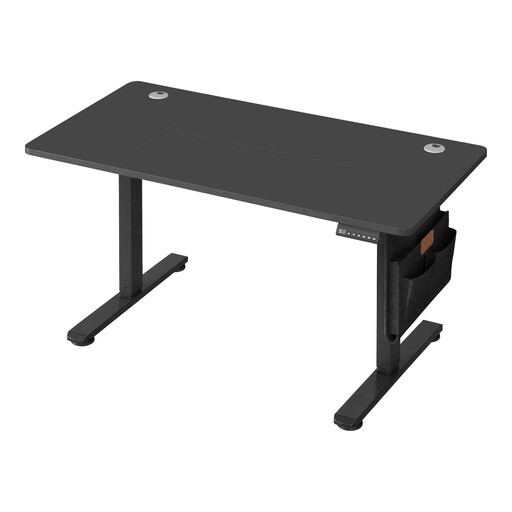
Why it stands out: This model offers the same excellent features as the 140 cm version but in a sleek, modern black finish that's versatile enough to fit into any decor.
Key features:
Who is it for? Aimed at users looking for a high-performance, large motorised desk with a minimalist and professional aesthetic. Its versatile style is equally suited for a home office or a corporate workspace.
The electric standing desk is focused on ergonomics and movement. If your priority is to maximise storage with integrated solutions, other options might be a better fit for you.
️ Discover our range of desks with cabinets and drawers for a perfectly organised workspace.
1. What is the ideal height for a standing desk? When sitting, the rule is simple: your elbows should form a right angle (about 90°) with your forearms resting flat on the desk. When standing, the principle is the same: adjust the height so your forearms rest flat without your shoulders being hunched. The memory function proves incredibly convenient for effortlessly switching between the two positions.
2. Is a motorised desk noisy? Modern models are designed to be discreet. The noise level of a quality motor is typically below 50 decibels, which is equivalent to a quiet conversation. This allows you to change height discreetly, without disturbing your concentration or those around you.
3. How often should I alternate between sitting and standing? There's no absolute rule; the key is regular movement. A common approach is to change positions every 30 to 60 minutes. Some height-adjustable desks even offer a reminder function to prompt you to stand up. The most important thing is to listen to your body and avoid prolonged static postures.