
Livraison le jour même ou le lendemain

Qualité garantie

Débloquez vos offres de bienvenue: Livraison GRATUITE | Jusqu'à -80 % | 30 jours d'essai gratuits à JoyPlus
Téléchargez l'application
Spending your days glued to a chair, whether at the office or working from home, has become a daily reality for millions. The result? Back, neck, and shoulder pain that insidiously creeps in. The electric standing desk is the ideal solution to break this sedentary cycle: it allows you to effortlessly alternate between sitting and standing, reintroducing movement into your routine.
This guide is designed to help you make an informed decision. We will review the essential criteria to check before you buy and present a selection of models suited to every need, from a small studio to the most demanding workspace.
Before you take the plunge, consider a few technical details that will make all the difference in your day-to-day use. Here are the three key points you shouldn't overlook to make the right choice.
First things first: take out your tape measure and measure your available space. A desk that's too large will overwhelm the room, while one that's too small will quickly become frustrating. Next, list all the equipment you plan to put on it: one or two monitors, a laptop, a keyboard, a mouse, etc. Standard desktops range from 120?cm wide for minimalist setups to 160?cm and more for those who need a larger surface.
A good ergonomic desk is, above all, one that works so seamlessly you forget it's there. The memory function is a must-have: it allows you to save your preferred sitting and standing heights and switch between them with a single press. For optimal comfort, ensure the motorised desk has a quiet motor (under 50?dB) so it won't disturb your concentration or your colleagues. Finally, the integrated USB-C port is a small but significant bonus, letting you charge your devices without cluttering your power strip.
Stability is non-negotiable. Your desk must remain rock-solid, even at its highest position, without wobbling as you type. Check the sturdiness of the steel frame and the maximum load capacity (often around 70?kg), a crucial point if you have heavy equipment. Simple assembly is also a real plus: look for models with clearly labelled parts and straightforward instructions to save yourself a major headache.
To give you a concrete idea of what's on the market, here are three models that caught our eye. Each one is designed for a specific need and home office space.
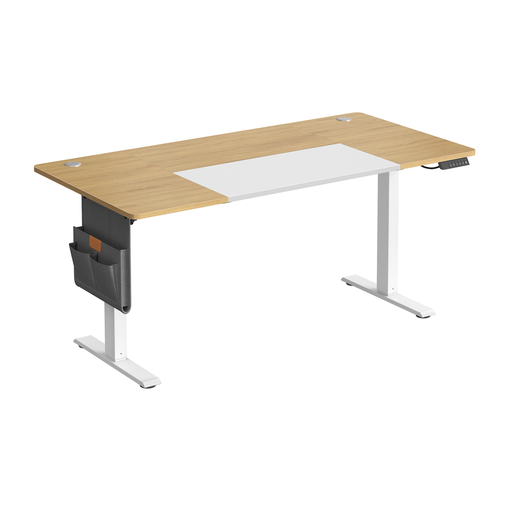
What sets it apart: Its XXL desktop. With generous dimensions of 160 x 70 cm, this desk is a true productivity powerhouse, perfect for multi-monitor setups or for those who like to have space for their documents.
Key features:
Who is it for? Professionals who need space: developers, graphic designers, architects, or simply multi-monitor users who feel cramped.
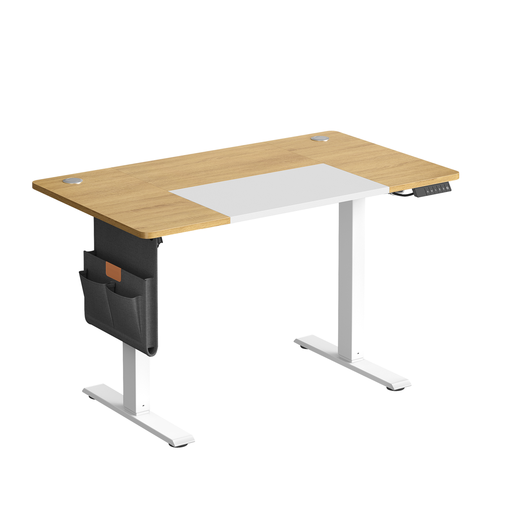
What sets it apart: Its smart footprint. With dimensions of 120 x 60 cm, it fits anywhere and is perfect for optimising a studio, apartment, or a dedicated office nook.
Key features:
Who is it for? Students, city dwellers in apartments, or anyone looking to set up a compact office nook without compromise. It's the perfect choice for a first home office setup.
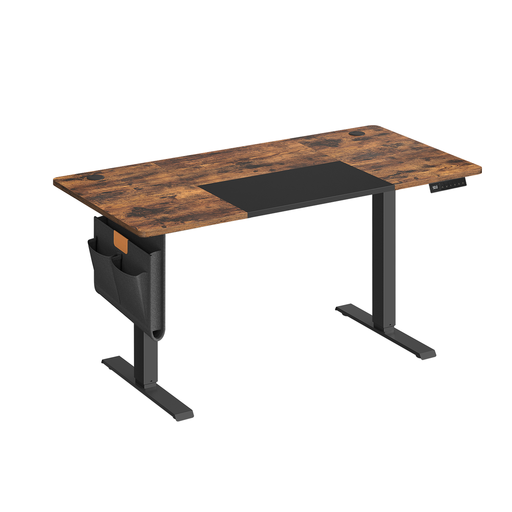
What sets it apart: Its distinctive look. The combination of the vintage brown desktop and black frame gives it a chic industrial style that stands out from traditional finishes.
Key features:
Who is it for? For those who want to combine function with style. It will naturally find its place in a well-designed interior where office furniture should also be a statement piece.
Our selection is just a starting point for improving your daily comfort. If these models don't check all your boxes or if you want to fine-tune your setup, many other solutions are available.
To explore a wider range of accessories and optimise your workspace, take a look at our smart study desk gadgets category.
The perfect height depends on your body. The golden rule, for both sitting and standing, is that your elbows should form a right angle (90°) when your forearms are resting on the desktop. When sitting, your feet should rest flat on the floor (or on a footrest). Most desks, with an adjustment range of 72 to 120?cm, meet the needs of the vast majority of users.
Recent models are designed to be as discreet as possible. The motor noise rarely exceeds 50 decibels, which is equivalent to a quiet conversation or a modern refrigerator. This means the height can be adjusted smoothly, without disturbing your concentration or the open-plan office.
While the idea of assembling motorised furniture might seem intimidating, manufacturers have made huge strides in simplifying the process. The models we recommend come with clear instructions and numbered parts to prevent errors. By following the step-by-step guide, assembly is manageable for anyone, even if you're not a DIY expert.