
Livraison le jour même ou le lendemain

Qualité garantie

Débloquez vos offres de bienvenue: Livraison GRATUITE | Jusqu'à -80 % | 30 jours d'essai gratuits à JoyPlus
Téléchargez l'application
Whether you're working from home, in the office, or studying, the long hours spent sitting eventually take their toll. Discomfort, fatigue, lack of energy?: the symptoms are all too familiar. To combat this, one solution is becoming increasingly popular?: the electric standing desk. With a single click, it allows you to alternate postures throughout the day, transforming a static workstation into a healthier, more pleasant space.
But with an ever-expanding selection on the market, how do you find your way?? This guide gives you everything you need to choose the model that's perfectly suited to your needs, breaking down the technical criteria that truly matter. To illustrate our advice, we will also present a selection of products that have caught our eye.
Before you commit to a model, a few technical points deserve your attention. These are the details that will make all the difference in your daily routine and guarantee a successful purchase.
This is the starting point. How much space do you really need?? A single screen and a laptop, or a full setup with two monitors and stacks of files?? Standard sizes range from compact 120?x?60?cm desktops, perfect for setting up a home office nook, to generous 180?x?80?cm surfaces for the most demanding configurations.
Also, consider the weight of your equipment. The maximum supported load capacity must be sufficient to hold all your gear in complete safety. Most quality models offer a capacity of around 70?kg, which easily covers the needs of typical office use.
It's often the details that make a motorised desk stand out. The memory function is arguably the most valuable?: it allows you to save your ideal heights (one for sitting, one for standing, for example). A single press is all it takes to switch between them, without fumbling to find the perfect setting every time.
Integrated connectivity is another great convenience feature. A USB-C port directly accessible on the control panel is a real bonus for charging your smartphone or tablet. No more hunting for outlets on a power strip; your workspace stays clean and well-organised.
A good ergonomic desk must be perfectly stable, especially in its highest position. Nothing is more annoying than a desktop that wobbles with every keystroke. A sturdy steel frame is a guarantee of durability and peace of mind. Also, check the adjustment range?: a span from 72?cm (standard sitting position) to 120?cm (comfortable for most adults when standing) will ensure a perfect fit for your body type.
To move from theory to practice, here are a few models that illustrate these different points and meet a variety of needs.
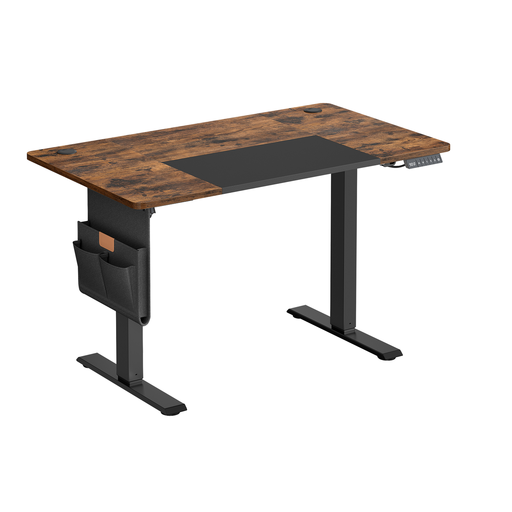
Why it stands out?? It's the ideal solution for small spaces without sacrificing essential features. With its compact dimensions, it fits easily into a student's room or a home office nook set up for remote work.
Highlights?:
Who it's for?? Students, remote workers in apartments, or anyone looking for an effective and compact first adjustable desk.
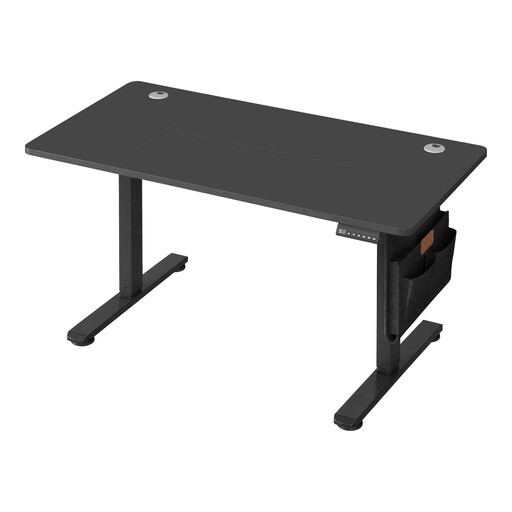
Why it stands out?? With an extra 20 cm of width, it's a game-changer. You can comfortably set up two monitors or simply enjoy a more spacious work area. Its clean, modern design blends seamlessly into most interiors.
Highlights?:
Who it's for?? Multi-monitor pros, creatives, and gamers looking for the best compromise between work surface and footprint.
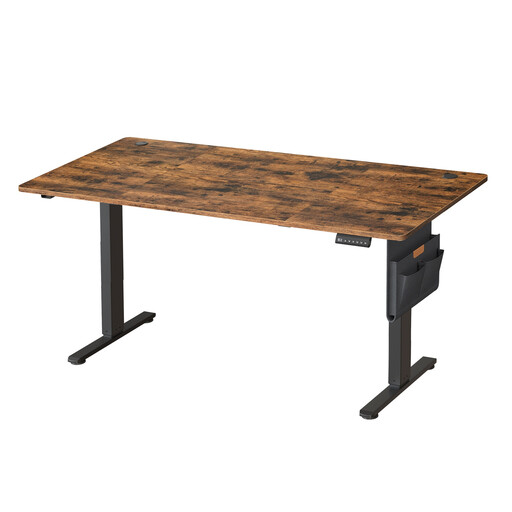
Why it stands out?? This is the heavyweight of our selection, with an ultra-generous work surface. It's perfect for demanding users who juggle large blueprints, multiple pieces of equipment, or simply want maximum room to move. Its 80 cm depth is a real plus for comfortable viewing distance from a large monitor.
Highlights?:
Who it's for?? Architects, developers, video editors, and all professionals who need to spread out their projects without feeling cramped.
The motorised desk is a champion of ergonomics, but perhaps your priorities lie elsewhere?: a more distinct aesthetic, integrated storage, a more executive style... In that case, a classic executive desk might better suit your needs.
? Discover our selection of executive wooden desks with drawers to explore other options.
It all depends on your height. The golden rule, for both sitting and standing, is simple?: your forearms should rest flat on the desk, with your elbows forming a 90-degree angle and your shoulders relaxed. This is precisely where the memory function becomes your best ally, allowing you to save these two positions and return to them effortlessly.
Modern models are designed to be as discreet as possible. The motor noise rarely exceeds 50 decibels (the equivalent of a quiet conversation), which is perfectly acceptable. You can change height without disturbing your colleagues in an open-plan office or your family when working from home.
There's no hard and fast rule?: the most important thing is to listen to your body. A good starting point is to alternate 30 minutes of standing for every hour of sitting. Feel free to adjust this frequency based on how you feel. Some models even include a programmable alert to remind you when it's time to move