
Livraison le jour même ou le lendemain

Qualité garantie

Débloquez vos offres de bienvenue: Livraison GRATUITE | Jusqu'à -80 % | 30 jours d'essai gratuits à JoyPlus
Téléchargez l'application
An electric space heater can quickly warm up a bedroom, living room, home office or studio. But with promises of instant heat, controlled energy consumption and quiet operation, it's easy to end up with a unit that doesn't quite suit your everyday needs.
Before you decide, take a moment to consider three common pitfalls:
Models rated between 1500 and 2000 W are generally suitable for occasional heating, provided you consider the room size, its insulation and the temperature you're aiming for. A heater with multiple power settings helps you avoid running it at maximum all the time.
A ceramic fan heater with a PTC element delivers hot air quickly. It's a great fit for a home office, bedroom or area you only use for a few hours at a time. For longer use, check that it offers a low-power mode or automatic temperature regulation.
Working out the running cost is straightforward: 2000 W equals 2 kW. If it runs for two hours, the heater will theoretically use 4 kWh. The actual cost then depends on your electricity tariff. A heater marketed as low energy consumption doesn't change this relationship between power, time and energy used – its real benefit lies in better temperature control and sensible usage.
A heater with an adjustable thermostat lets you set a target temperature, rather than letting the appliance run non-stop. Some models offer precise digital control, while others use a simple mechanical dial.
A timer is especially useful for programming an automatic shut-off. The models featured here offer programmable timers from 12 to 24 hours, depending on the model. A heater with a remote control or touch panel can also be handy when the unit is placed near a bed, sofa or desk.
In a shared room, an oscillating heater distributes the airflow more effectively across a wider area. However, this feature doesn't replace the need for adequate clearance around the unit – its air intakes and outlets must remain completely unobstructed.
At a minimum, make sure the heater has overheat protection and an automatic shut-off if it tips over – often called a tip-over switch. These features add welcome safety, but they don't replace careful use.
In the UK, check the information regarding voltage, frequency, the manufacturer and, where applicable, the responsible party established in the European Union. Also check the markings and documentation supplied. A powerful heater should be plugged directly into a suitable wall socket. Avoid extension leads and multi-way adaptors if the manual advises against them.
A portable electric heater with a handle or castors can be moved easily from room to room. An oil-filled radiator or oil-filled heater warms up more gradually and retains heat for a while after switching off. On the downside, it's bulkier and its surface can become very hot.
During use:
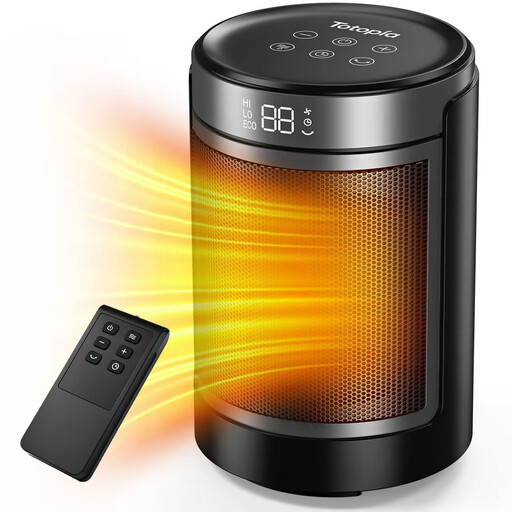
Why this suits this profile: This model offers four modes: fan only, 750 W, 1500 W and ECO. It also includes an LED display and a remote control. A well-rounded choice for a bedroom, home office or personal space used occasionally.
The different power levels mean you don't have to run it at 1500 W all the time. The timer, adjustable from 1 to 12 hours, also helps prevent the heater being left on by mistake.
PTC heating element, wide-angle oscillation, overheat protection and automatic tip-over shut-off.
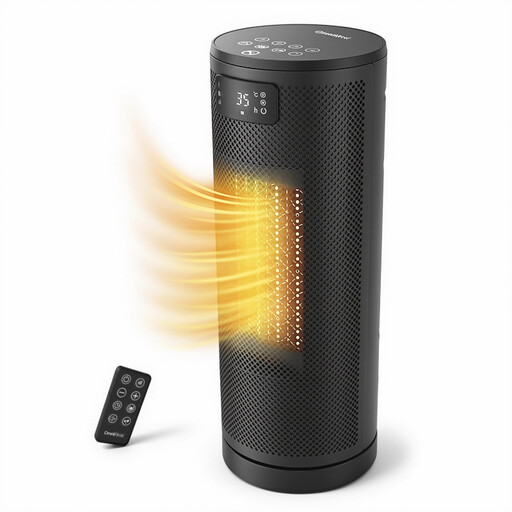
Why this suits this profile: Its adjustable temperature range from 5 to 35 °C, remote control, ECO mode and 24-hour timer meet the expectations of comfortable, easily customisable home use.
The adjustable thermostat and ECO mode provide much finer temperature control than a simple on/off switch.
Four modes, oscillation, noise level rated between 38 and 50 dB depending on the setting, overheat and tip-over protection.
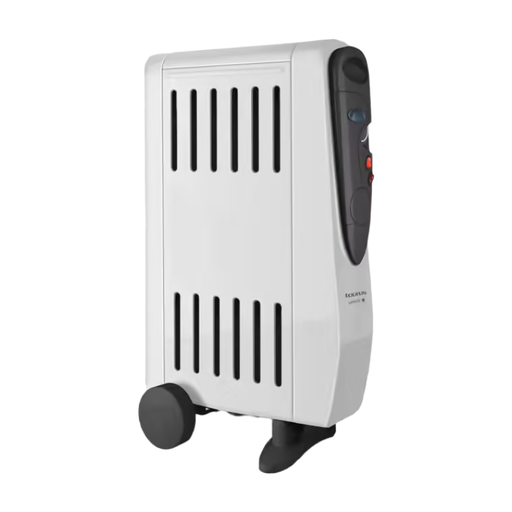
Why this suits this profile: With seven fins, this radiator combines radiant and convection heat. It's designed for those who prefer gradual warmth and want a portable unit with wheels and a handle.
It avoids choosing a fan heater when the goal is to deliver more gradual heat. The mechanical thermostat makes it simple to adjust the operation.
Two heat settings, built-in humidifier, cord storage and overheat protection.
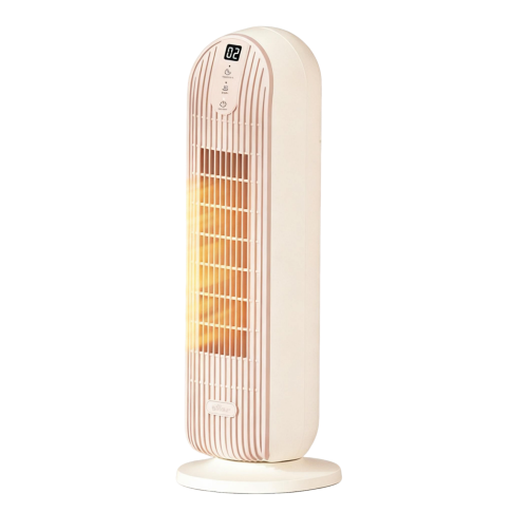
Why this suits this profile: With two power levels of 1200 W and 2000 W, 90° oscillation and a concealed handle, it's easy to move from the living room to the home office or bedroom.
Choosing between two power levels means you don't have to run it at 2000 W all the time. The timer, programmable up to 12 hours, helps you better manage heating periods.
Upward-adjustable airflow, 90° oscillation, digital display, reportedly quiet operation and multiple safety protections.
We've put together a comprehensive, real-time updated selection of products that meet these demanding criteria and European safety requirements.
It all depends on its power rating and how long you use it. A 1500 W heater running for one hour theoretically uses 1.5 kWh, compared to 2 kWh for a 2000 W model under the same conditions. The thermostat, lower power settings and timer all help you avoid unnecessary continuous heating.
Always follow the manufacturer's instructions carefully. A timer can schedule a shut-off or limit the running time, but the heater must always remain unobstructed, placed on a stable surface and kept away from fabrics. Never cover a heater and unplug it when not in use.
A ceramic fan heater heats up quickly and is easy to move around – it's ideal for occasional use. An oil-filled radiator takes longer to warm up, is heavier, but generally runs silently and continues to radiate heat after switching off. The best choice really depends on your usage pattern, how portable you need it to be and the space available, rather than any general promise of savings.