
Livraison le jour même ou le lendemain

Qualité garantie

Débloquez vos offres de bienvenue: Livraison GRATUITE | Jusqu'à -80 % | 30 jours d'essai gratuits à JoyPlus
Téléchargez l'application
An electric space heater can quickly warm up a bedroom, home office or part of the living room without touching your main heating system. Electric radiators, fan heaters and radiant panels all serve different purposes. A high wattage doesn't guarantee better comfort, controlled energy use or impeccable safety.
Before you buy, three common pitfalls to watch out for:
1500 W models are generally suitable for occasional use in a bedroom, home office or well-insulated studio flat. A 2000 W appliance will be more at home in a living room or larger space, but the area quoted by the manufacturer should be treated as a rough guide only.
Several factors come into play:
A portable heater of 1500 W is handy for quickly warming a personal space. If you prefer a more gradual, silent heat, an oil-filled radiator or an electric radiant panel will often be more comfortable.
A fan heater combines a heating element and a fan to deliver hot air immediately. Fitted with a PTC element, the ceramic fan heater appeals thanks to its rapid heat-up and compact size. On the downside, the fan can produce noticeable noise and stir up dust.
An electric radiant panel distributes heat through radiation and convection. It can be suitable for prolonged use in a bedroom or living room. Oil-filled radiators take longer to heat up, but continue to give off warmth for a while after being switched off.
A heater with a thermostat lets you set your desired temperature rather than leaving the appliance running continuously. A timer of one to twelve hours, or even 24 hours on some models, helps prevent you forgetting to switch it off. A remote control also adds welcome convenience when the heater is placed near a sofa or bed.
Check for the following features:
The CE marking indicates that the manufacturer declares the product meets applicable European requirements. However, it does not replace safe usage practices: always follow the instructions in the manual.
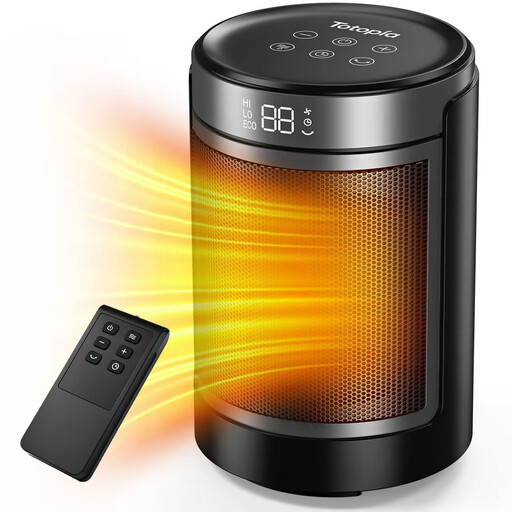
Why this suits this profile: Its compact size fits easily into a bedroom, home office or personal space. The fan-only, 750 W, 1500 W and ECO modes let you adjust the power to suit each situation.
The four modes prevent it from always running at 1500 W. The adjustable timer up to 12 hours also helps prevent you leaving it on by mistake.
PTC heating element, LED display, remote control, oscillation and overheat and tip-over protection.
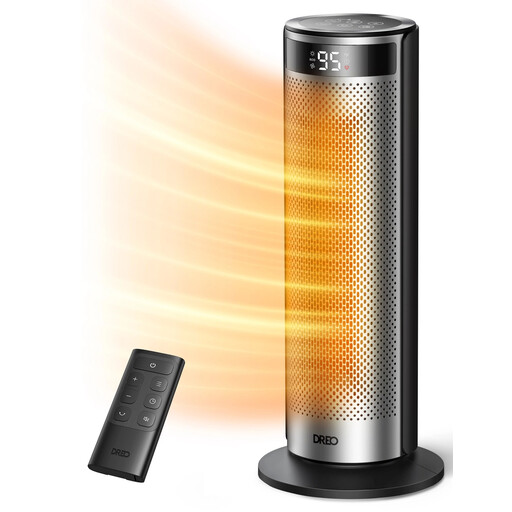
Why this suits this profile: This model combines 2000 W power, an adjustable thermostat from 5 to 35 °C, 70° oscillation and remote control for precise adjustment.
The temperature range and adaptive control offer far more options than a simple power selector. The eight claimed safety features are detailed on the product page.
2000 W power, stated noise level of 25 to 42 dB, 12-hour timer and tip-over protection.
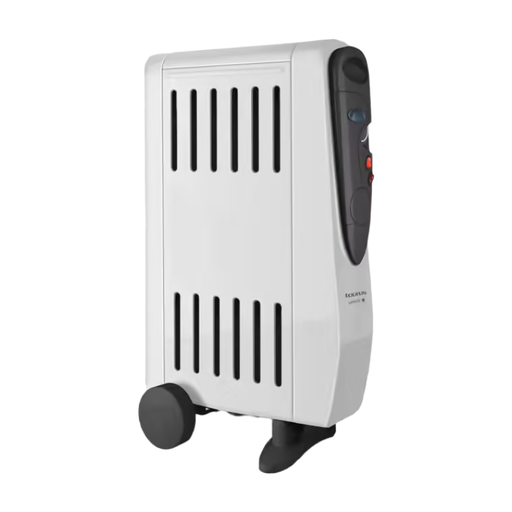
Why this suits this profile: Its radiation and convection operation suits those looking for more stable warmth in a bedroom, living room or home office.
It doesn't rely on a fan to distribute heat. Its mechanical thermostat and two power levels still allow you to adjust its operation.
1500 W power, seven heating elements, wheels and handle, overheat protection and built-in humidifier reservoir.
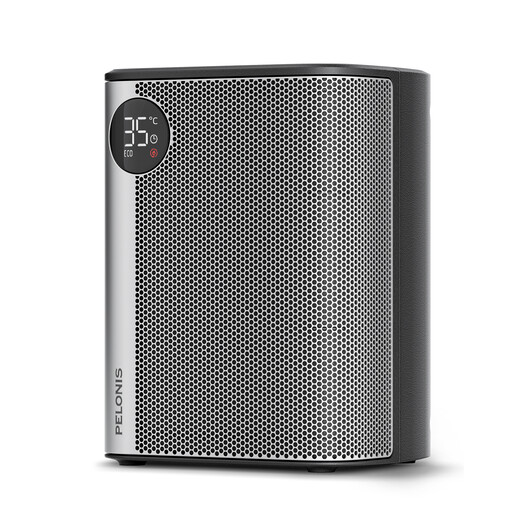
Why this suits this profile: Its five modes, adjustable thermostat and built-in handle make it easy to move between the living room, home office and bedroom.
The ECO mode and 24-hour timer can reduce unnecessary running periods, without pretending to offer zero consumption.
Five modes, thermostat, temperature display, overheat protection and tip-over protection.
We've put together a comprehensive, real-time updated selection of products that meet these demanding criteria, as well as European safety standards.
Always place the appliance on a flat, stable, dry surface, leaving at least one metre of clearance around air outlets and flammable materials. Never cover it, do not use it in a bathroom and avoid extension leads with 2000 W models.
Before moving it, switch it off, unplug it and wait for it to cool down completely. Regularly check the condition of the cord, plug and ventilation grilles. If you notice an unusual smell, abnormal noise or overheating, stop using it immediately.
For the same usage time and at full power, yes: a 1500 W appliance uses less electricity than a 2000 W model. However, actual consumption depends on the thermostat, ECO mode and running time. To estimate it, multiply the power in kilowatts by the usage time, then by the price per kilowatt-hour on your contract.
It's best to follow the instruction manual carefully and choose an appliance with a timer and automatic shut-off. The heater must remain unobstructed, placed on a hard surface and kept away from the bed, curtains and clothing. Tip-over protection does not replace careful installation.
A fan heater delivers hot air quickly and suits occasional needs. An oil-filled radiator heats up more gradually, without a fan, and can stay warm for a while after being switched off. The choice therefore depends mainly on how quickly you need heat, the acceptable noise level and how long you'll be using it.