
Livraison le jour même ou le lendemain

Qualité garantie

Débloquez vos offres de bienvenue: Livraison GRATUITE | Jusqu'à -80 % | 30 jours d'essai gratuits à JoyPlus
Téléchargez l'application
Winter is approaching, and you're looking for a way to heat a specific room without sending your electricity bill skyrocketing? The electric space heater is often the go-to solution. But faced with a jungle of models and marketing claims, it's easy to get lost and make the wrong choice.
As a product expert at Joybuy, my mission is to guide you. Let's forget the technical jargon and marketing promises. We'll focus on what really matters to help you choose a device that truly meets your needs, while avoiding the most common pitfalls.
The market is flooded with products making tempting promises, but be warned: some can be misleading. Here are two essential points to watch out for before you check out.
Many manufacturers tout the "low energy consumption" label. Let's be clear: a 2000W electric radiator will always consume 2 kWh if it runs at full power for one hour, regardless of its technology. Real energy savings don't come from the device itself, but from its ability to heat intelligently. A good electric space heater is one that quickly reaches the desired temperature and maintains it without running constantly. That's why features like a precise thermostat and an "ECO" mode are far more crucial than a marketing label.
A device labelled as "silent" can be a disappointment, especially if it's a fan heater. By definition, any device that uses a fan to circulate heat will generate background noise. If silence is your absolute priority, particularly for a bedroom, it's better to opt for technologies like the oil-filled radiator. It heats through thermal inertia and its operation is virtually inaudible.
To make the right choice, three criteria must be scrutinised: technology, power, and safety.
There are three main types of electric space heaters, each with its own strengths and weaknesses:
Power, measured in watts (W), should be appropriate for the room's size. As a general rule, you should count on 100W per m? for a well-insulated room. A 2000W device is therefore suitable for a room of about 20 m?.
But raw power isn't everything. An adjustable thermostat is essential to maintain a stable temperature and prevent the device from running needlessly. An ECO mode, which adjusts the power based on the ambient temperature, is a real plus for keeping your consumption in check.
A space heater must incorporate reliable safety features. Check for the presence of these two key systems:
To put theory into practice, here are a few models that stand out from the crowd, each suited for a specific use case.
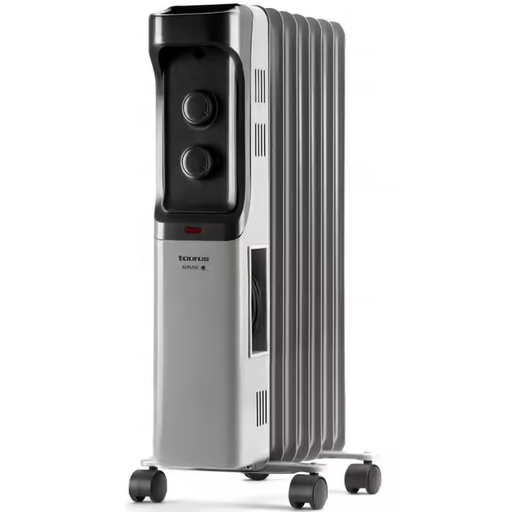
Why we recommend it: Perfect for those who want gentle, consistent heat without any noise. Ideal for a bedroom or office where quiet is key. Its oil-filled technology ensures excellent thermal inertia.
It avoids the "silent" pitfall thanks to its oil-filled technology, which operates without a fan and is therefore completely inaudible.
Lasting heat thanks to its thermal inertia. Mechanical thermostat for simple and reliable temperature control.
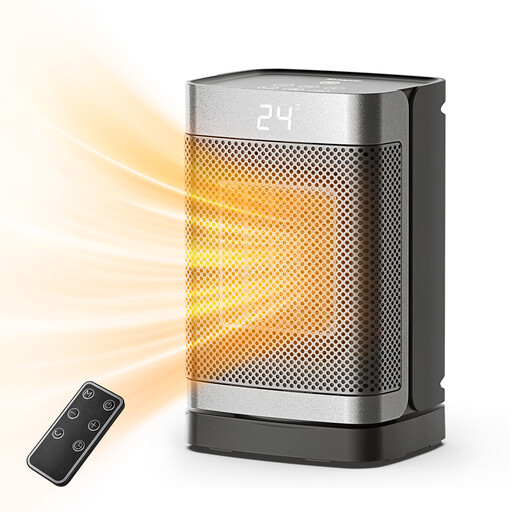
Why we recommend it: The ideal companion for students or remote workers. Its compact size and ceramic (PTC) technology heat up a personal space (desk area, corner of a living room) in a flash, with no waiting.
It doesn't promise miraculous energy savings, but it gives you the tools to manage it: 2 heat settings and a 12-hour timer to schedule shut-off and prevent waste.
Heats up in seconds. Tip-over and overheat protection for peace of mind.
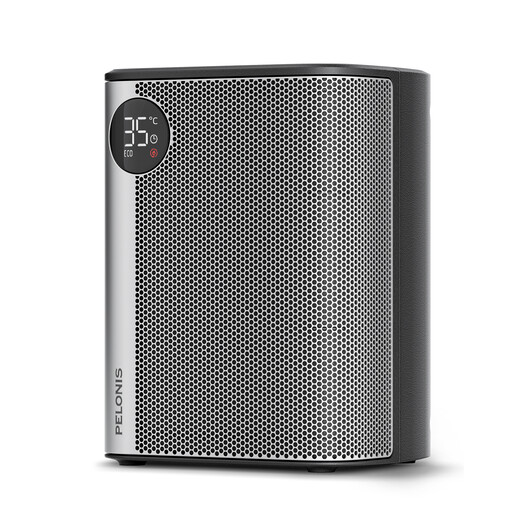
Why we recommend it: The ultimate family-friendly solution. Powerful enough for a living room, it includes smart features to optimise consumption and a full suite of safety features for complete peace of mind.
It tackles the consumption pitfall head-on with a smart ECO mode that adjusts power based on the temperature, offering genuine energy optimisation.
ECO mode for controlled consumption. Comprehensive safety features (overheat, tip-over) and a 24-hour timer.
Explore our full selection of space heaters, all tested and approved based on our performance and safety criteria.
A 2000W (or 2 kW) device consumes 2 kilowatt-hours (kWh) for every hour it runs at full power. The cost will depend on the price per kWh set by your electricity contract. To lower the bill, the trick is simple: don't let it run continuously. Use the thermostat so it shuts off once the target temperature is reached, and favour models with an ECO mode.
For a bedroom, silence is the number one criterion. An oil-filled radiator is the top choice, as it has no fan and distributes a gentle, consistent heat. If you prefer a faster heat-up time, a modern ceramic heater with a quiet mode or a low-speed fan setting can be an excellent compromise.
Modern devices must meet very strict safety standards. For risk-free use, check that your model has, at a minimum, tip-over protection and overheat protection. Always follow the manufacturer's instructions: never cover the device, do not use it in a bathroom (unless it is certified IP21 or higher for protection against water drips), and place it on a flat, stable surface, away from curtains and other flammable materials.