
Livraison le jour même ou le lendemain

Qualité garantie

Débloquez vos offres de bienvenue: Livraison GRATUITE | Jusqu'à -80 % | 30 jours d'essai gratuits à JoyPlus
Téléchargez l'application
When the temperature drops, an electric space heater is the go-to solution for adding a few degrees of warmth to a room without turning on the central heating. But be warned: the market is flooded with models making tempting promises, and it's easy to fall for a device that will skyrocket your electricity bill or, worse, put your safety at risk. Follow our guide to cut through the noise and make the right choice.
Before you pull out your credit card, beware of these common mistakes that can turn a good idea into a real headache.
To avoid making a mistake, focus on the technical specifications that make all the difference in performance, safety, and comfort.
Most high-performance models use PTC (Positive Temperature Coefficient) technology. A ceramic fan heater ticks all the right boxes:
Power, measured in watts (W), should match the room's size. The rule of thumb? Plan for about 100W per square metre for a room with standard insulation. But raw power is useless without a good thermostat. An electronic model, accurate to the degree, is essential. It shuts the device off when the target temperature is reached and turns it back on only as needed, preventing waste. "ECO" modes are a bonus for automating this management and lowering your bill.
For optimal daily comfort, keep an eye out for these features:
To put theory into practice, here are some models that meet our criteria, categorised by use case.
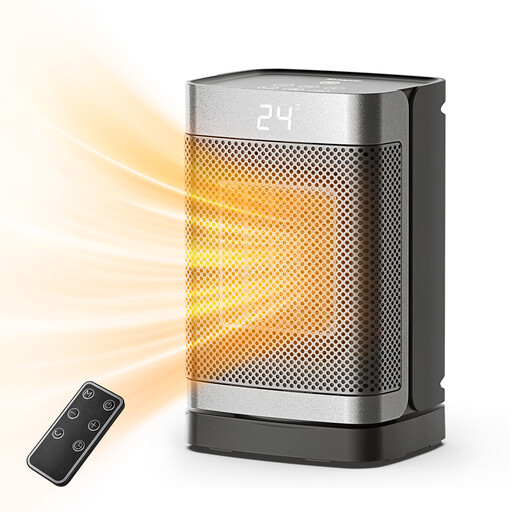
The verdict: Perfect for those who want a simple, effective solution for an office or a small bedroom. It gets straight to the point: heating quickly and efficiently, in complete safety, without unnecessary gadgets.
It includes tip-over and overheat protection, which sets it apart from entry-level models that skimp on safety.
Rapid heat-up (thanks to PTC ceramic), a 12-hour timer, and a remote control so you don't have to leave your chair.
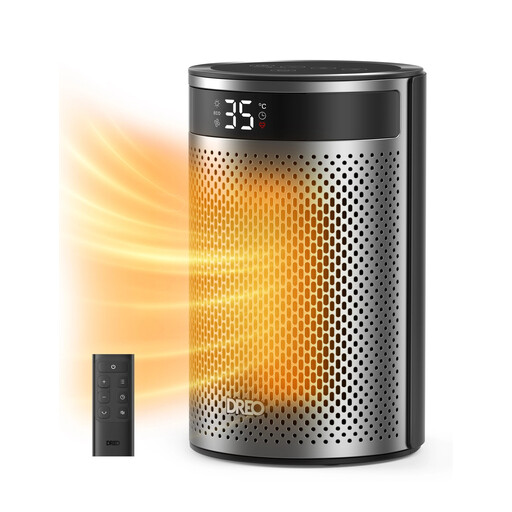
The verdict: The perfect ally for bedrooms and offices where the slightest noise is a distraction. It knows how to heat effectively while going unnoticed.
It tackles the noise problem head-on. Advertised at 34 dB in quiet mode, it's designed to disturb neither sleep nor concentration.
A precise thermostat (adjustable from 5 to 35°C), a full suite of safety features, and an Eco mode that promises significant energy savings.
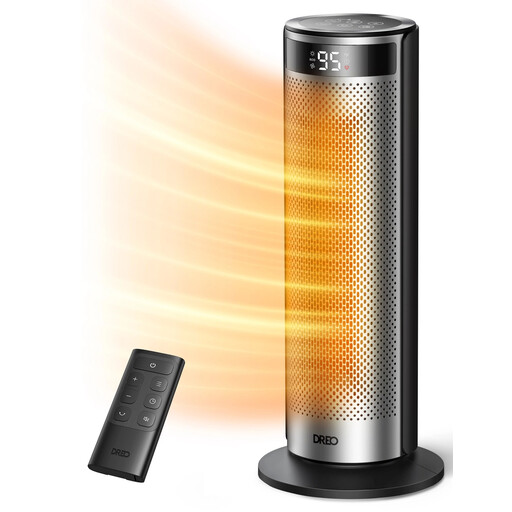
The verdict: Built for larger living spaces (up to 25 m? according to the brand), like a living room, where you need to combine power with good heat distribution.
It avoids the raw power pitfall by pairing its 2000W with a smart thermostat, wide 70° oscillation, and an Eco mode. The power is there, but it's controlled.
Its tower design distributes heat more broadly, it heats up almost instantly (2 seconds, according to Dreo), and it makes no compromises on safety.
Discover our full selection of space heaters that meet our performance criteria and European safety standards.
It's simple: a 1500W (or 1.5 kW) device running for one hour consumes 1.5 kWh. To avoid nasty surprises on your bill, the secret is to choose a model with a precise thermostat and an Eco mode. It will only heat when necessary, which makes all the difference.
Yes, and for a good reason. It heats the room much faster, so you use it for less time to achieve the same feeling of warmth. Its ceramic technology also retains some heat (a property known as thermal inertia), unlike a basic convector that goes cold the moment you turn it off. Ultimately, this efficiency is reflected in your bill.
Only if the device is designed for it! Look for a quiet heater for bedrooms that ticks all the safety boxes: a timer to schedule its shutdown, a reliable thermostat, and above all, overheat and tip-over protection. The golden rule: NEVER cover it and always place it on a stable surface, far from any flammable objects.