
Livraison le jour même ou le lendemain

Qualité garantie

Débloquez vos offres de bienvenue: Livraison GRATUITE | Jusqu'à -80 % | 30 jours d'essai gratuits à JoyPlus
Téléchargez l'application
Cleaning grout lines, shower stalls, or kitchen floors is a real chore. For anyone who suffers from back pain, knee pain, or is simply short on time, scrubbing by hand quickly becomes an impossible task. The electric cleaning brush promises effortless cleaning, but the market is flooded with models offering wildly inconsistent performance.
As a product expert at Joybuy, my mission is to help you navigate the options. Together, we'll break down the essential features and avoid the most common pitfalls, enabling you to make an informed choice that meets your real needs—not just the siren song of marketing.
Many devices look promising on paper but disappoint in practice. Here are the most common design flaws that can render an electric brush nearly unusable after just a few months.
To avoid these traps, focus on a few objective technical specifications. They are the only true indicator of the quality and durability of a cordless electric spin scrubber.
The IP rating is an international standard that classifies a device's level of waterproofing. For use in a shower or bathtub, an IPX7 or IPX8 rating is highly recommended.
This is not only a guarantee of longevity for your brush but, more importantly, a guarantee for your safety, eliminating any electrical risk in a wet environment.
These two elements are inseparable. Effective power is measured by the motor's ability to maintain its rotation speed (expressed in revolutions per minute or RPM) even when pressure is applied to the brush. Opt for models that offer at least two speeds to adapt the power to the type of dirt.
As for the battery, its capacity is expressed in milliampere-hours (mAh). A value above 2000 mAh is a good starting point for at least 60 to 90 minutes of continuous use. Also, check for a modern charging port like USB-C, which ensures faster, universal charging.
For cleaning without bending over, a motorised telescopic brush is essential. Make sure the handle length is adjustable to fit your height and the areas you need to reach (shower walls, baseboards, floors).
The device's versatility also depends on the number and quality of the included brush heads. A good kit should include at a minimum:
Rather than a generic product list, we've matched specific solutions to distinct user profiles, based on the performance and durability criteria we've just covered.

Why it's a match: Ideal for deep cleaning bathrooms, kitchens, and tiled floors without having to bend over. Its long telescopic handle (up to 120 cm) and 9 brush heads make it an ultra-versatile tool for all surfaces.
This model addresses common problems point by point: it's IPX8 certified for risk-free use, its powerful motor (up to 400 RPM) doesn't stall, and its 2600 mAh battery recharges via a USB-C port.
4-section telescopic handle for maximum comfort. Two rotation speeds to adapt to stubborn dirt or routine maintenance. LED display shows speed and battery level.
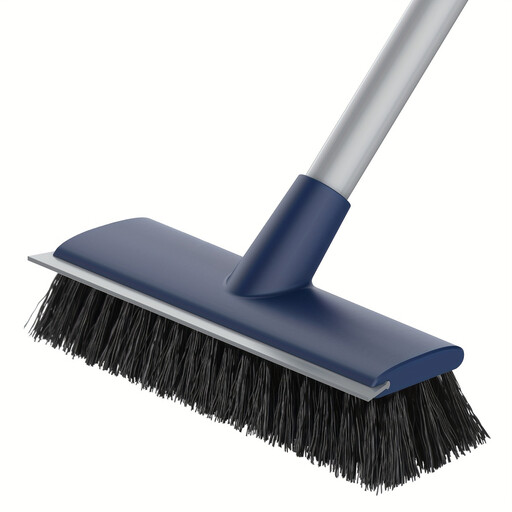
Why it's a match: For those who prefer a non-electric solution but still want to save their backs. Perfect for heavy-duty cleaning of patios, garages, or very dirty floors, where durability takes precedence over automation.
As a manual tool, it completely bypasses the risks associated with batteries, motors, or waterproofing. Its metal frame and stiff bristles are built to last, with no electronic parts that could fail.
2-in-1 function with an integrated brush and squeegee. Adjustable handle up to 124 cm and a 45° angled head for a comfortable working posture. A simple, budget-friendly, and indestructible solution.
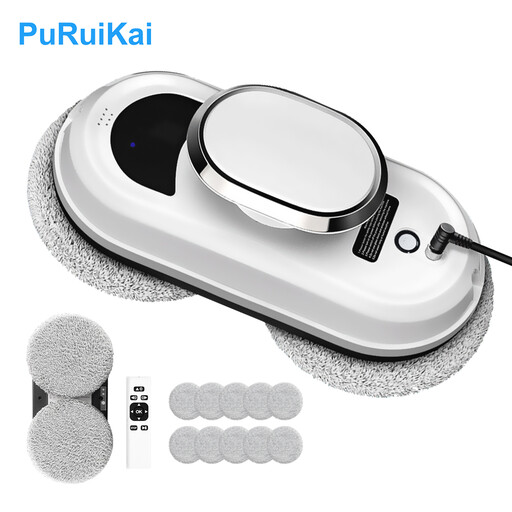
Why it's a match: For those whose main challenge is cleaning large glass surfaces, especially outdoors. This robot automates a tedious and potentially dangerous task, offering another form of "effortless cleaning."
It solves the fundamental problem of safety and physical effort involved in cleaning at heights. Equipped with a safety rope and an anti-fall backup battery, it's designed to work autonomously on smooth vertical surfaces.
Intelligent cleaning path planning and edge detection. Strong suction power (2800Pa) for reliable adhesion. Remote control for easy management.
We have compiled a comprehensive and up-to-date selection of products that meet our quality and safety criteria.
The longevity of an electric brush mainly depends on three factors: the battery, the motor, and its maintenance. A good quality lithium-ion battery will withstand several hundred charge cycles. The motor, if well-protected from moisture, can last for years. To maximise its lifespan, follow a few simple habits: clean the brush heads after each use, don't leave the device discharged for long periods, and store it in a dry place.
Generally, yes. You can use standard bathroom or kitchen detergents. However, it's best to avoid extremely harsh chemicals or highly abrasive scouring powders that could damage the brush's plastic bristles or the device's body. For most uses, a solution based on white vinegar or black soap is both effective and safe for the equipment.
Effectiveness isn't just measured by the final result, but also by the effort required. An electric brush provides a constant, rapid rotation speed (up to 400 RPM) that is impossible to maintain manually. This continuous mechanical action dislodges embedded dirt, limescale, and soap scum more easily and evenly, especially on large surfaces or in hard-to-reach grout lines. It transforms a painful chore into easy, effortless cleaning.