
Livraison le jour même ou le lendemain

Qualité garantie

Débloquez vos offres de bienvenue: Livraison GRATUITE | Jusqu'à -80 % | 30 jours d'essai gratuits à JoyPlus
Téléchargez l'application
An electric ride-on for kids is instantly appealing with its realistic looks, lights and sounds. Yet many purchases disappoint when you rely solely on design or stated power. For a birthday, Christmas or regular outdoor play, a few simple checks can help you avoid a toy that’s too fast, hard to control or poorly suited to your child’s size.
A 24 V battery or two powerful motors doesn’t guarantee the vehicle will suit every child. For a young driver, speed, acceleration and braking matter far more. A model without gradual acceleration can cause jerky movements, especially during the first few rides.
A kids’ ride-on with remote control lets an adult take over steering or reduce speed from a distance. This feature is especially useful in the garden, on a driveway or near other children. However, it’s not always available on an electric motorbike for kids or an electric scooter for kids.
Music, a horn, stories and LEDs make a battery-powered ride-on toy more fun, but they don’t replace a stable frame, grippy wheels or a well-fitted seat. Also check that the volume is adjustable and that some sound effects can be turned off, particularly for indoor use.
The manufacturer’s recommended age is a good starting point, but you should also compare the maximum weight capacity, seat height and legroom. For a car for a 3-year-old, an easily accessible seat and simple controls are generally easier to manage. Also measure narrow doorways, the boot and storage space.
Battery voltage gives an indication of the electrical system, not the actual run time. This varies depending on your child’s weight, the terrain, temperature and how often they stop. Before buying, check:
A vehicle travelling between 3 and 7 km/h can feel very different depending on your child’s weight, the tyres and the surface. Asphalt, concrete, wood or grass all affect the wheels differently.
Choose a model with a wide enough base and non-slip tyres. For a kids’ motorbike, stabiliser wheels may be essential depending on age. For an electric car for kids, a seatbelt, lockable doors and a remote control with brake or emergency stop give you extra control.
In the UK, look for the UKCA mark or CE marking, the instructions in English and the contact details of the manufacturer or responsible importer within the European Union. The CE mark shows the product has a declaration of conformity with the relevant requirements; it is not, on its own, a guarantee of quality. Always supervise the vehicle when in use, in a clear area away from traffic.
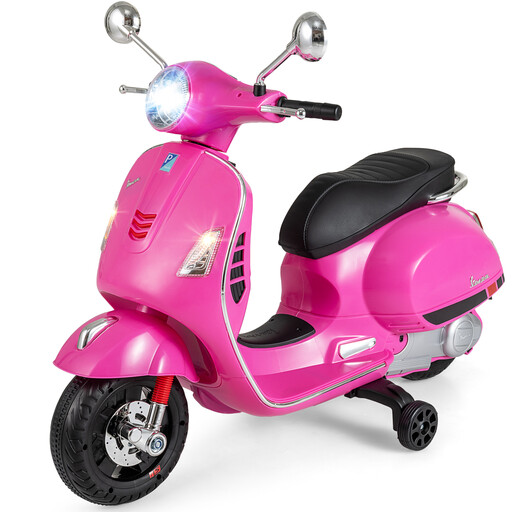
Why this choice suits this profile: This kids’ electric scooter, designed for ages 3-6, has a compact design and simple controls. Its stated maximum weight capacity of 30 kg makes it ideal for first supervised rides on a flat surface.
Its removable stabiliser wheels, triangular frame and durable tyres reduce the risk of instability often associated with a standard motorbike.
Two 30 W motors, push-button start, forward and reverse, LED headlight, horn, music and USB/MP3 input.
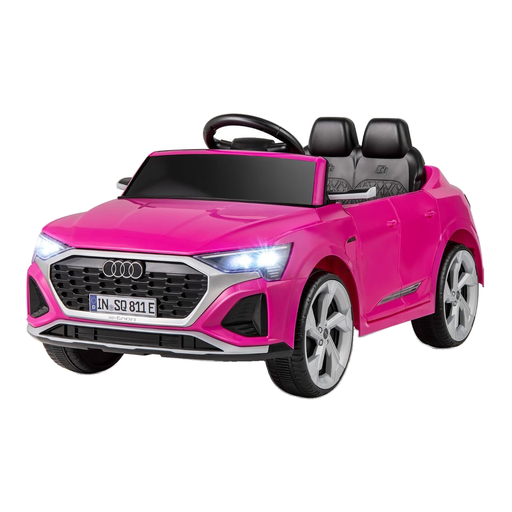
Why this choice suits this profile: This Audi kids’ car focuses on realistic styling and a full set of features. It’s aimed at families looking for a toy with an authentic automotive look, suitable from age 3 according to the product listing.
The three-speed parental remote control, lockable doors, seatbelt and gradual acceleration help prevent jerky manoeuvres.
Two 12 V motors, stated speed of 3 to 5 km/h, four-wheel suspension, LED headlights, horn and music.
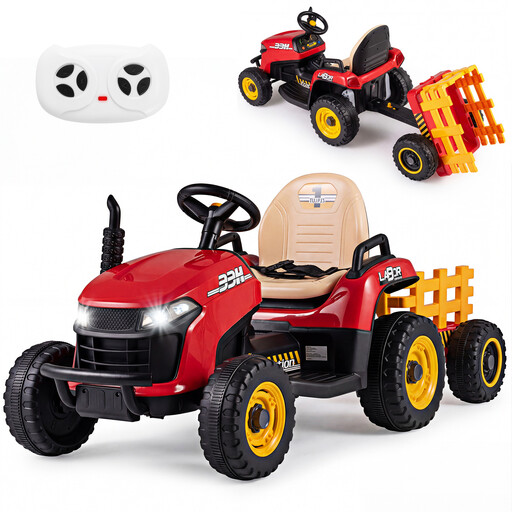
Why this choice suits this profile: This kids’ electric tractor is designed for long play sessions in a garden or yard. Its tipping trailer lets children imagine all sorts of transport or farming scenarios.
The 2.4 GHz remote control offers three speed levels, plus steering and braking control. Gradual start and stop reduce jerky movements.
24 V 4.5 Ah battery, two 35 W motors, stated speed of 3.2 to 7 km/h, detachable trailer and 5 kg load capacity.
We’ve put together a full list, updated in real time, of products that fully meet these strict selection criteria and European safety regulations.
Start by checking the recommended age, maximum weight capacity, seat height and how simple the controls are. An adjustable speed, a parental remote control and gradual acceleration make the first rides much easier. Adult supervision is always essential.
The charging time depends on the model and should be checked in the manual. Charge the battery with the supplied charger in a dry, well-ventilated area. Avoid leaving the vehicle out in the rain and regularly check the cables, plug and battery casing.
No. These products are designed for private spaces or suitable play areas, never on public roads. Use them on a clear surface, away from steps, ponds, vehicles and steep slopes. Wearing appropriate protective gear may also be a good idea depending on the play environment.