
Livraison le jour même ou le lendemain

Qualité garantie

Débloquez vos offres de bienvenue: Livraison GRATUITE | Jusqu'à -80 % | 30 jours d'essai gratuits à JoyPlus
Téléchargez l'application
Cleaning a car, patio, fence or driveway isn’t always as simple as pulling out the garden hose. An electric pressure washer can save you precious time, provided you choose a model suited to the surfaces you need to treat, how often you’ll use it, and the layout of your outdoor space.
However, you shouldn’t take the claims made in product listings at face value.
A stated pressure of 180 bar isn’t enough to judge a machine’s performance. You also need to look at the water flow rate, measured in litres per hour. High pressure combined with a low flow rate can limit the area you can cover, whereas a more generous flow helps wash away loosened dirt more effectively.
The motor power, such as that of a 2200 W pressure washer, mainly tells you about the machine’s electrical requirements. On its own, it doesn’t guarantee consistent cleaning across all materials.
With a hose that’s too short, you’ll have to move the machine around frequently. On a patio or a long driveway, this can quickly become a chore. A pressure washer with an 8 m hose gives you a more comfortable working range, provided the power socket and water source are close enough.
The storage system matters too. A pressure washer with a hose reel lets you store the hose more neatly and reduces the risk of kinks or tangles.
The gun, foam nozzle and rotary nozzle each serve a different purpose. A concentrated jet nozzle can tackle stubborn dirt on a tough surface, but you need to use it carefully on car bodywork, wood or delicate joints.
Also remember to check the compatibility of the fittings, the length of the power cable, whether there’s a filter on the water inlet, and the manufacturer’s recommendations.
For versatile domestic use, you should analyse these three features together:
These figures are technical values stated by the manufacturer. They don’t guarantee identical results on every material.
For a home with a patio, gate or driveway, it’s best to choose a machine with wheels and a stable handle. A long hose makes it easier to move around a car or fence. An integrated hose reel is also handy for avoiding leaving the hose trailing on the ground after each use.
Before you order, measure the distance between the power socket, the tap and the area you need to clean. Never use the machine in the rain, and protect the connections from water spray.
The versatility of a pressure washer depends above all on its accessories:
With a car pressure washer, start with a moderate pressure and a suitable nozzle. For a patio pressure washer, you can use a more powerful jet on concrete or hard stone, but avoid lingering on the joints. A garden pressure washer can be used to clean garden furniture, fences or certain tools, but never direct the jet towards delicate plants.
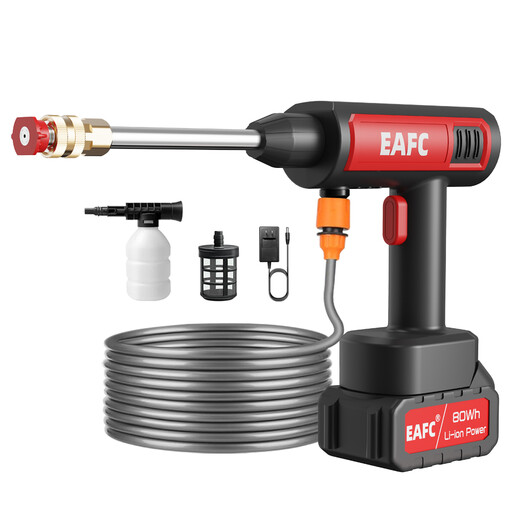
Why this choice suits this profile: Cordless, this machine is ideal for small cleaning jobs on the car, balcony or garden furniture, especially when the tap or power socket is too far away.
It avoids relying on a long power cable and can be fed from a bucket, via self-priming, or from a tap, depending on the stated configuration.
A portable format, a lithium battery, a foam sprayer and the ability to use it for watering or everyday washing.
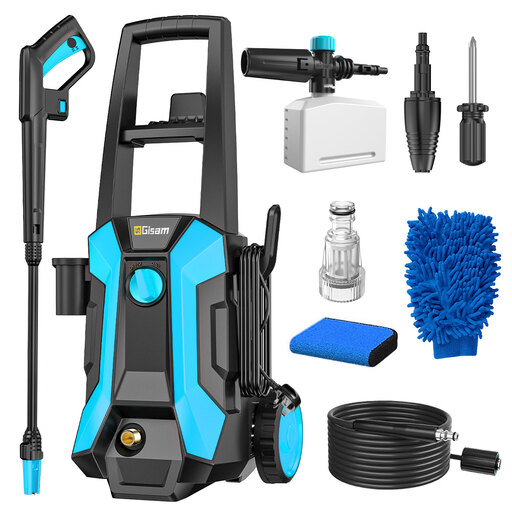
Why this choice suits this profile: This corded machine is aimed at homeowners who want a versatile appliance for the car, fence, patio, garden and driveway.
Its specification sheet details the power, pressure, flow rate and hose length, rather than relying on a single eye-catching figure.
A 2200 W motor, a stated pressure of 180 bar, a flow rate of 480 L/h, an 8 m hose, a hose reel, a pressure washer gun, a foam nozzle and a rotary nozzle.
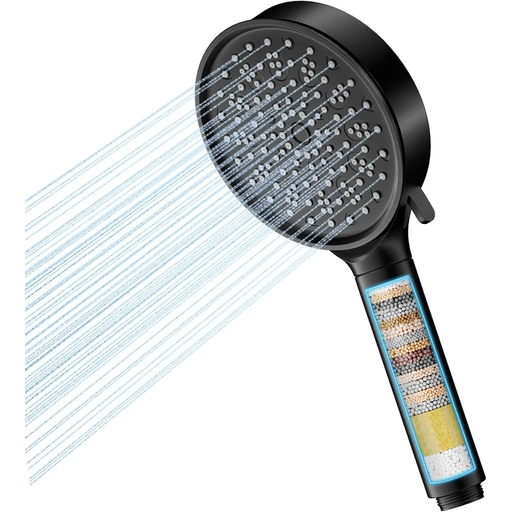
Why this choice suits this profile: This product doesn’t replace an electric pressure washer. Instead, it meets a specific need in the bathroom, particularly for changing the spray pattern of a shower.
By clearly distinguishing between showering and outdoor cleaning, you avoid buying a high-pressure appliance for a domestic use that doesn’t warrant it.
Six spray modes, a universal G1/2 connection and a filtration system stated to have 20 levels.
We’ve put together a comprehensive list, updated in real time, of products that meet these demanding selection criteria and European safety regulations.
Before using the machine for the first time, connect the water supply correctly and bleed the air from the system. Start at a good distance from the surface, then gradually move the lance closer if needed. On a car, avoid delicate seals and electrical components. For wood, paint or render, stick to a moderate pressure.
After each use:
The lifespan depends on how often you use it, the storage conditions and the maintenance you carry out. A machine used several times a week for a large patio won’t face the same demands as one brought out occasionally to wash a car.
For a variety of household tasks, always consider the power together with the pressure and flow rate. A 2200 W model, stated at 180 bar and 480 L/h, is a configuration suited to outdoor surfaces and car washing. However, check that your electrical supply can handle it properly.
It depends on the actual flow rate and how long you run the machine. As a guide, a machine rated at 480 L/h can use around 8 litres per minute when running continuously. Pauses, releasing the trigger and the actual cleaning time usually reduce the total volume used.
For a car, start by applying the foam, then rinse with a wide jet while keeping a sensible distance. On a stone patio, a rotary nozzle can be effective against ingrained dirt, as long as you check the material’s resistance and the condition of the joints. The recommendations of the surface manufacturer should always take priority.