
Livraison le jour même ou le lendemain

Qualité garantie

Débloquez vos offres de bienvenue: Livraison GRATUITE | Jusqu'à -80 % | 30 jours d'essai gratuits à JoyPlus
Téléchargez l'application
For graphite, coloured or drawing pencils, an electric pencil sharpener saves valuable time at home, in the classroom, at the office or in the workshop. However, not all models are created equal. A device designed for standard pencils may, for example, wear out quickly when used with thicker artist pencils.
Before placing your order, four points deserve particular attention:
The diameter is the first thing to check. A 6-12 mm electric pencil sharpener generally suits standard graphite pencils, many coloured pencils and some sketching or charcoal pencils.
A dual-hole model can be more practical when it distinguishes between two ranges, for example 6-8 mm and 9-12 mm. However, you must respect the limits stated by the manufacturer: waxy pencils, oil pastels and very soft pencils are not always suitable for a motorised blade.
Artists should also check the type of point offered. A very fine point works well for writing, whereas a medium or shorter point will preserve more of the lead for drawing and colouring.
The choice between a rechargeable or battery-operated electric pencil sharpener and a mains-powered model depends mainly on where you plan to use it.
Check that the supplied adapter is compatible with the sockets used in the UK. As with any electrical appliance, also consult the manual, safety instructions and compliance information provided with the product.
A helical metal blade gradually removes the wood around the lead. It generally ensures a clean cut, but requires minimal maintenance: empty the tray, remove any residue around the blade and always unplug the device before cleaning it.
A pencil sharpener with a removable shavings tray saves you from having to work over a bin. Its capacity becomes particularly important in a school, a shared office or an illustration studio.
Finally, an electric pencil sharpener with automatic stop must be used in accordance with its manual. On the models we have selected, the device stops when the point is formed, in the event of overheating or if the lid is opened. This protection does not replace the need to supervise children: never put your fingers or any object into the opening.

Why this model suits this profile: Its four AA battery operation and compact design make it a practical choice for first-time use at home, at school or in a small office.
Its two openings accommodate pencils of 6-8 mm and 9-12 mm. The lid must be properly closed for the device to operate.
6-12 mm compatibility, removable shavings tray, metal blade and replacement blades included. Batteries must be purchased separately.
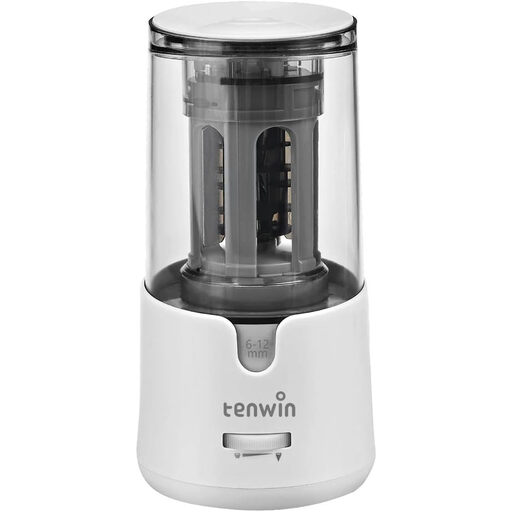
Why this model suits this profile: Its mains power supply and point adjustment meet the regular needs of a drawer, teacher or professional.
It accepts diameters of 6-12 mm and offers three point levels: fine, medium or short. It is not designed for waxy pencils.
Helical metal blade, large-capacity shavings tray, automatic stop and overheat protection.

Why this model suits this profile: It naturally fits on a fixed workstation where several pencils need to be sharpened in succession, particularly in a workshop or classroom.
The non-slip base prevents movement on the table. The device stops when sharpening is complete, if the lid is opened or in the event of overheating.
Three point profiles, 6-12 mm diameter, spacious shavings tray and mains adapter power supply.
We have put together a comprehensive, real-time updated selection of products that meet these demanding criteria, while complying with European safety regulations.
Yes, provided the diameter and lead type are compatible with the instructions in the manual. Coloured pencils can be wider or more fragile than graphite pencils. Use the appropriate opening, apply only light pressure and preferably choose a medium point if the lead tends to break.
The models shown have a sharpening time of approximately 3 to 5 seconds. This varies depending on the pencil diameter, the type of wood, the condition of the blade and the selected point profile. Once the device has stopped, avoid holding the pencil in the opening.
Empty the shavings tray regularly, remove any debris around the blade and always unplug the device before cleaning it. Do not use water on the motor and replace the blade when it becomes less consistent or requires excessive pressure. With a battery-operated model, remove the batteries before any prolonged storage.