
Livraison le jour même ou le lendemain

Qualité garantie

Débloquez vos offres de bienvenue: Livraison GRATUITE | Jusqu'à -80 % | 30 jours d'essai gratuits à JoyPlus
Téléchargez l'application
There's nothing more frustrating than a poorly sharpened pencil ruining a drawing session or note-taking. Broken leads, uneven points, shavings all over your desk... these are annoyances that artists, teachers, students, and professionals know all too well. For them, a reliable sharpening tool isn't a luxury—it's a necessity.
With so many models on the market, choosing the right electric pencil sharpener can quickly become overwhelming. This guide is here to break down the key criteria and present a selection of tried-and-tested products to help you make the right choice.
Before diving into our selection, let's review the key points to consider to find the perfect model for you.
This is the essential starting point: is your future sharpener compatible with your favorite tools? Check the diameter of the pencils it accepts. Most standard models support 6-8?mm pencils, but if you use larger colored pencils or carpenter's pencils, you'll need a device compatible with diameters up to 12?mm. A good sharpener for colored pencils must also be able to handle soft leads without breaking them.
The choice of power source will primarily depend on your usage and work environment.
A quality automatic sharpener must include safety features, especially if it's intended for children. An auto-stop function that activates once the pencil is sharp, in case of overheating, or if the reservoir is removed, is an essential feature. Additionally, a sharpener with a large-capacity reservoir will save you the chore of constant emptying and keep your workspace pristine.
Here are a few options that stand out for their features and design, catering to a variety of needs.
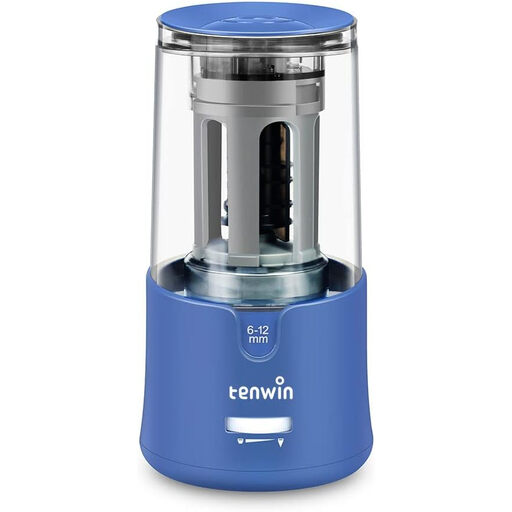
Key Feature?: This model stands out as a versatile and high-performance solution for daily use. Its ability to handle 6-12?mm pencils and its three adjustable sharpness settings make it a highly adaptable tool.
Pros?:
Who is it for? Artists, teachers, and professionals looking for a reliable and versatile professional pencil sharpener for their office or studio.

Key Feature?: This model focuses on portability and flexibility with its battery-powered operation and dual-hole design.
Pros?:
Who is it for? Pupils, students, and anyone who needs an effective sharpening solution on the go, in the classroom, or at home.
Although our focus is on electric models, some specialized manual tools are worth mentioning for their targeted design.
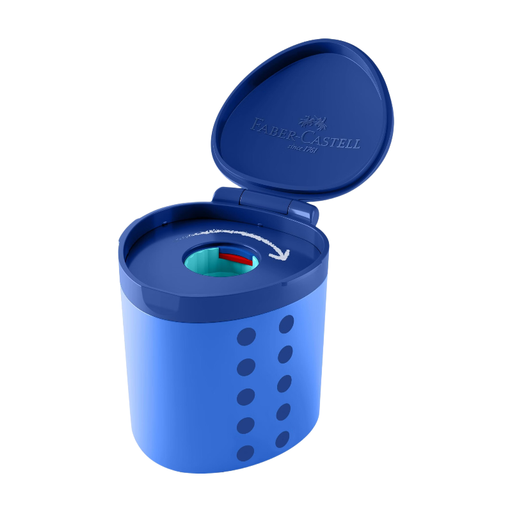
Key Feature?: Designed specifically for the safety of young users, this manual sharpener is an excellent alternative for school or home. It is optimized for large-diameter pencils.
Pros?:
Who is it for? Parents and teachers who prioritize safety and cleanliness for young children.
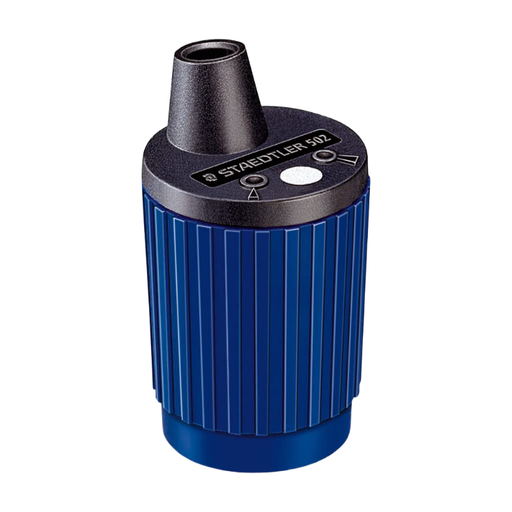
Key Feature?: This is a manual, non-electric precision tool intended for a very specific use: sharpening 2?mm leads for lead holders.
Pros?:
Who is it for? Architects, technical illustrators, artists, and professionals who use 2?mm lead holders for their precision work.
Our selection covers several common uses, but the world of sharpening tools is vast. If you want to explore other models—whether manual, hand-crank, or even more specialized—feel free to browse our full category.
Discover Our Full Range of Pencil Sharpeners
1. Can you use an electric pencil sharpener for colored pencils? Yes, most modern electric pencil sharpeners are compatible with colored pencils. However, it's always recommended to check the manufacturer's specifications. For pencils with very soft or waxy leads, a model with a heavy-duty helical blade and the ability to adjust the point's sharpness is preferable to avoid breaking the lead.
2. How do you maintain an electric pencil sharpener to ensure its longevity? Maintenance is simple but essential. Regularly empty the shavings reservoir to prevent dust from building up in the mechanism. From time to time, unplug the device and use a small, dry brush to clean the blade of lead and wood residue. Never use water or liquid products, as this could damage the motor and cause the blade to rust.
3. Is an automatic pencil sharpener safe for children? Models with safety features, such as an auto-stop function when the reservoir is removed, are designed to minimize risks. However, an electric sharpener is still a device with a blade. Adult supervision is always recommended when it is used by young children. For the youngest users, a secure manual model like the Faber-Castell Grippy Sharpener Box may be a wiser alternative.