
Livraison le jour même ou le lendemain

Qualité garantie

Débloquez vos offres de bienvenue: Livraison GRATUITE | Jusqu'à -80 % | 30 jours d'essai gratuits à JoyPlus
Téléchargez l'application
Painting a wall, piece of furniture or fence with a roller takes time, especially when the surface includes textured areas, corners or hard-to-reach sections. An electric paint sprayer can significantly speed up application, but not every model is suited to the same paints or projects.
Before you reach for your bank card, there are a few common pitfalls to avoid: higher power does not guarantee an even finish, a large tank can quickly make the tool heavier and claimed compatibility with a Makita 18 V battery may be limited to certain series. Here are the key criteria to consider when choosing an electric paint sprayer suited to your projects in France.
An 800 W paint sprayer can deliver a high flow rate, making it useful for walls, ceilings, fences or patios. However, power alone is not enough to assess spray precision. Flow adjustment, nozzle diameter, supported viscosity and spray pattern all have a direct impact on the final result.
For furniture or smaller surfaces, a less powerful but more precise and better-adjustable tool is often easier to control. For furniture fronts, sheds or fences, a higher flow rate can significantly reduce the time spent painting.
Paint that is too thick can produce uneven overspray, clog the nozzle or interrupt the spray. Specifications such as 120 DIN-S refer to a viscosity measurement taken with a specific flow cup. They make it possible to compare advertised specifications, but preparation will always depend on the product being used.
Check the paint manufacturer’s instructions before diluting. Use only the thinner recommended by the manufacturer, and filter the paint if the sprayer’s instructions advise doing so. Poor preparation can compromise the finish, even when using a high-performance tool.
Residue that dries inside the nozzle, tube or seals is one of the leading causes of malfunctions. A large-capacity tank does not make up for a time-consuming disassembly process. Check whether the sprayer includes a cleaning brush, cleaning needle and replacement seals, and whether its various components are easy to access.
After each use, quickly rinse or clean the components according to the manufacturer’s instructions. With solvent-based paint, water is generally unsuitable: use the recommended cleaning product instead.
An HVLP paint sprayer uses a high volume of air at relatively low pressure. This design makes application easier to control, provided the flow is adjusted correctly and a consistent distance is maintained from the surface.
The three most common spray patterns are:
Flow adjustment allows you to adapt the amount of product to contours, corners and large surfaces. Always test the sprayer on a piece of cardboard before working on the final surface.
The nozzle diameter should match the product being applied. Smaller diameters are generally suitable for stains, varnishes and fluid finishes, while larger nozzles are better suited to certain wall paints or primers.
A versatile tool may come with several nozzles, for example 1.0 mm, 1.5 mm, 1.8 mm, 2.0 mm, 2.6 mm or 3.0 mm. This variety makes it easier to switch from furniture to fencing, but it does not mean every paint can be used without preparation.
An electric paint sprayer with a 1300 ml tank reduces the number of refills required for large surfaces, but its weight increases once the tank is full. For everyday household projects, a 1000 ml model may offer a more comfortable balance.
For a corded tool, check the length of the power cable and hose. For a cordless paint sprayer, check whether the battery and charger are included, as well as the stated runtime. Models advertised as compatible with a Makita 18 V battery do not necessarily work with every battery from the brand. Check the battery series and type carefully before ordering.
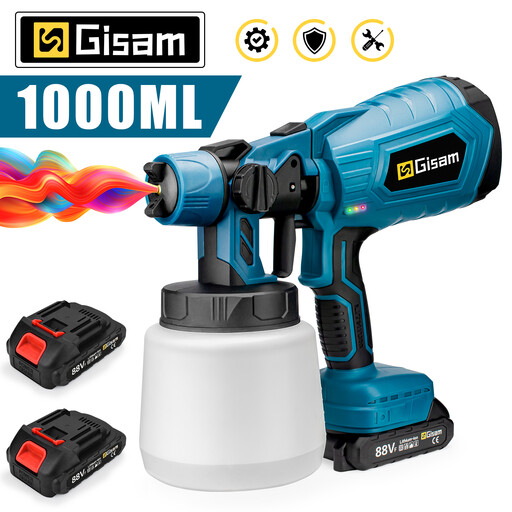
Why this model suits this profile: its 18 V power supply may appeal to people who already own certain compatible Makita batteries and want to paint furniture, walls, ceilings or fences without being tethered to a power outlet.
The product details specify compatibility with Makita 18 V batteries from the B series and exclude G-series and older Ni-Cd batteries. Checking this information reduces the risk of an unwelcome surprise upon delivery.
1000 ml tank, 1.8 mm nozzle, adjustable flow rate and three spray patterns: horizontal, vertical and circular.
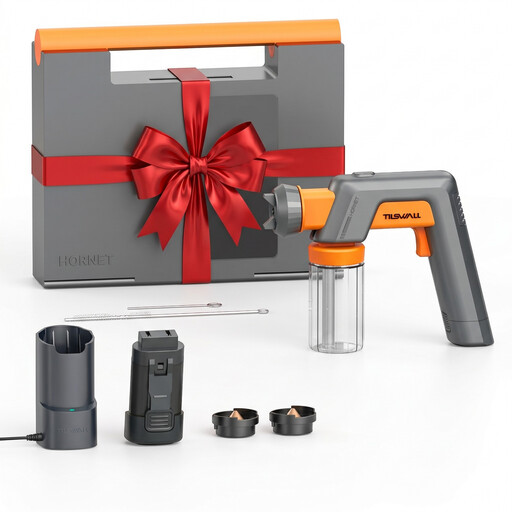
Why this model suits this profile: its stated weight of 450 g and cordless operation can be particularly convenient for touch-ups, small pieces of furniture and projects that require frequent changes of position.
The cordless design eliminates the need to stay close to a power outlet. However, check the exact contents of the box and the stated runtime before taking on a substantial project.
Stated weight of 450 g, three spray patterns, two nozzle diameters and two batteries included according to the product listing.
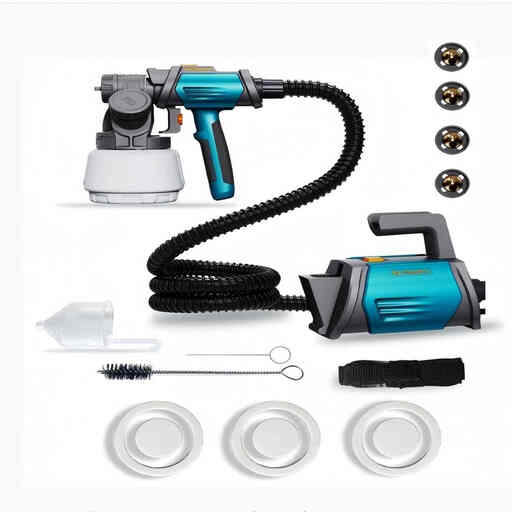
Why this model suits this profile: its 800 W corded motor, 2.5 m hose and 1300 ml tank make it suitable for walls, ceilings, fences, patios and sheds.
The four nozzles and adjustable flow rate make it possible to adapt the spray to the surface, rather than relying on a single setting for every project.
800 W of power, four nozzles from 1 to 3 mm, three spray patterns, a stated flow rate of up to 1100 ml/min and a maximum stated viscosity of 120 DIN-S.
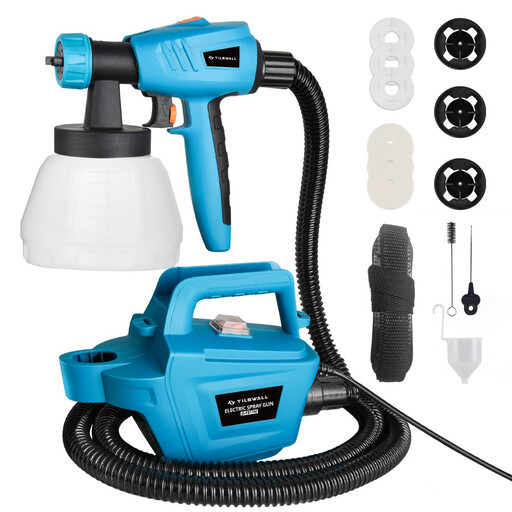
Why this model suits this profile: it is designed for users who switch between wall paint, varnish, furniture and fencing projects, with a constant mains power supply for outdoor work.
The removable tank, wide opening and cleaning accessories simplify maintenance when switching from one product to another.
1300 ml tank, 2.5 m hose, 3 m cable, three nozzles and three spray patterns, with an adjustable flow rate of up to 1100 ml/min according to the listing.
We have put together an updated selection of products that match these criteria and the needs of French DIY enthusiasts.
Protect floors, furniture and nearby surfaces with a protective sheet. Ventilate the room and wear the protective equipment recommended on the paint label, particularly respiratory protection where required. Outdoors, avoid spraying in strong winds to limit product drift.
Before first use, read the instructions in French, check for CE marking where applicable, inspect the cable or charger and confirm that all advertised accessories are present. Never point the spray at a person or animal. Begin with a low-flow test, maintain a consistent distance and favour several thin coats over one excessively thick layer.
It depends on the model, nozzle and stated maximum viscosity. Some tools accept water-based or solvent-based paints, varnishes, stains and primers, although dilution may be necessary. Always consult both the sprayer’s instructions and the paint manufacturer’s guidance.
It can be suitable for a small room or touch-up work, but battery life and tank capacity become critical on larger surfaces. For several walls or a ceiling, a corded model with a 1300 ml tank can help avoid interruptions caused by recharging.
Clean the nozzle, tank, tubes and seals immediately after every project. Store the sprayer in a dry place, never leave paint in the system and store batteries separately in accordance with the manufacturer’s instructions. Regular maintenance helps prevent blockages and maintain a consistent flow rate.