
当日/次日达

品质保障

开启新人专享福利: 全场免邮 | 低至 2 折 | 免费试用 30 天 JoyPlus 会员
下载 Joybuy
Ditching the roller for an electric paint sprayer promises significant time savings and a much more uniform finish. Yet, how many DIYers end up with a tool that's destined for the bin after just one project? The culprit? Marketing promises that poorly conceal critical design flaws. Before you invest, it's crucial to know the pitfalls to avoid so your renovation project doesn't turn into a fiasco.
As a product expert at Joybuy, my mission is to help you see things more clearly. Let's break down the features that truly separate a reliable tool from a source of frustration.
The market is flooded with models boasting enticing spec sheets. Unfortunately, three recurring problems quickly turn the dream of easy painting into a nightmare.
To make an informed choice, focus on three key technical parameters. The versatility, performance, and lifespan of your future tool depend on them.
The majority of consumer models use HVLP (High Volume, Low Pressure) technology, often marketed as a “low-pressure paint station”. This system propels a large volume of air at low pressure, allowing you to apply paint with high precision while significantly reducing spray mist (overspray). It's the ideal technology for spray painting walls, furniture, or fences with a clean finish and minimal waste.
This is arguably the most critical point. Viscosity measures the thickness of a liquid. Every sprayer specifies a maximum supported viscosity, measured in DIN-seconds (DIN-s). To give you an idea, standard wall paint is much more viscous than varnish.
Rather than an endless list, here are three options that cater to distinct user profiles, chosen based on the performance and ease-of-use criteria we've just covered.
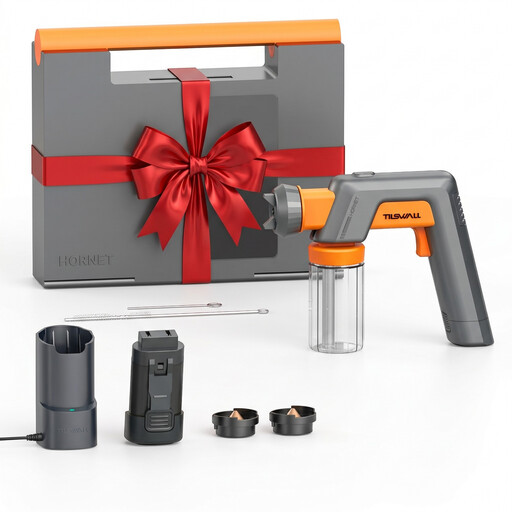
Why we chose it: Ideal for repainting furniture, a chair, or a small fence without being weighed down by a cord or a heavy station. Its light weight and cordless design make it the perfect tool for quick projects and touch-ups.
Its design is focused on simplicity. The quick-disassembly feature makes cleaning incredibly easy, helping you avoid the pitfall of a sprayer that's clogged after a single use.
Ultra-lightweight (450g) and cordless: complete freedom of movement. Comes with two batteries so you don't run out of power in the middle of a small job.
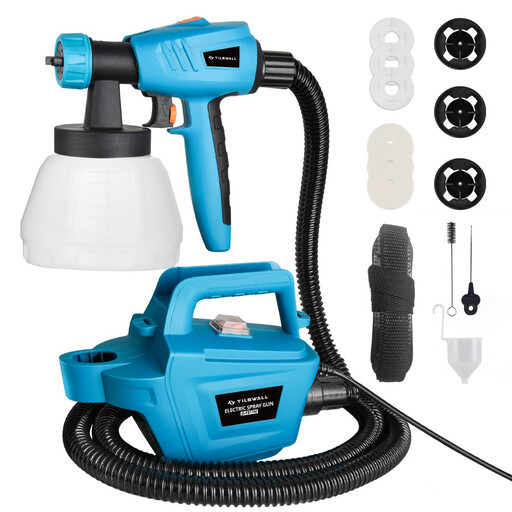
Why we chose it: Designed for large-scale projects like renovating multiple rooms, painting exterior walls, or spraying long fences. Its separate base station reduces the weight in your hand, and its large 1300 ml reservoir means fewer refills.
Its 800W power and atomisation technology are calibrated to handle more viscous paints, avoiding the incompatibility trap. The three included nozzle sizes ensure true versatility.
Separate base station: reduces fatigue, as you only hold the spray gun. High and adjustable flow rate (up to 1100 ml/min) to quickly cover large surfaces.
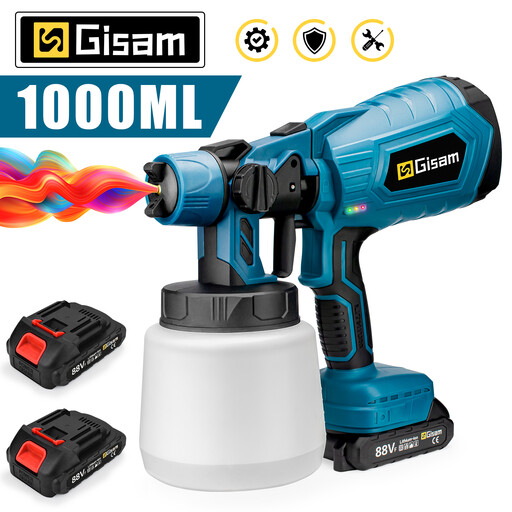
Why we chose it: Perfect for DIYers who already own tools from the Makita 18V range. It allows you to use your existing battery collection to enjoy cordless freedom on medium-sized projects without investing in a whole new ecosystem.
It offers a powerful cordless solution capable of handling various projects, thanks to its adjustable flow rate and 1000 ml reservoir. Its simple design facilitates cleaning, a crucial factor for its longevity.
Compatibility with the Makita 18V ecosystem: no need to buy new batteries if you're already equipped. Excellent compromise between portability and capacity.
We have compiled a complete and up-to-date selection of products that meet these demanding selection criteria and current safety standards.
Yes, in almost all cases. Paints, especially for walls, are too thick to be sprayed as-is. It is essential to thin them according to the recommendations of both the sprayer and the paint manufacturer. Use the provided viscometer to achieve the ideal consistency. Improper thinning is the number one cause of clogged sprayers.
Cleaning must be done immediately after each use, before the paint has a chance to dry.
In theory, a versatile model with multiple nozzles and an adjustable flow rate can adapt to many projects. In practice, an HVLP paint sprayer is better suited for fine finishes on wood and metal, while a more powerful station will be much more effective for large wall surfaces. The final choice will therefore depend on the primary nature of your projects.