
Livraison le jour même ou le lendemain

Qualité garantie

Débloquez vos offres de bienvenue: Livraison GRATUITE | Jusqu'à -80 % | 30 jours d'essai gratuits à JoyPlus
Téléchargez l'application
An electric milk frother is all you need to transform filter coffee, espresso or hot chocolate into a smoother, creamier drink. However, not all models meet the same needs. Some electric milk whisks simply froth the milk, while an automatic milk frother also heats it. Others focus on a compact design, a rechargeable battery or compatibility with plant-based drinks.
Before reaching for your bank card, it is worth keeping three common pitfalls in mind: relying solely on the advertised speed, underestimating the cleaning involved and confusing a milk frother with a coffee machine fitted with a steam wand.
A fast motor can produce plenty of foam, but its texture also depends on the whisk, immersion depth and type of milk used. For a latte, you will generally want a fine, smooth foam that is easy to pour. For a cappuccino, a thicker texture may be preferable.
A manual or electric handheld milk frother therefore requires a little technique. Avoid placing the whisk too close to the surface, as this will incorporate too much air and create large bubbles.
A product described as a hot and cold milk frother does not necessarily heat the milk. A portable rechargeable model, for example, may simply froth a liquid that is already warm or cold. If you want both steps to be automated, check that it has a heating base, jug and programmes dedicated to temperature control.
Milk residue dries quickly around the whisk, lid or jug base. When the motor unit must not be immersed, careful rinsing after every use is essential. Removable dishwasher-safe parts make cleaning easier, but always check the instructions and follow the recommended temperatures.
For preparing one or two drinks, a portable electric milk whisk or rechargeable frother is usually sufficient. Battery-powered models can easily be kept at the office or in a travel bag. A rechargeable milk frother, meanwhile, charges via cable and saves you from having to buy batteries regularly.
For several cups, an automatic jug offers greater convenience. Pay particular attention to the actual capacity available in frothing mode: milk expands as air is incorporated. A 270 ml tank, for example, cannot always be filled to the maximum if you want to avoid spills and achieve stable foam.
Oat, soya and almond drinks do not all react in the same way. A frother for plant-based milk should offer a suitable setting or, failing that, clearly state which drinks are compatible in its instructions. Drinks labelled ‘barista’ often produce more consistent foam, but the result also depends on their composition.
For hot milk, check the temperature range and whether there is overheating protection. Do not touch hot surfaces and never move a jug while it is operating.
An stainless steel milk frother fitted with a 304 stainless steel whisk is easy to rinse and stands up well to daily use. This does not mean that the entire appliance is waterproof. With a battery-powered model, check the required battery type as well as the recommended continuous operating time. For a USB-C appliance, check the charging time, battery life and whether or not it can be used while charging.
An espresso coffee machine with a milk frother requires more space and maintenance, but combines coffee extraction with froth preparation. ‘15 bars’ or ‘20 bars’ refers to the pressure stated by the manufacturer; on its own, this does not indicate the quality of the result in the cup.
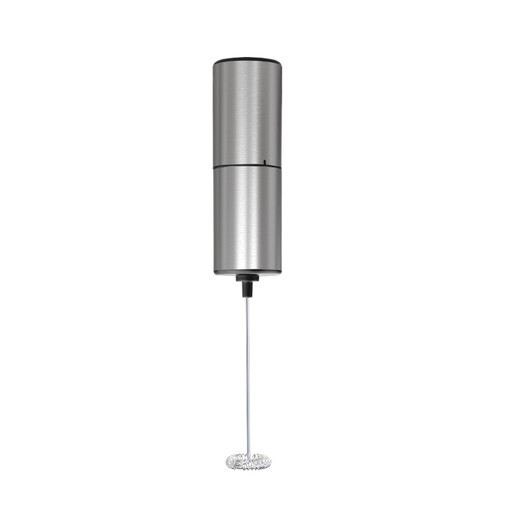
Why this choice suits this profile : This electric milk whisk runs on two AA batteries and is operated with a simple button, without a base or complicated settings. It is ideal for discovering homemade cappuccinos and lattes, whether at the office or while travelling.
Its operation makes it clear that this is a frothing appliance, not an automatic milk heater. The 304 stainless steel whisk can be rinsed under running water, while the body must not be immersed.
Lightweight design, motor advertised as quiet, powered by 2 AA batteries, with a recommended continuous operating time limited to 3 minutes.
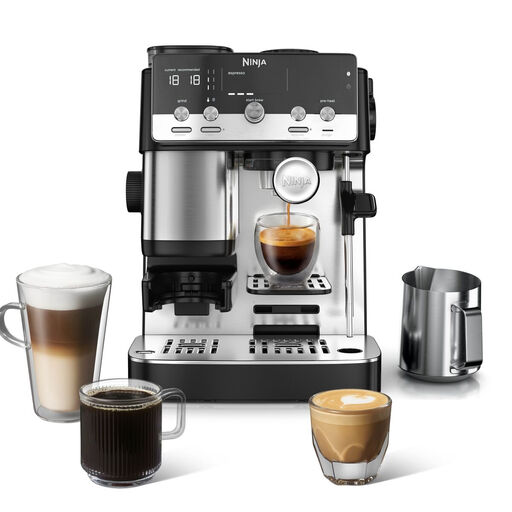
Why this choice suits this profile : This machine combines espresso, filter coffee, an integrated conical grinder and an automatic frothing system. It is designed for anyone who wants to prepare several drinks with minimal hands-on effort.
The frothing system is integrated and advertised as compatible with both traditional milk and plant-based drinks. The removable parts are described as dishwasher-safe, provided that the instructions are followed.
Integrated conical grinder, stated weight-based dosing, preparation of several coffee styles and a relatively compact design.
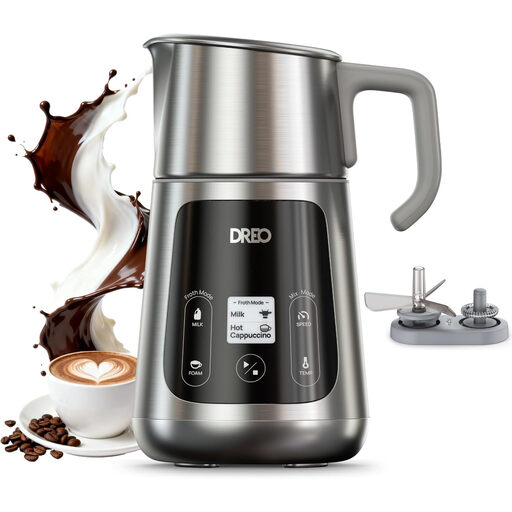
Why this choice suits this profile : Its 450 ml automatic jug and hot, cold and microfoam programmes are ideal for people who regularly prepare several drinks or switch between different plant-based drinks.
The modes are clearly separated, and the MIN/MAX markings must be observed. Overheating protection and operation at 220–240 V are stated in the product details.
Stated power of 600 W, two attachments, four modes and jug components compatible with the top rack of the dishwasher.
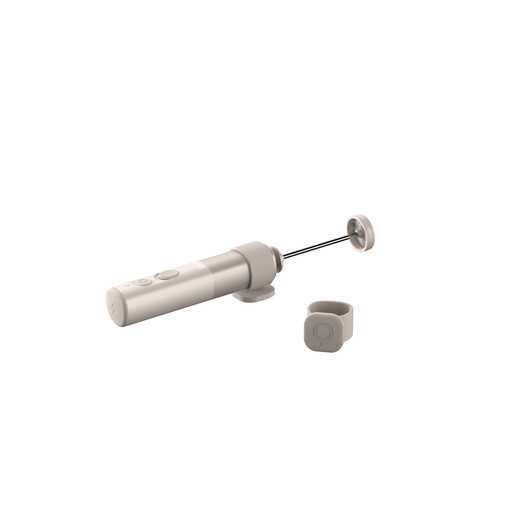
Why this choice suits this profile : This portable rechargeable milk frother weighs just 165 g, charges via USB-C and works unplugged while frothing. It slips easily into a bag for the office, travel or smaller kitchens.
The product details specify that it does not heat milk, so the liquid must be prepared separately. This distinction prevents you from relying on a function the appliance does not offer.
Two speeds, removable whisk, USB-C cable and operation with hot or cold milk, without immersing the motor unit.
We have put together a complete, real-time updated list of products that fully meet these strict selection criteria and European safety regulations.
No. A portable electric milk whisk will generally only froth milk that is already hot or cold. To heat milk automatically, choose a jug with a heating base and dedicated programmes, as found on some automatic milk frother models.
Yes, but the result varies depending on the drink you choose. Oat- or soya-based drinks formulated for coffee can produce more foam. Check the stated compatibility and follow the filling levels. An appliance with several modes offers greater flexibility, without guaranteeing identical texture with every recipe.
The cost mainly depends on the electricity used for charging and the number of cycles completed. A USB-C model avoids the need to buy batteries, while a battery-powered frother requires you to keep replacement AA batteries available. When comparing models, consider the purchase price, charging time, battery life and the accessories supplied, particularly the cable and interchangeable whisks.