
Livraison le jour même ou le lendemain

Qualité garantie

Débloquez vos offres de bienvenue: Livraison GRATUITE | Jusqu'à -80 % | 30 jours d'essai gratuits à JoyPlus
Téléchargez l'application
After a workout, a day spent in front of a screen or a long car journey, an electric massage gun can easily earn its place in your relaxation routine. Yet product descriptions often focus on top speed or the number of attachments, at the expense of far more practical everyday criteria.
Before you place an order, it's worth looking at amplitude, grip, noise level, battery life and safety instructions. Here are the points to consider when choosing a muscle massager that's right for your needs.
A high number of revolutions per minute doesn't guarantee the device will feel pleasant or be suitable for all areas of the body. High speed can even become uncomfortable for a beginner or on sensitive muscles. Several adjustable levels are generally more useful than a single maximum speed value.
To progress gently, choose a model with at least three clearly marked intensity levels. The RPM (revolutions per minute) figures then allow you to compare devices on an objective basis.
A device that's too heavy quickly becomes tiresome to hold, especially when trying to reach your back, shoulders or the backs of your thighs. A slippery handle or a poorly balanced device can also cut your sessions short.
A portable massage gun weighing between 300 and 600 grams will be easier to carry to the office, the gym or when travelling. The shape of the handle and the position of the buttons matter just as much as the weight stated on the spec sheet.
Phrases like "accelerated recovery", "professional massage" or "therapeutic action" should be taken with a pinch of salt. A muscle massage device is primarily aimed at comfort and relaxation: it is not a substitute for medical advice.
Instead, focus on verifiable data: number of attachments, stated amplitude, battery life, noise level, charging type and the presence of clear warnings.
Amplitude refers to the depth of the massage head's movement. A stroke of 10 to 12 mm is often favoured by athletes looking for a more pronounced sensation on larger muscle groups. For gentler daily use, a lower intensity and moderate amplitude may be more suitable.
A massage gun for sports recovery should allow you to start gently, then gradually increase the power. Avoid spending too long on the same area: instruction manuals generally recommend short sessions.
Round attachments are generally suitable for large muscle areas. Flat or U-shaped attachments, on the other hand, can be intended for more targeted work. However, the device should not be used on the head, throat, spine, bones, wounds, bruises or swollen areas.
The number of attachments alone isn't enough to choose between two models. Also consider their material, how easy they are to clean and their fixing system. Four well-differentiated attachments can prove more practical than a long list of accessories you'll never use.
A heated massage gun can provide pleasant warmth before or during a relaxation session. The temperature should remain adjustable, and the heating function should not be used on a swollen, irritated or particularly sensitive area.
For travel, a rechargeable battery and a USB-C massage gun mean you can reuse a cable you already have in your bag. Compare the stated battery life, charging time and the ability to use the device without it being plugged in.
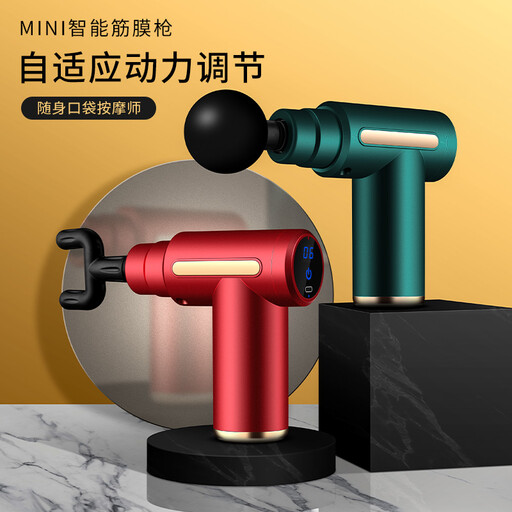
Why this choice suits this profile: Its compact design lends itself well to first-time use at home, in the office or in a sports bag. Its six levels allow you to gradually increase the intensity.
It doesn't rely solely on maximum speed: the stated range goes from 1,800 to 3,200 RPM, with four interchangeable heads.
A 1,200 mAh battery, Type-C charging and a mini format. Several colours are available so you can choose the one that suits you best.
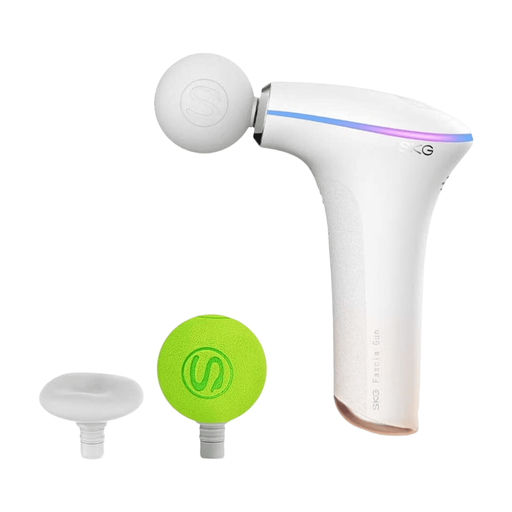
Why this choice suits this profile: This model combines percussion and adjustable heat in a device stated to weigh 300 g. It's suitable for those looking for versatile use at home and on the go.
The settings are detailed: three speeds, a 10 mm amplitude and three temperature levels between 104 and 127 °F, which is approximately 40 to 53 °C.
A stated brushless motor, operation below 45 dB according to the spec sheet and Type-C charging.
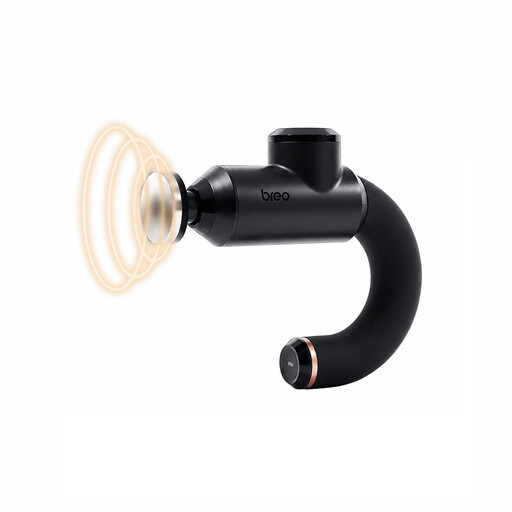
Why this choice suits this profile: It's aimed at users who want to vary the areas and sensations thanks to six attachments, including a heating head, in a rechargeable device.
The spec sheet details four levels, from 1,400 to 2,600 RPM, a 12 mm amplitude and a stated stall force of 19 kg: data that's more meaningful than a simple promise of power.
Heating is stated to reach temperature in five seconds, with a curved anti-slip handle and USB-C charging. The heating function should be used in accordance with the warnings.
We've put together a comprehensive list, updated in real time, of products that meet these strict selection criteria as well as European safety requirements.
A short session is usually enough for a comfort routine. Follow the duration stated in the instruction manual and limit the time spent on each muscle group. Prolonged use does not automatically improve results and can, on the contrary, increase discomfort.
The frequency depends on your sensitivity, the area being targeted and the manufacturer's recommendations. For daily use, choose a moderate intensity and avoid heat on irritated, swollen or sensitive areas. If you have a particular health condition, seek advice from a professional.
Turn off the device and unplug it before cleaning. Remove the attachments, wipe them according to the instructions in the manual and use a slightly damp cloth on the main body. Store the massager in a dry place, avoid leaving it on charge unnecessarily and do not expose it to high heat.