
Livraison le jour même ou le lendemain

Qualité garantie

Débloquez vos offres de bienvenue: Livraison GRATUITE | Jusqu'à -80 % | 30 jours d'essai gratuits à JoyPlus
Téléchargez l'application
Choosing an electric kettle? It seems simple enough at first glance. Yet, between marketing promises of "?ultra-fast boiling?" and materials with baffling names, it's easy to make a misstep. A leak after six months, water that tastes of plastic, or a skyrocketing electricity bill are all common disappointments. This guide provides everything you need to find a reliable model that fits your needs, far from the marketing hype.
Before you even start comparing models, it's crucial to know how to spot the false promises and design flaws that turn a purchase into a regret.
To make an informed choice, focus on these three objective parameters. They are what define the performance and user-friendliness of an electric kettle.
Power, expressed in watts (W), determines the heating speed.
The key is to find the right balance between the power and the capacity you actually need. There's no point in going too big if you only heat one cup at a time, just as a small kettle will quickly become frustrating for family use.
The choice of material has a direct impact on durability, taste, and maintenance.
Finally, never compromise on two essential safety features: automatic shut-off at boiling point and boil-dry protection.
It's the small details that make all the difference in daily use.
Our editorial team has scrutinised dozens of models based on these criteria for performance, safety, and ease of use. Here are our recommendations for different user profiles.
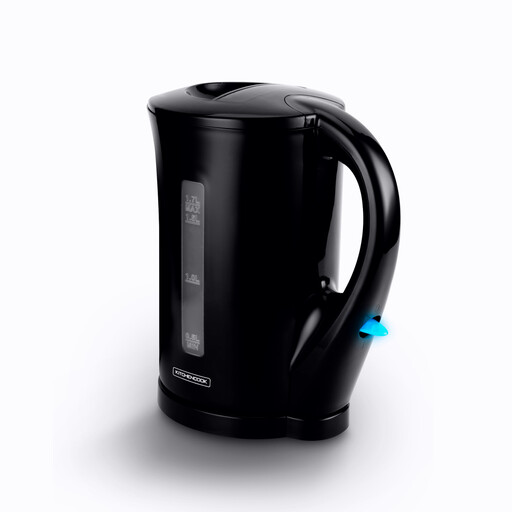
Why we chose it: Perfect for families or heavy use, it gets straight to the point: a large capacity and rapid heating, without unnecessary gadgets that drive up the price.
It doesn't overpromise: its 2200 W power ensures a genuinely rapid boil. Its stainless steel body is a guarantee of durability and preserved taste.
The perfect balance between a large 1.7 L capacity, high power (2200 W), and essential safety features (automatic shut-off, boil-dry protection).
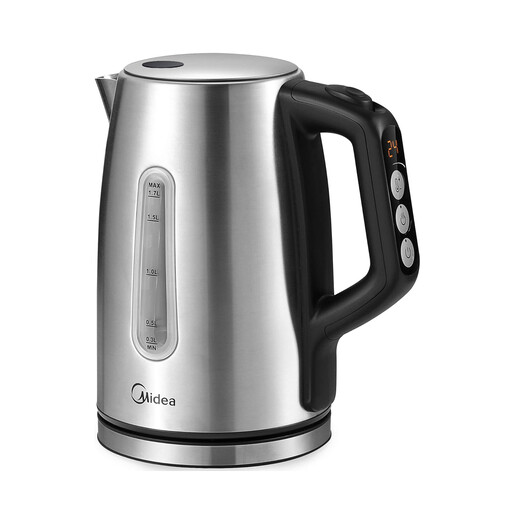
Why we chose it: Perfect for those who know that every tea has its ideal temperature. Green, white, oolong teas, or specialty coffees: this precise control helps to unlock their full aroma.
Here, the variable temperature feature isn't a gimmick but a function that justifies its price. It's aimed at a discerning user who will actually use it, thus avoiding the superfluous feature trap.
Six temperature presets (from 40 °C to 100 °C) and a keep-warm function for up to 60 minutes. Its stainless steel interior preserves the water's purity.
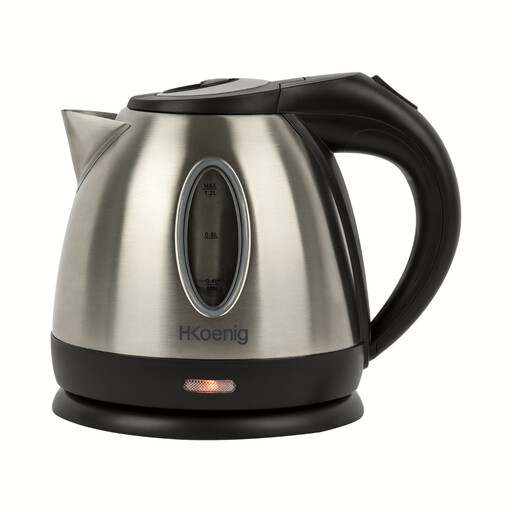
Why we chose it: Its compact size and sleek aesthetic make it a perfect choice for small kitchens, offices, or student dorms. It combines design and efficiency for one or two people.
It doesn't try to compete with family-sized models. Its strength lies in its compact (1.2 L) size and stainless steel body, making it a beautiful, functional object that never clutters the countertop.
Compact and elegant design, perfect for small spaces. 360° base and hinged lid for easy filling. Its 1630 W power is perfectly suited to its capacity.
Discover our full selection of products that meet our demanding selection criteria and rigorous safety standards.
On average, you can expect a lifespan of 3 to 5 years. This depends heavily on the frequency of use, manufacturing quality, and, above all, the hardness of your water. The key to making it last? Regular descaling, which also preserves its performance.
The simplest and most cost-effective solution: fill your kettle with a 50/50 mixture of water and white vinegar. Let it sit for an hour, then bring it to a boil. Empty it, rinse several times with clean water to remove the vinegar smell, and you're all set. Do this every one to three months, depending on your water hardness.
For durability and a perfectly neutral taste, food-grade stainless steel (type 304) stands out as the best choice. It doesn't retain odours, won't alter the taste of the water, and is highly resistant to corrosion. BPA-free certified plastic models are a safe and lighter alternative, but some sensitive palates may sometimes perceive a slight alteration in taste, especially when the appliance is new.