
Livraison le jour même ou le lendemain

Qualité garantie

Débloquez vos offres de bienvenue: Livraison GRATUITE | Jusqu'à -80 % | 30 jours d'essai gratuits à JoyPlus
Téléchargez l'application
Buying an electric kettle? It seems simple enough. Yet, who hasn't struggled with a model that leaks, gives water a plastic taste, or simply dies after a few months? The market is flooded with marketing promises that often hide serious design flaws. As a Product Specialist at Joybuy, my mission is to help you see through the noise. Let's break down the pitfalls to avoid and the criteria that truly matter to make the right choice.
Before you even start comparing models, it's crucial to know how to spot misleading marketing claims.
To avoid unpleasant surprises, here are the objective technical specifications to inspect to judge the quality and durability of an electric kettle.
The choice of material is paramount, both for your health and for the taste of the water.
Capacity and power should be tailored to your needs.
Certain options can transform a simple kettle into a true assistant for your hot beverages.
Here are a few models that meet specific needs, all selected according to our quality and practicality criteria.
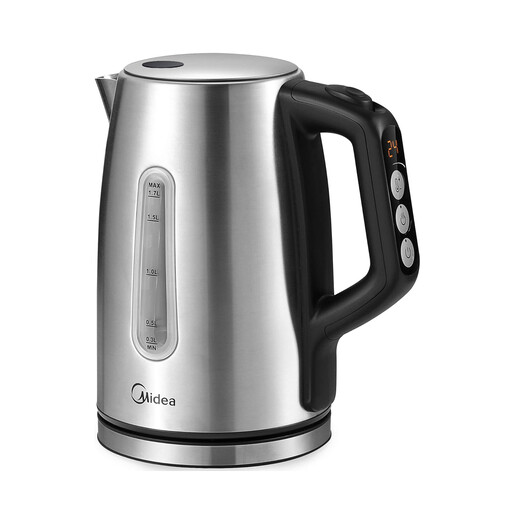
Ideal for: Purists who take their tea or coffee preparation seriously. The precise temperature control allows you to tailor the heat to each beverage, unlocking all its subtle flavours.
It solves the one-temperature-fits-all problem by offering 6 heating levels. No more scalding your green tea with water that's too hot!
The keep warm function (up to 1 hour) and its large 1.7 L capacity make it a perfect ally for both daily use and entertaining guests.
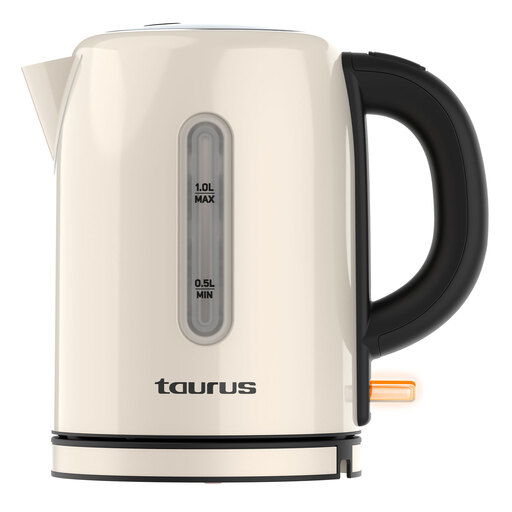
Ideal for: Those looking for a beautiful object for their kitchen. Its retro look and compact 1 L capacity are perfect for small spaces, studios, or offices.
It ticks all the ergonomic boxes: a drip-free spout, a cool-touch handle, and an easy-to-open lid. Those little daily annoyances are a thing of the past.
Its 2400 W of power for just 1 L ensures an express boil. Its stainless steel body and BPA-free materials are a guarantee of safety.
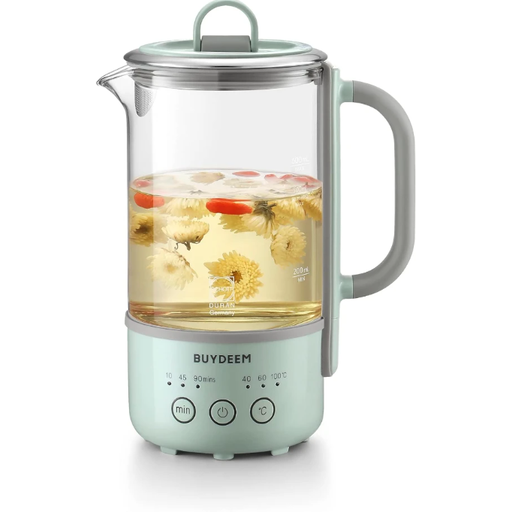
Ideal for: Travellers, students, or anyone needing a portable solution. Ultra-light and compact, this travel kettle fits anywhere. Its 0.6 L capacity is perfect for individual use.
Unlike low-end travel models, this one uses premium materials: DURAN glass and 18/10 stainless steel. Say goodbye to the risk of a plastic taste.
Its automatic keep warm function for 8 hours is an extremely rare and practical feature on such a compact model.
Explore our full selection of kettles that meet our quality criteria and European safety standards.
Regular descaling is essential to maintain your appliance's performance and lifespan. The simplest and most economical method? White vinegar. Fill the kettle halfway with a 50/50 mixture of water and white vinegar. Bring it to a boil, let it sit for an hour (with the appliance turned off), then empty it and rinse thoroughly with clean water (at least two or three times) to remove the vinegar smell.
The lifespan depends on the quality of the materials, frequency of use, and maintenance. An entry-level model will rarely last more than 1 to 2 years. Conversely, a well-made kettle (stainless steel or glass) that is properly maintained and regularly descaled can work perfectly for 5 years or even longer.
Yes, when it comes to a direct impact, glass is inherently more fragile than stainless steel. However, quality models use borosilicate glass, which is designed to perfectly withstand thermal shock (the rapid change from cold to hot). If you're a careful person, a glass kettle is an excellent choice for its neutrality and aesthetics. If rock-solid durability is your number one criterion, then a stainless steel kettle remains unbeatable.