
Livraison le jour même ou le lendemain

Qualité garantie

Débloquez vos offres de bienvenue: Livraison GRATUITE | Jusqu'à -80 % | 30 jours d'essai gratuits à JoyPlus
Téléchargez l'application
Choosing a new electric kettle might seem like child's play, but the market is a jungle of models with often misleading claims. Between flashy designs and complex features, the risk of ending up with an unsuitable, or even flawed, appliance is very real. This guide is here to decode the spec sheets and help you make an informed choice that's perfectly suited to your daily life.
Before we even start comparing features, let's review the common mistakes that can turn a purchase into a disappointment.
To sort through the options and find the perfect model, focus on these key points.
The material of the kettle's body is crucial: it affects the water's taste, the appliance's durability, and your health.
The capacity should match your habits—no more, no less.
Expressed in watts (W), power determines the heating speed. Anything over 2000?W is considered a rapid-boil kettle. However, high wattage isn't everything; the overall energy efficiency also depends on the appliance's design.
Some options can transform your experience... provided they meet a real need.
We've selected a few models that stand out for their smart design and quality materials, catering to different user profiles.
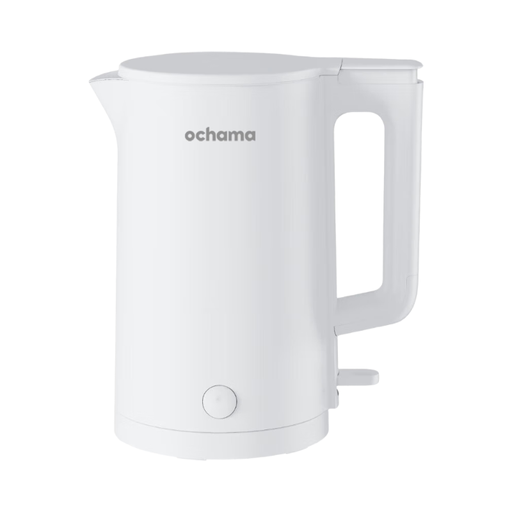
Why we love it: With its comfortable 1.7 L capacity, it's perfectly sized for family needs. A simple, efficient model that gets straight to the point: heating water quickly, effectively, and safely.
This model skips superfluous features. It focuses entirely on food safety with a body made of 304 stainless steel, ensuring your water has no aftertaste.
Its automatic keep-warm function at 55°C is a real bonus, providing warm water on demand without needing to re-boil completely.
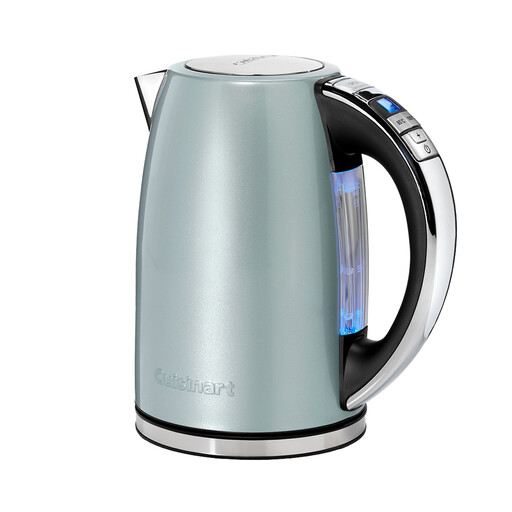
Why we love it: For those who are serious about their brew, temperature control is non-negotiable. This model offers several presets (from 85°C to 100°C) to precisely suit different teas and coffees.
Here, the temperature control isn't a gimmick. It meets a genuine need for a discerning user who will leverage it to perfect their brews.
Its LCD screen displaying the real-time temperature and its 3000 W power ensure precise control and lightning-fast boiling. Its full stainless steel body also guarantees easy maintenance.
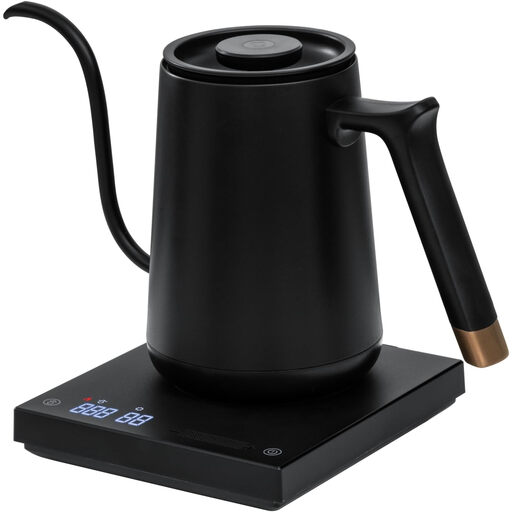
Why we love it: This is the tool of choice for pour-over coffee enthusiasts. Its design is entirely focused on pouring precision—a non-negotiable criterion for gentle extraction methods like V60 or Chemex.
This gooseneck kettle doesn't try to be a jack-of-all-trades. It's a specialist's tool that excels at its mission, with zero compromise on flow rate control.
Its patented spout ensures a perfectly vertical (90°), thin, and stable stream of water. Paired with to-the-degree temperature control (from 40 to 100°C), it offers absolute command over the extraction.
Discover our full selection of kettles that meet our quality criteria and European safety standards.
Limescale is your kettle's number one enemy: it harms its performance and hygiene. The simplest, most eco-friendly solution? Fill it halfway with a 50/50 mixture of water and white vinegar. Bring it to a boil, let it sit for an hour (with the appliance off), then empty it and rinse thoroughly with clean water at least two or three times to remove the vinegar smell.
It all depends on your priorities. Stainless steel is the champion of durability and retains heat slightly better. Glass wins on aesthetics, lets you see the water simmer, and guarantees a 100% neutral taste, but it remains more fragile.
Consumption obviously depends on the power and your usage. That said, the electric kettle remains one of the most energy-efficient appliances for heating water. Why? Because it only heats the exact amount you need and does so much faster than a pot on a stovetop, thereby limiting energy waste.