
Livraison le jour même ou le lendemain

Qualité garantie

Débloquez vos offres de bienvenue: Livraison GRATUITE | Jusqu'à -80 % | 30 jours d'essai gratuits à JoyPlus
Téléchargez l'application
Buying an electric kettle? Seems simple enough, at first glance. Yet, behind the eye-catching designs and marketing promises lie pitfalls that can quickly turn your daily essential into a source of frustration. Our mission: to help you decode the technical specs and make an informed choice that’s tailored to your real needs, not the siren song of advertising.
Before you decide, let's review the 3 most common mistakes that lead to buyer's remorse.
fast boiling as a key selling point. However, this performance simply depends on the ratio of power (in watts) to capacity (in litres). A 2200W kettle for 1.7L is not fundamentally faster than a 1500W model for 1L. The key is to choose a power level appropriate for the volume you typically heat, so you don't waste energy unnecessarily.stainless steel kettle or a glass kettle? Think again. The inner lid, filter, or even the water level indicator are too often made of plastic and come into direct contact with boiling water. Even with a "BPA-free" label, these components can alter the taste of the water and wear out much faster than the rest of the unit.variable temperature kettle with ten settings really necessary if you only drink black tea or instant coffee? These options, while perfect for purists, often represent an unjustified extra cost for standard use.To sidestep these traps, focus on these fundamental technical points. They are the true guarantee of your appliance's durability, safety, and quality.
This is THE deciding factor for taste purity and the longevity of your kettle.
stainless steel kettle where the inner pot, spout, and inside of the lid are 100% metal is an excellent indicator of quality.glass kettle allows you to easily monitor the water level and any limescale buildup. Check that the heating base is made of stainless steel.Your choice should fit your daily routine.
small kettle (between 0.6L and 1.2L) is perfect for a single person or a couple. For a family or heavy tea drinkers, a 1.7L kettle is more convenient.fast boiling for large volumes. For a small kettle, a power rating of 1500 to 1800W is more than sufficient and more energy-efficient.User comfort and safety are non-negotiable.
cordless kettles. This means the kettle detaches from its 360° base for easy pouring, whether you're right- or left-handed.variable temperature kettle is a real asset for lovers of delicate teas (green, white, etc.) that require infusion at 70-80°C. A keep-warm function can also be very practical.To help you see more clearly, here's how these criteria translate in practice with a few models that stand out from the crowd.
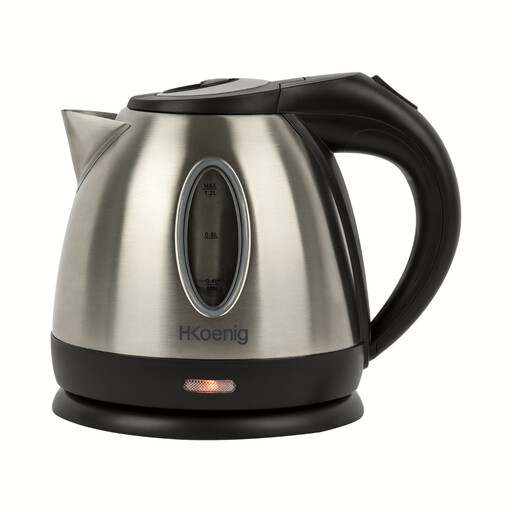
Why this model stands out: Perfectly sized for one or two people, this small 1.2L kettle gets straight to the point. Its 1630W power is ideal for its volume, ensuring fast and efficient heating for your morning tea or coffee, without any superfluous features.
Its almost all-stainless-steel design minimises contact with plastic. It focuses on its primary mission: heating water, and doing it well.
A compact size and a stainless steel body, guaranteeing simplicity and durability. Its 360° base and visible water level make it very practical for daily use.
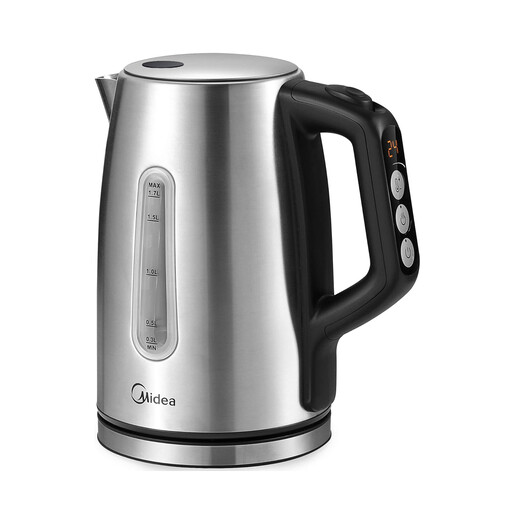
Why this model stands out: For those who know that scalding green tea with 100°C water is a sacrilege, this model is the perfect ally. It offers precise temperature control to extract the best flavour from every infusion.
Here, the advanced features aren't gimmicks. The temperature control is a genuine value-add that justifies its price. Its double-wall construction ensures excellent insulation and enhanced safety.
Its six temperature presets (from 40 to 100°C) and its keep-warm function for up to one hour. The large 1.7L capacity is perfect for serving multiple tea enthusiasts.
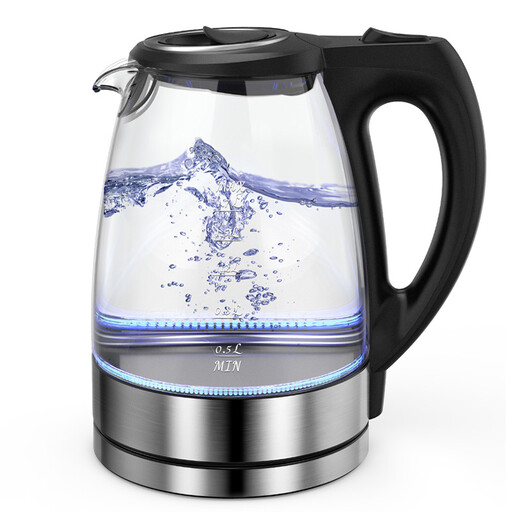
Why this model stands out: Combining modern design with great practicality, this kettle is tailor-made for family life. Its large 1.7L capacity and powerful 2200W heating element are ideal for mornings when every minute counts. The glass body is a real plus, for both hygiene and style.
It tackles the "hidden plastic" trap head-on. Its borosilicate glass body and 304 stainless steel heating base ensure virtually zero contact with undesirable materials. Its high power is perfectly justified by its large capacity.
The transparency of the glass, which lets you monitor cleanliness and the water level at a glance. Overheat and boil-dry protection make it a safe appliance for the whole family.
We've curated a full selection of kettles that meet our quality criteria and European safety standards.
The lifespan of an electric kettle generally ranges from 3 to 5 years. This longevity depends on the frequency of use, the quality of the components, and, crucially, the hardness of the water in your area. Regular descaling is the secret to preserving its heating element and efficiency.
For a simple and eco-friendly descaling, fill your kettle with an equal-parts mixture of water and white vinegar. Bring it to a boil (or let it sit for an hour without heating), empty it, then rinse thoroughly with clean water (two to three times) to remove any residual vinegar smell. Commercial descaling products are also very effective.
Yes, in most cases. Kettles where the parts in contact with water (inner pot, inside of the lid, spout) are made of 304 food-grade stainless steel or borosilicate glass are preferable. These materials are considered "inert": they do not leach any substances into boiling water and do not alter its taste, unlike some plastics, even those labelled "BPA-free".