
Livraison le jour même ou le lendemain

Qualité garantie

Débloquez vos offres de bienvenue: Livraison GRATUITE | Jusqu'à -80 % | 30 jours d'essai gratuits à JoyPlus
Téléchargez l'application
Buying an electric kettle? It seems simple enough. Yet, between marketing promises and flashy designs, numerous pitfalls can quickly turn your tea break into a daily disappointment. As the Head of Product Curation at Joybuy, my role is to guide you beyond the advertising hype, focusing on concrete criteria. Let's break down the common mistakes to avoid and the key factors for making an informed choice.
Before you even start comparing models, let's review the three classic mistakes that lead to buyer's remorse.
For a purchase you won't regret, focus on these three pillars. They are what will make the difference in the long run.
The choice of material is crucial: it directly impacts the taste of the water and the longevity of your kettle.
stainless steel kettle: This is the reliable choice. Robust, neutral in taste, and easy to clean, stainless steel ticks all the boxes. Double-wall models add excellent insulation, keeping water hot for longer and ensuring the exterior remains cool to the touch.glass kettle: Its main appeal is the visual delight of watching the water boil. Glass also guarantees absolute taste neutrality. Its Achilles' heel is its fragility. Opt for borosilicate glass, which is much more resistant to thermal shock.The capacity and power combination should be tailored to your household size and habits.
Some options, far from being gimmicks, can genuinely simplify your life.
adjustable temperature kettle: A must-have for tea and coffee aficionados. Preparing green tea at 80°C instead of 100°C makes all the difference in preserving its aromas. Some models offer fixed presets, while others allow for precise temperature control, perfect for purists.cordless kettle: This has become the standard; virtually all models are "cordless." In practice, the kettle detaches from its 360° base for easy pouring, whether you are right- or left-handed.Here is our selection of models that tick all the right boxes, each tailored to a specific need.
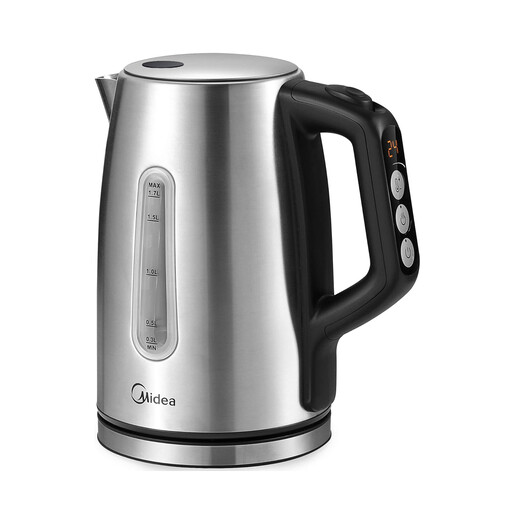
Why we chose it: Perfect for those who are serious about their tea or coffee preparation. Its six temperature presets allow you to achieve the ideal brewing temperature for every beverage, from delicate white tea to simple instant coffee.
No useless gimmicks here. Just one essential, well-executed feature: precise temperature control that sets it apart from a basic model.
Its large 1.7 L capacity, its double-wall stainless steel body (for cool-touch safety), and its keep-warm function for up to 60 minutes.
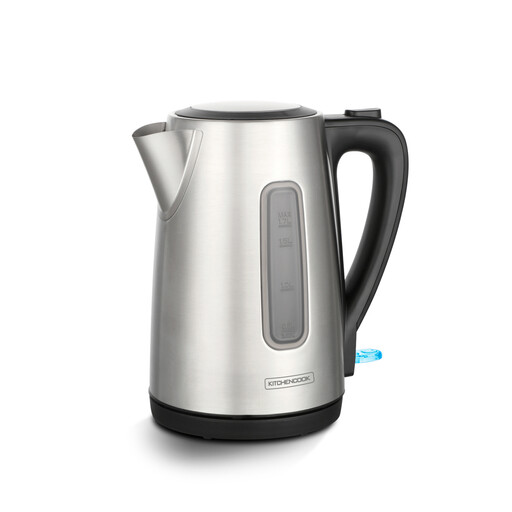
Why we chose it: The quintessential reliable and efficient model, built for the daily grind. Its large 1.7 L capacity is perfect for the whole family's breakfast or for meal prep.
It goes all-in on durability with a 100% stainless steel body. Say goodbye to the low-grade plastic pitfall, which degrades and imparts a bad taste to the water.
Fast boiling thanks to its high power (1850-2200 W), a removable anti-scale filter, and all the essential safety features (auto shut-off, boil-dry protection).
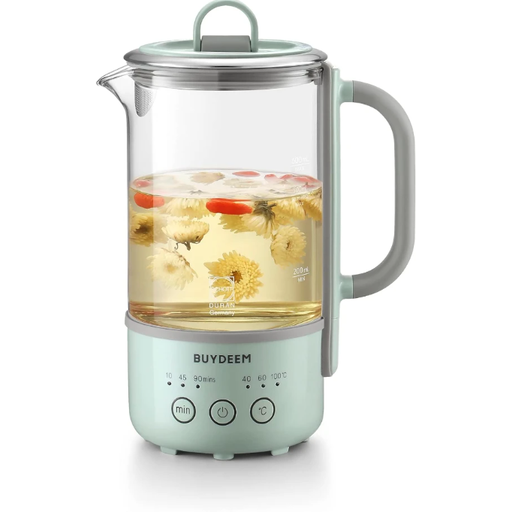
Why we chose it: The perfect companion for those who need hot water anywhere: on the road, at the office, or in a student dorm. Its ultra-compact size and feather-light weight make it incredibly easy to transport.
It proves that a mini size doesn't mean cut-rate quality. The use of Schott Duran glass and 18/10 stainless steel ensures healthy, taste-free water, even when you're on the go.
Feather-light (680 g), a 0.6 L capacity ideal for one or two people, and a surprising 8-hour automatic keep-warm function.
Discover our full selection of kettles, all tested and approved according to our quality criteria and European safety standards.
Descaling is essential to guarantee your appliance's performance and longevity. The simplest and most cost-effective solution? White vinegar. Fill the kettle halfway with a 50/50 mixture of water and white vinegar. Bring it to a boil, let it sit for about an hour, then empty it. Afterwards, rinse thoroughly with clean water (two or three times) to get rid of the vinegar smell.
From a health perspective, both glass and stainless steel are impeccable. Neither leaches unwanted substances nor alters the taste of the water. The choice, therefore, comes down to aesthetics and durability. Stainless steel is virtually indestructible, while glass, though more elegant, is inherently more fragile.
The lifespan depends on its manufacturing quality, your frequency of use, and the hardness of your water. On average, a good model will last between 3 and 5 years. The secret to making it last? Regular descaling (every 1 to 3 months, depending on the limescale in your area) is the best way to ensure its longevity.