
Livraison le jour même ou le lendemain

Qualité garantie

Débloquez vos offres de bienvenue: Livraison GRATUITE | Jusqu'à -80 % | 30 jours d'essai gratuits à JoyPlus
Téléchargez l'application
An electric hair styling tool can make drying, straightening or creating curls much simpler. But marketing promises alone aren't enough to guarantee a reliable choice. Excessive heat, an incompatible plug or an awkwardly sized tool can make using it a chore, and may even accelerate damage to the hair fibre.
Before buying a hot brush, straightener or hairdryer, focus on the settings, the heating method, the power supply and the accessories that are actually included. These criteria will help you choose a tool suited to fine, thick, curly, hard-to-tame or frizz-prone hair.
Ionic technology is often presented as a miracle cure for frizz. In practice, it can help reduce static electricity, depending on the design of the appliance and your hair type. However, it doesn't replace proper drying or well-controlled heat.
An 1,800 W ionic hairdryer or an ionic hot brush can fit into certain routines, especially if your hair tends to puff up. But do check the available settings and don't regard ions as a guarantee of shine or protection from damage.
A maximum temperature of 200 °C or more isn't necessarily an advantage. Fine, coloured or already damaged hair often needs moderate heat. Thick or very curly hair can benefit from a higher temperature to make styling easier, provided you work on dry hair in small sections.
Opt for an appliance with several temperature levels, ideally with a clear display. Precise adjustment is far more practical than a simple 'hot' or 'very hot' button.
Some products described as 'dual voltage' or 'bi-voltage' come with a foreign plug. Compatibility with different voltages doesn't mean the appliance can be plugged directly into a UK socket. Check the plug type, the accepted voltages and whether you might need an adaptor.
The format also matters: a swivel cord makes movement easier, while a cordless model offers more freedom, at the cost of regular recharging.
For versatile use, look for at least three temperature levels. An LCD screen or digital display lets you know exactly which setting you've selected and makes it easier to replicate your routine.
As a guide, a thermal brush might offer moderate levels, around 150 °C to 165 °C, for fine hair, then higher settings for normal, thick or hard-to-tame hair. These values aren't a medical recommendation: always adapt the heat to the condition of your hair and the manufacturer's instructions.
A ceramic or ceramic tourmaline coating is valued for its more even heat distribution. The shape of the barrel should also match the result you're after:
Longer heated bristles can help grip sections, but avoid any direct contact with the scalp and skin.
The power of a hairdryer, expressed in watts, gives an indication of its consumption and motor capabilities. However, it alone doesn't determine drying speed. Airflow, the concentration of the stream and temperature settings matter just as much.
Check for overheat protection, a removable or washable air intake grille, and a concentrator nozzle if you want to do a blow-dry. For a rechargeable cordless straightener, pay close attention to the charging time, the stated battery life and whether you can use it while it's charging.
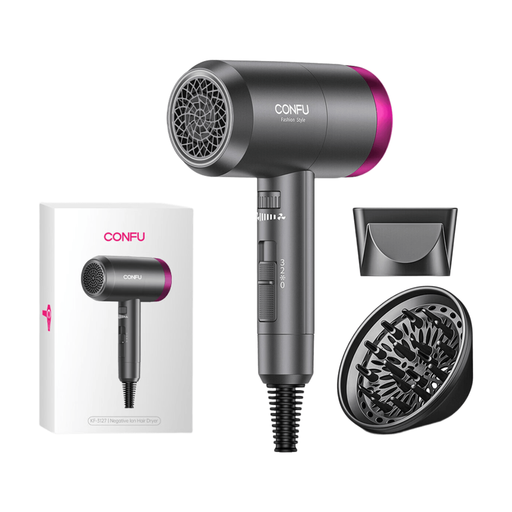
Why this choice suits this profile: This hairdryer is suitable for a daily drying and styling routine, with a stated power of 1,800 W and a concentrator nozzle.
Its temperature and speed settings mean you don't have to make do with a single mode. The listing also mentions automatic shut-off in case of motor overheating.
Stated power of 1,800 W, ionic technology mentioned by the manufacturer, removable rear grille and air outlet.
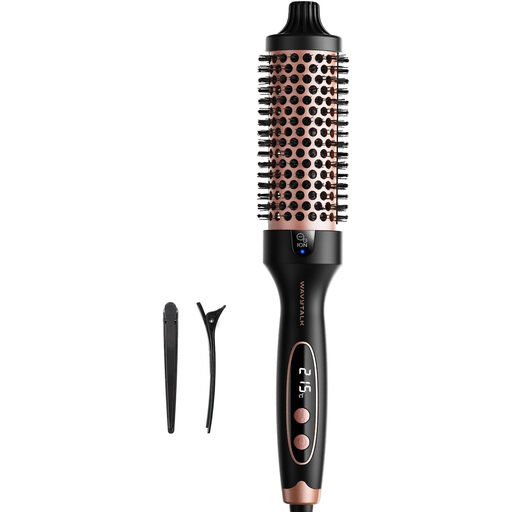
Why this choice suits this profile: Its two-in-one format is ideal for those who want to create volume and movement without cluttering the bathroom with multiple devices.
The five displayed temperatures reduce the risk of picking a setting at random. Please note: this is a hot brush, not a blow-dry brush; hair must be dry.
38 mm barrel, ceramic tourmaline coating, LED display, 360° swivel cord and stated dual voltage.
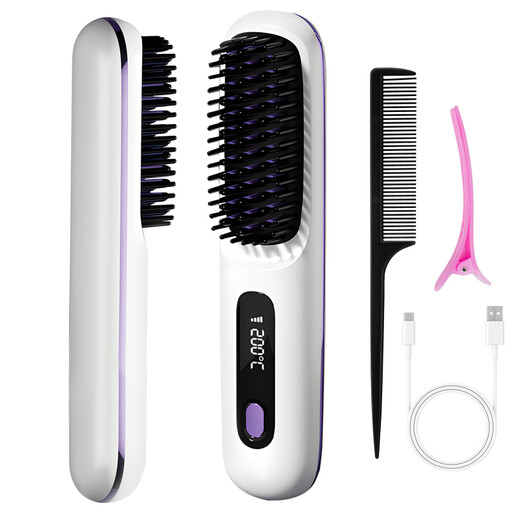
Why this choice suits this profile: Its cordless operation is ideal for touch-ups, travel or salon use where mobility comes first.
The LCD screen and three stated temperatures help prevent approximate settings. However, do check the battery life and charging time before any heavy use.
Rechargeable format, cable-free use and stated compatibility with all hair types.
We've put together a comprehensive, real-time selection of products that meet these exacting criteria as well as European safety regulations.
There isn't necessarily one perfect styling appliance for all hair types and all users. Fine hair generally appreciates lightweight tools and moderate temperatures. Thick or curly hair, on the other hand, often needs powerful airflow, good grip on sections and precise heat control.
An ionic hot brush or ionic hairdryer could be worth considering if your hair is prone to static electricity. However, the result depends on your hair fibre, the ambient humidity and your styling technique. Dry the roots in the direction of growth and opt for a temperature suited to the maximum level.
A model around 1,800 W can offer a good balance between power and domestic use, like the CONFU hairdryer featured above. However, don't consider power in isolation: also compare speeds, temperatures, airflow, weight and whether a concentrator nozzle is included.
The lifespan depends on how often you use it, how well you maintain it, how you store it and the quality of the cord or battery. Regularly remove hair and dust, avoid knocks, never leave the appliance plugged in unattended, and stop using it immediately if the cable is damaged, the battery swells or an unusual smell appears. Check the warranty and manufacturer's information for applicable terms.