
Livraison le jour même ou le lendemain

Qualité garantie

Débloquez vos offres de bienvenue: Livraison GRATUITE | Jusqu'à -80 % | 30 jours d'essai gratuits à JoyPlus
Téléchargez l'application
The electric grill has become a kitchen staple, offering the perfect way to enjoy grilled food year-round without the hassle of a traditional barbecue. Whether you need a meat grill for a quick weeknight dinner, a social electric griddle for entertaining, or a panini press for lunch, the market is flooded with options. The problem? Not all models are created equal, and disappointment is common.
As experts in small kitchen appliances, our mission is to guide you through this jungle. To help you avoid buyer's remorse, we've identified the three common pitfalls that too often turn a great deal into a bad purchase.
To avoid these issues, rely on objective technical criteria. These are the true guarantors of your future indoor grill's performance and longevity.
Power, measured in watts (W), is the most critical factor. To sear a good cut of meat and get those coveted grill marks, aim for at least 1800W. Anything less, and the appliance will lack punch and struggle to maintain a stable temperature, especially on larger cooking surfaces.
Inseparable from power, an adjustable thermostat is just as crucial. It allows you to adapt the temperature for each type of food: high heat for a steak, gentler heat for vegetables or a panini. It gives you complete control for healthy cooking with precision.
Don't be fooled by the mere mention of "non-stick." Scrutinise the type of coating. Cast aluminium plates with a reinforced coating, sometimes ceramic-based, are a sign of durability. Crucially, ensure the coating is certified PFOA-free (perfluorooctanoic acid), a controversial substance to be avoided for your peace of mind.
Everyday convenience comes down to design details. Here are the points you must check:
Because every user is unique, here is our selection of models that stand out for their smart design and suitability for specific uses.

Why we love it: Perfect for city dwellers and busy families, this Swiss Army knife of appliances acts as a grill, sandwich maker, and panini press. Its dual-sided contact cooking cuts preparation time in half for meals ready in a flash.
With its 2000W, it heats up quickly and ensures even cooking with no cold spots. Its food-grade non-stick coating is designed to be wiped clean with a sponge, solving the problem of tedious maintenance.
Its 3-in-1 versatility and dual-sided cooking for on-the-go meals.
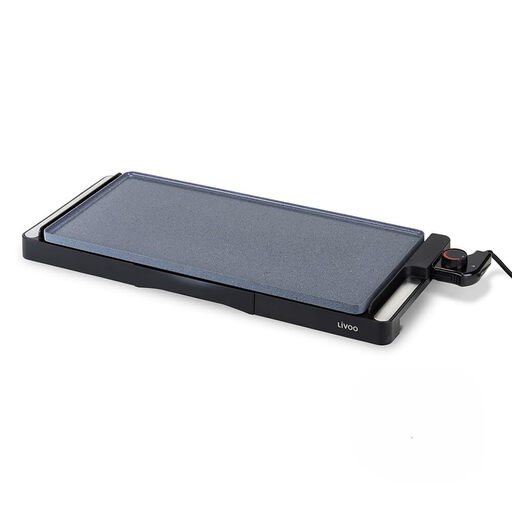
Why we love it: Ideal for meals with family or friends, this XXL griddle offers a generous cooking surface. Its bamboo base isn't just for looks: it provides stability and thermal insulation to protect your table.
Its 2200W of power ensures even heat across the entire surface, overcoming the uneven cooking pitfall. The grease collection system with its removable tray radically simplifies cleaning.
Its XXL cooking surface (50x25 cm) and removable thermostat for optimised storage and cleaning.
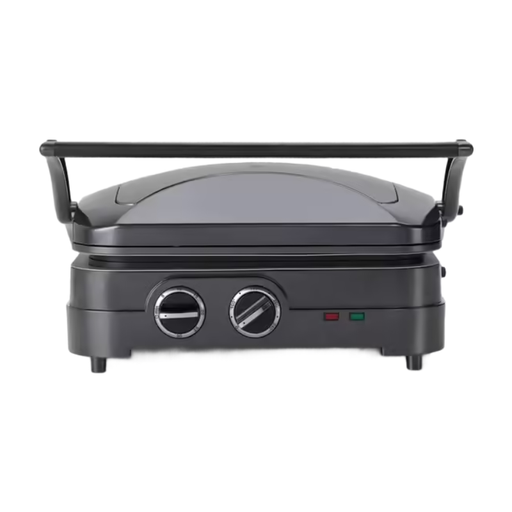
Why we love it: For those who demand more than just a simple grill. This model features reversible plates (one grill side, one griddle side) and a floating hinge that adjusts to the thickness of the food (up to 8 cm), perfect for thick cuts of meat or gourmet paninis.
It smashes the cleaning pitfall: its plates are removable and dishwasher-safe. Its PFOA-free coating and robust design promise excellent longevity, a far cry from disposable gadgets.
Its 3 cooking modes (grill, barbecue, griddle) and reversible plates for absolute versatility.
Discover our full selection of grills and griddles that meet our quality standards and European safety regulations.
It all depends on your intended use. To properly sear meat, aim for at least 1800 to 2000W. For paninis or more occasional use, 1500W may be sufficient. For a large griddle, 2200W or more is a good benchmark to ensure even heat.
If the plates aren't removable, technique is key. Wait until the appliance is warm (never hot!) and unplugged. Use a soft sponge with a little washing-up liquid. The trick for stubborn residue? Place a damp paper towel between the plates and close the grill for a few minutes: the steam will loosen the baked-on juices. Most importantly, never use an abrasive sponge or metal utensil that could scratch the coating.
Consumption depends on the power and usage time. A 2000W (or 2kW) grill consumes 1 kWh if it runs at full power for 30 minutes. But since cooking times are very short (usually 10-20 minutes), its impact on the electricity bill is very limited—much less than a conventional oven that requires a long preheating time.