
Livraison le jour même ou le lendemain

Qualité garantie

Débloquez vos offres de bienvenue: Livraison GRATUITE | Jusqu'à -80 % | 30 jours d'essai gratuits à JoyPlus
Téléchargez l'application
As a passionate golfer, you know that concentration and endurance are key on the green. But after a dozen holes, the weight of your bag takes its toll, turning a fun round into a test of stamina. To save your energy and protect your swing, a remote-controlled electric golf caddy is the ideal solution.
However, the market is flooded with promises that don't always go the distance on the fairway. Before you pull out your credit card, it's best to understand the common marketing traps to avoid disappointment.
An electric golf caddy is an investment. To avoid buyer's remorse, here are three common weaknesses often hidden by a polished sales pitch.
To avoid being fooled by slogans, focus on objective technical criteria. Here are the 2 points to examine closely.
Motor power and battery endurance are inseparable. The motor gives the caddy the strength to tackle changes in elevation, while the battery gives it the stamina to go the distance.
A smart golf caddy is nothing without rock-solid stability. The chassis design and choice of wheels are therefore crucial for its reliability, regardless of the terrain.
To see what this looks like in practice, here is a suggestion tailored for a specific type of player.
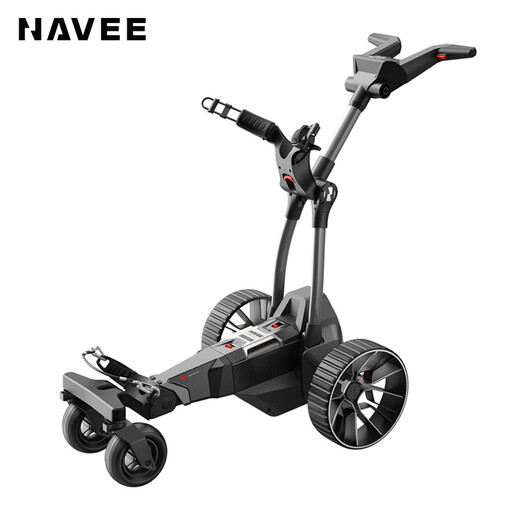
Why it's a match: Perfect for regular players who frequent courses with elevation changes. Its precise remote control allows them to focus 100% on their game.
Its 220 Wh battery ensures a true 36-hole range, while its dual motor (240W peak) and anti-tip wheel make it foolproof on slopes where less robust models would give up.
Its power allows it to climb slopes of up to 25% without faltering. The IPX5 water resistance is a major asset for playing even in light drizzle. Its compact fold and included accessories (umbrella holder, cup holder) round out an already solid spec sheet.
This model is clearly aimed at demanding players. If you play more occasionally or on mostly flat courses, other criteria like compactness or a tighter budget will take priority. Don't hesitate to explore other ranges to find the caddy that perfectly suits your needs.
Discover our full selection of models that meet our demanding selection criteria and current safety standards.
A quality lithium battery is designed to handle between 300 and 500 full charge cycles. For a weekly golfer, this translates to several years of peace of mind. The secret to making it last? Avoid complete discharges and, for long-term storage, keep it in a cool, dry place at about 50-60% charge.
It all depends on its design. A well-thought-out model with a low center of gravity, wide wheels, and a responsive, high-torque motor can be controlled with precision using the remote, even on an incline or sidehill. Caddies equipped with an anti-tip wheel, like the NAVEE Birdie 3 golf caddy, add welcome security against the risk of flipping over.
Maintenance is a breeze. After each round, a wipe-down with a damp cloth is enough to remove mud and grass. Occasionally check that the wheels turn freely and the axles are clean. For the battery, the golden rule is: only use the original charger, avoid extreme temperatures, and strictly follow the manufacturer's advice for winter storage.