
Livraison le jour même ou le lendemain

Qualité garantie

Débloquez vos offres de bienvenue: Livraison GRATUITE | Jusqu'à -80 % | 30 jours d'essai gratuits à JoyPlus
Téléchargez l'application
Rough heels, thickened skin on the soles of your feet, or calluses that keep coming back – an electric foot callus remover can make home care much simpler. But you need to choose a model that suits your needs. A high speed doesn’t guarantee a more comfortable result, and a flood of accessories can make maintenance more complicated rather than easier.
Before comparing an electric foot file, an electric callus remover or an electric foot sander, take the time to look at the features that really matter, the safety of use, and the availability of replacement heads.
A very fast device might seem appealing, but it isn’t necessarily suitable for sensitive areas or thin calluses. At high speed, pressing too hard can quickly make the treatment uncomfortable.
A multi-speed setting lets you start gently on the heels, then adjust the movement for the soles of your feet. Having several speed levels is often more useful than an impressive number highlighted in an advert.
A single abrasive surface isn’t necessarily right for every area. Heels generally have thicker skin than the top of the foot, while the sole may need a more gradual approach.
Interchangeable sanding heads offer more flexibility, provided they are clearly labelled and easy to remove. Also check whether they can be rinsed and dried separately – never submerge the motor unit.
Skin residue can build up on the roller or in the grooves of the device. A model that’s difficult to clean will quickly lose its appeal for everyday use. Always check the manual to see which parts are washable.
A callus remover should only be used on thickened, intact skin. Avoid irritated, injured, very thin or painful areas. If you have any specific foot problems, consult a healthcare professional before using the device.
The material of the head affects how it feels during use and how precise the treatment is. Nano-glass surfaces, abrasive rollers and heads with different grit levels all offer a different experience.
To gradually remove hard skin from your feet, choose a head suited to the thickness of the skin and avoid repeated passes over the same spot. The aim is to smooth rough areas, not to remove the entire protective layer of the epidermis.
A device with many speed levels can suit different needs, as long as the controls are simple to use. A gradual adjustment is particularly useful for switching between:
The number of speeds should be considered alongside the shape of the handle, the stability of the device, and how easy it is to control your movement.
Check the instructions for cleaning the rollers and heads. Some accessories can be rinsed, but the motor and charging port must not be submerged unless the manufacturer explicitly says so.
For regular use, also look for:
These points don’t replace reading the manual, but they help you rule out devices where use or maintenance isn’t clearly explained.
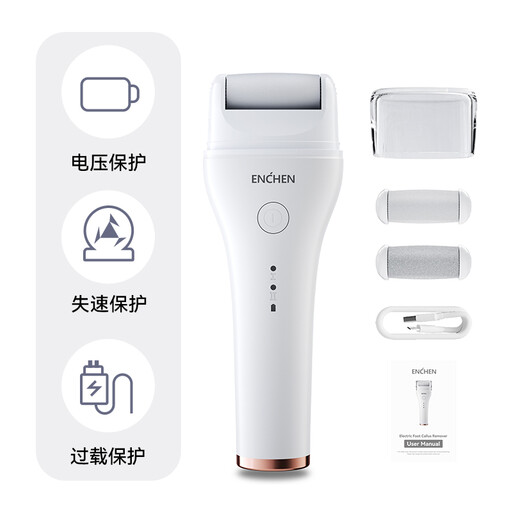
Why this suits this profile: Its three heads let you match the abrasive surface to the thickness of the callus, making it easy to start a basic home care routine.
The choice of three rollers means you don’t have to make do with a single abrasion level. The manufacturer also states that it has an automatic stop if too much pressure is applied.
Three interchangeable sanding heads and the option to use on dry or damp skin, as per the instructions provided.
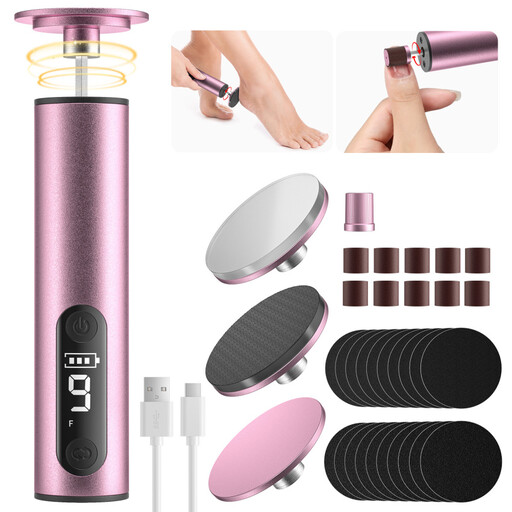
Why this suits this profile: Users who want to fine-tune their routine have nine speed settings and nano-glass heads at their disposal.
The nine levels mean you’re not limited to a single speed. However, it’s still best to start at the gentlest setting and pay attention to how it feels.
Nine speed settings and nano-glass sanding heads designed for heels and the soles of the feet.
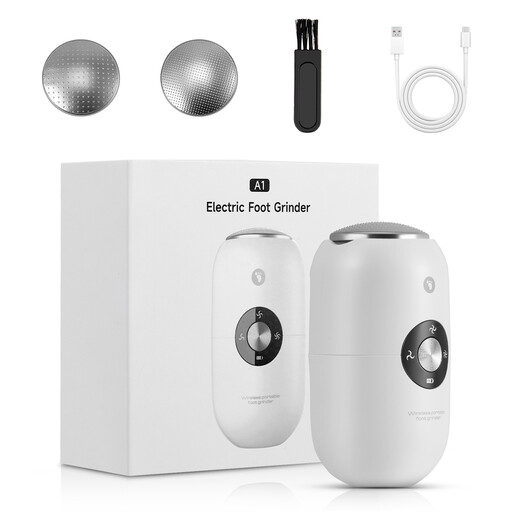
Why this suits this profile: Its multi-speed adjustment and interchangeable heads make it ideal for a household where several people have different needs.
The replaceable accessories reduce the risk of using the wrong head for the area being treated. The speed adjustment also lets you adapt your technique to the dryness of the skin.
Interchangeable sanding heads and multi-speed control, in a design suitable for both men and women.
We’ve put together a comprehensive, real-time selection of products that meet these demanding criteria, as well as European safety regulations.
To minimise irritation, it’s best to follow a simple routine:
Do not use the device on a wound, blister, irritated area or very thin skin. Persistent corns, pain and any unusual changes should be checked by a doctor.
Some models are designed for dry or damp use, but this depends entirely on the product. For the ENCHEN Rock, the instructions state both options for the feet. This does not mean the motor unit can be submerged. Always check the manual before getting the device wet.
Its lifespan depends on how often you use it, the pressure applied, how well it’s maintained, and the condition of the abrasive heads. A worn roller or head should be replaced if the manufacturer offers suitable parts. Regularly cleaning the accessories and keeping the device dry can help preserve its performance.
Power consumption mainly depends on the type of battery, charging time and how often you use it. To compare two models, check the charging information provided and choose a device where the cable, port and instructions are clearly documented. In everyday use, the cost is generally limited to charging and the occasional replacement of heads.