
Livraison le jour même ou le lendemain

Qualité garantie

Débloquez vos offres de bienvenue: Livraison GRATUITE | Jusqu'à -80 % | 30 jours d'essai gratuits à JoyPlus
Téléchargez l'application
Between weekday traffic jams and the call of the wild on weekends, finding a truly versatile mode of transport has become a major challenge. In this context, the electric fat bike is emerging as the ideal solution, combining the power of electric assistance with the unparalleled comfort and stability of its XXL tyres.
As the Head of the "Buying Guides" section at Joybuy, my mission is to decode the latest trends for you and give you the keys to making the right choice. This guide is designed to help you navigate the options and identify the features that truly matter, whether you're an adventurer at heart or a pragmatic bike commuter.
Before diving into our selection, let's review the essential technical criteria that will make your purchase a success.
The number one criterion for an e-bike is, of course, its range. A long-range electric bike promises extended rides without the fear of running out of power. The range advertised by manufacturers (often between 50 and 100 km) is an estimate that varies greatly depending on the assistance mode, terrain, your weight, and even the weather. For daily use, an electric bike with a removable battery is a major advantage. It allows you to charge the battery at the office or at home, without having to haul the entire bike up in the lift.
The motor's power defines the bike's character, especially when tackling hills. In the UK and the rest of the EU, the legislation for Electrically Assisted Pedal Cycles (EAPCs or pedelecs) is clear: the motor's nominal power must not exceed 250W, and the assistance must cut out above 25 km/h (15.5 mph). Some models advertise a peak power (for example, a 750W electric bike), which represents a temporary power spike for an acceleration boost. To ride legally on public roads, ensure the model you choose is certified as an EAPC and is limited to 25 km/h.
The signature feature of a fat bike? Its oversized tyres, of course! These wide tyres (often 4 inches or more) provide an exceptional contact patch with the ground. The result: stunning stability and grip on difficult surfaces like sand, snow, or muddy paths. They also act as a very effective natural shock absorber. On the safety front, and given the considerable weight of an e-bike, hydraulic disc brakes aren't an option—they're essential. They guarantee powerful, progressive, and consistent braking, even in the rain.
Here are a few options that stand out for their features and versatility, suited for different types of users.

[Summer Deals - Next-Day Delivery] Mangosteen FT03 Electric Bike 250W with 48V 18.2Ah Removable Battery, 25 km/h, 75 km Range, 20 x 4.5-inch Wide Tyres, Dual Suspension and Hydraulic Disc Brakes
Why it stands out: The Mangosteen FT03 is built for those who refuse to choose between the urban jungle and off-road trails. Its dual suspension (front and rear) and hydraulic disc brakes ensure impeccable comfort and safety, even on the roughest terrain.
Advantages:
Who is it for? For the weekend adventurer who also uses it for their daily commute, and for whom comfort and safety are non-negotiable.
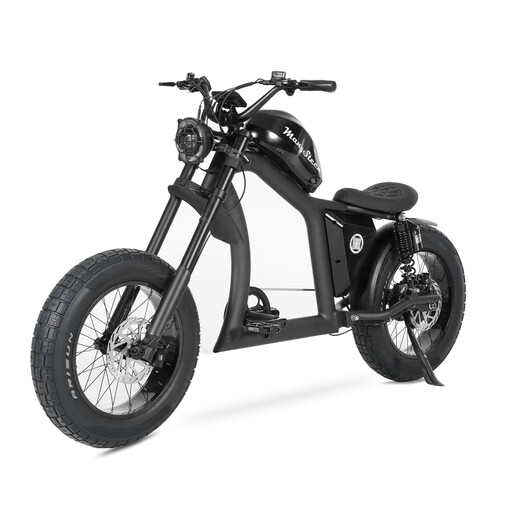
[Summer Deals - Next-Day Delivery] Mangosteen FT02 Electric Bike, 750W, 48V 22.5Ah, 25 km/h, 20" Fat Tyre E-Bike with Dual Suspension and Hydraulic Disc Brake
Why it stands out: The FT02 steps up its game, targeting those who need marathon-like range and a solid power reserve. With its heavy-duty battery and a motor capable of peaking at 750W, it's built for long-distance rides and steep inclines.
Advantages:
Who is it for? The obvious choice for high-mileage riders, long-distance commuters, or those living in hilly areas who need responsive and powerful assistance.

Hiland Ridge Adult Mountain Bike, Sturdy Steel Frame, City Bike for Men and Women, Front Suspension Fork, 18-Speed, Dual Disc Brakes, 26-Inch
Why it stands out: For those who prefer pure pedal power and the raw thrill of a traditional mountain bike, the Hiland Ridge is a relevant alternative. There's no motor here; it's all about robustness and proven mechanics.
Advantages:
Who is it for? For pedalling purists, athletes looking for a simple and effective training bike, or for occasional recreational use on a tight budget.
A bike requires maintenance. To ensure its longevity and optimal performance, certain parts deserve special attention. The braking system, your number one safety feature, is obviously one of them.
If you want to upgrade your current ride or simply find quality components, check out our selection of bike disc brakes.
It depends on many factors: the level of assistance, the rider's weight, the terrain, tyre pressure, and even the weather. For an electric fat bike, you can reasonably expect between 40 and 75 km. Models with very large batteries, like the Mangosteen FT02, can of course exceed this average under ideal conditions.
Yes, it's significantly more physical than with a conventional bike. The weight of the machine (often over 30 kg) and the rolling resistance of the large tyres are very noticeable. It's doable on flat ground or for short distances, but on a hill or a long journey, it quickly becomes a serious workout.
Of course. As long as your bike complies with European EAPC regulations (250W nominal motor, assistance cut-off at 25 km/h, no throttle-only mode), it is treated like a conventional bicycle. You can therefore ride on roads and cycle paths without registration or specific insurance.