
Livraison le jour même ou le lendemain

Qualité garantie

Débloquez vos offres de bienvenue: Livraison GRATUITE | Jusqu'à -80 % | 30 jours d'essai gratuits à JoyPlus
Téléchargez l'application
Electric bikes have already revolutionised how we get around, but the electric fat bike takes adventure to a whole new level. Urban cobblestones, muddy forest trails, sandy beaches… nothing stands in its way. Its versatility and robustness are its greatest strengths. But with an overwhelming number of options on the market, it can be hard to know where to start.
This guide is here to break down the essential criteria and introduce you to a selection of models that stand out from the crowd. The goal: to help you make an informed decision without getting lost in marketing jargon.
Before taking the plunge, a few technical concepts are essential for making the right choice for your daily needs. Here are the three fundamental aspects to scrutinise.
Range is arguably the number one criterion. A long-range electric bike will save you from the dreaded range anxiety. This range is directly dependent on the battery's capacity, expressed in watt-hours (Wh), which is the product of voltage (V) and amp-hours (Ah). In practical terms, a 48V, 20Ah battery (totalling 960Wh) will offer far more endurance than a 36V, 15Ah model (540Wh). Also, consider practicality: a removable battery is a major advantage for easy charging at home or the office.
The motor's power, expressed in watts (W), determines how easily the bike will assist you on hills and during acceleration. In Europe, the nominal power is legally limited to 250W. However, don't be fooled: it's the torque (expressed in newton-metres, N.m) and the peak power (which can reach 750W on some models) that make the real difference. This duo, combined with the wide tyres, transforms the fat bike into a true all-terrain electric bike, ready to tackle any surface.
Comfort is one of the fat bike's main selling points. Its oversized tyres (often 4 inches wide or more) already act as a highly effective natural shock absorber. For supreme comfort on rough terrain, a dual suspension system (front fork and rear shock) is a must-have. On the safety front, hydraulic disc brakes are non-negotiable today. They guarantee powerful, consistent braking, even in the rain—an essential feature for taming the bike's weight and power. A 20-inch fat bike often provides the best balance between urban agility and off-road capability.
To put theory into practice, here are a few models that caught our eye for their technical specs and overall value.
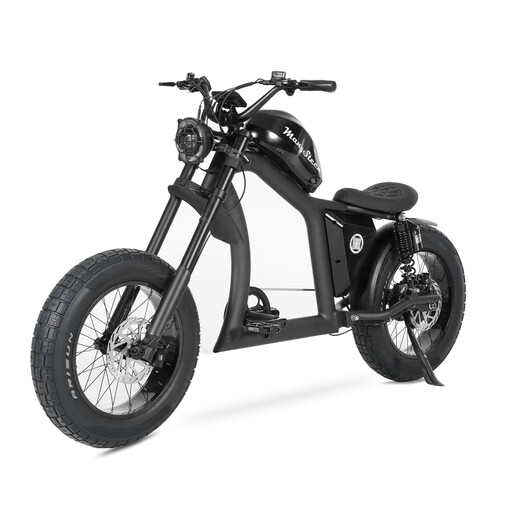
Why it stands out: The Mangosteen FT02 is built for those who refuse to compromise on performance. Its high-capacity battery and powerful motor make it a formidable ally for long distances and demanding terrains.
Key Features:
Who is it for? For long-distance commuters and weekend adventurers who demand maximum range and flawless comfort, no matter the terrain.

Why it stands out: The FT03 is a natural-born adventurer. With its ultra-wide 4.5-inch tyres and robust design, it's ready to devour asphalt, snow, or sand with equal ease.
Key Features:
Who is it for? For explorers who want a do-it-all bike, capable of taking them to the office during the week and on an adventure over the weekend, without ever worrying about the terrain.
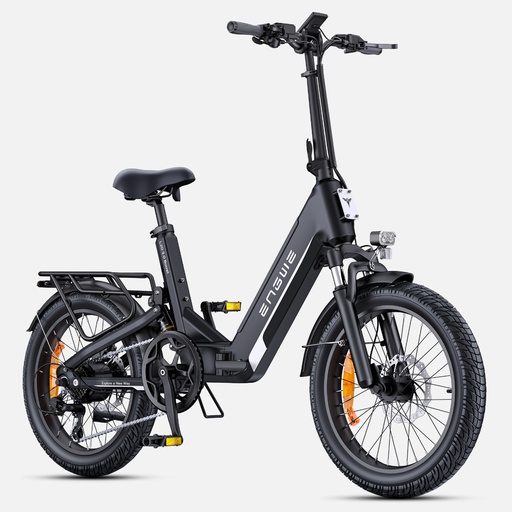
Why it stands out: The Engwe L20 3.0 stands out for its technology and efficiency. Its torque sensor provides an incredibly natural pedalling feel, and its record-breaking charging time is a key advantage.
Key Features:
Who is it for? For tech-savvy cyclists seeking a responsive and natural riding experience, and for whom charging speed is a non-negotiable daily criterion.
Safety is not optional. If the braking system is your top priority, many models are equipped with high-performance technologies.
Explore our full selection of bikes equipped with hydraulic brakes to discover other alternatives suited to your needs.
1. What is the real-world range of an electric fat bike? The advertised range is often optimistic. Under real-world conditions, it depends on many factors: your weight, the assistance level chosen, the terrain's elevation, tyre pressure, and even the temperature. Realistically, expect a range from 50 to over 100 km on the highest-endurance models. Bikes with large-capacity batteries (over 900Wh, e.g., 48V/20Ah) will more easily approach the 100 km mark.
2. Is a fat bike difficult to pedal without assistance? Yes, let's be honest: without assistance, it's more of a workout than a classic bike. The wide tyres create a large contact patch with the ground, which increases rolling resistance. But these bikes are designed and intended to be used with assistance, which completely negates this extra effort. The "no assistance" mode is more of a backup option.
3. Is an electric fat bike suitable for commuting? Absolutely! It's even an excellent choice for commuting to work. Its comfort smooths out road imperfections (potholes, cobblestones), its robustness makes it a reliable partner in all weather, and its all-terrain nature allows you to take shortcuts through parks or on side paths with complete peace of mind.