
Livraison le jour même ou le lendemain

Qualité garantie

Débloquez vos offres de bienvenue: Livraison GRATUITE | Jusqu'à -80 % | 30 jours d'essai gratuits à JoyPlus
Téléchargez l'application
An electric fan can cool a bedroom, circulate air in an office or speed up drying in a workshop. Yet disappointing purchases aren't always down to price – they often result from choosing the wrong format or misinterpreting key features.
Before you place an order, keep three common pitfalls in mind:
The right choice therefore depends on the room, the distance you'll be from the fan, your need for portability and the level of control you're after.
For a bedroom or office, a desk fan or a small portable model can be sufficient if the air needs to circulate over a short distance. In a larger room, a pedestal fan with an oscillation function generally distributes the airflow over a wider area.
Automatic oscillation, adjustable tilt and height adjustment are particularly useful when several people are in the room. In a workshop, garage or on a building site, focus instead on the airflow stated in litres per second, the stability of the base and the ability to direct the flow precisely. The Vacmaster AM1202, for example, claims an airflow of 245 l/s on its product page, with three speeds and adjustable tilt.
A powerful fan isn't necessarily the best choice for a bedroom: a direct, strong draught quickly becomes uncomfortable. It's often better to place it at a distance and use a moderate speed.
For a bedroom fan or an office fan, look at the motor type, the available modes and the stated noise level. DC motors (direct current) usually allow more gradual speed adjustment and can reduce energy consumption.
A low-energy fan should, however, be compared based on its actual power and how long you'll use it. To estimate the running cost, use this formula:
consumption in kWh = power in watts ÷ 1,000 × hours of use
A 35 W appliance used for 8 hours therefore consumes around 0.28 kWh, not accounting for any charging losses. The final cost then depends on the rate set by your electricity tariff.
A rechargeable fan is handy for moving around, for rooms where plug sockets are far away, or for occasional use on a covered patio. A USB fan can be plugged into a computer, a power bank or a compatible mains adapter. Always check the battery capacity, charging time and whether the fan can be used while charging.
For a permanent installation, a ceiling fan frees up floor space. Check its diameter, the ceiling height, the fixing system supplied and its compatibility with your electrical setup. Some models combine lighting, a remote control and reversible rotation, but installation must be carried out safely, following the manufacturer's instructions.
Finally, a bladeless fan limits direct access to moving parts and often has a more discreet design. You should still keep the air intakes and outlets clear, and unplug the appliance before cleaning it.
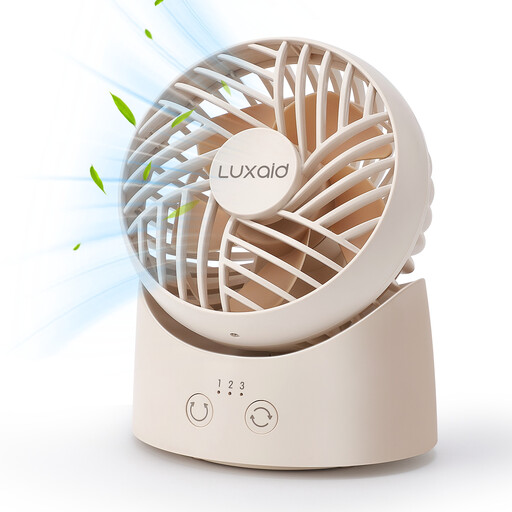
Why this choice suits this profile: Its compact size fits easily on a desk, bedside table or in a small room. It charges via USB-C and has a claimed battery life of up to 8 hours.
The stated capacity is clearly given: 1,800 mAh. This stops you relying solely on another claim on the packaging.
Three speeds, 60° oscillation and a built-in rechargeable battery.
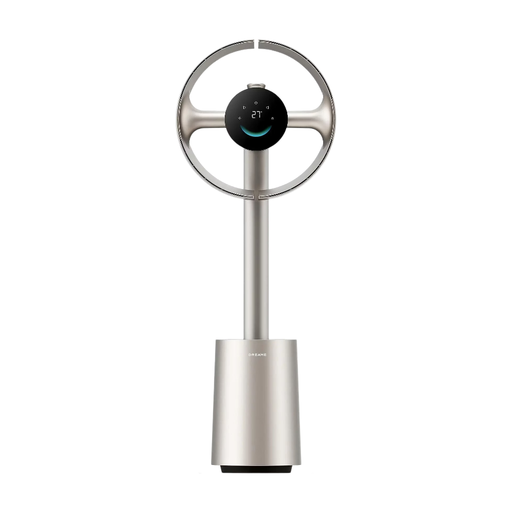
Why this choice suits this profile: This bladeless fan is aimed at users who want app control, a magnetic remote and multidirectional airflow.
The advertised features are clearly detailed: horizontal oscillation up to 180°, vertical up to 90° and a washable main filter.
55 W, app control and built-in temperature sensor, according to the product page.
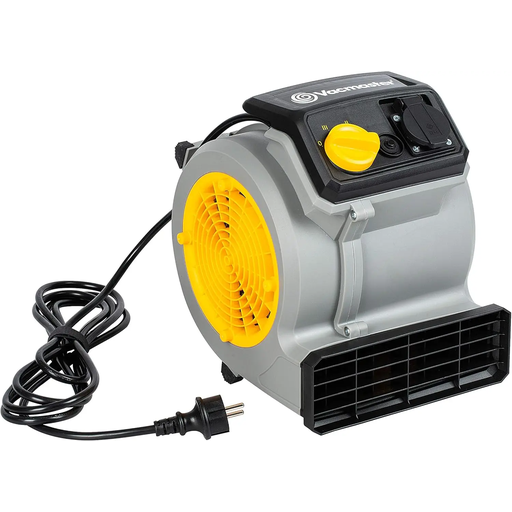
Why this choice suits this profile: Its floor-standing design and adjustable direction make it suitable for workshops, basements, gyms and spaces that need strong air circulation.
The stated airflow of 245 l/s gives a more meaningful indicator than just the electrical power. However, note that the appliance is rated at 75 dB, so it's less suited to quiet environments.
124 W, three speeds, tilt up to 45° and a built-in socket for linking multiple units.
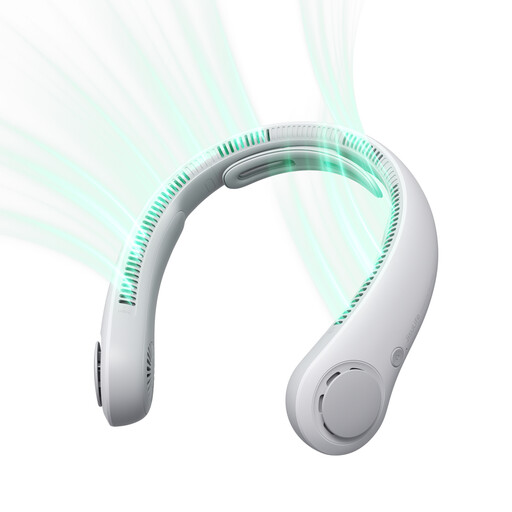
Why this choice suits this profile: This hands-free neck fan is designed for commuting, events, outdoor work and frequent travel.
The stated battery life ranges from 2.5 to 16.5 hours depending on the speed. That's a useful detail to set your expectations before buying.
5,000 mAh battery, five speeds and USB-C charging claimed in 3 to 4 hours.
The cost depends on the power, the speed selected and how long you use it. A 35 W model consumes less per hour than a 124 W appliance, but the airflow and use cases aren't comparable. Check the price per kilowatt-hour on your electricity tariff, then apply the formula given above.
Put it on a stable surface, without blocking the air intakes or outlets. In a bedroom, direct the airflow towards a wall or diagonally rather than straight at your face. To push hot air out, opening a window slightly can help when outdoor conditions allow.
It depends on the motor quality, how often you use it, dust build-up and maintenance. Always unplug the appliance before cleaning it, use a suitable cloth and regularly check the condition of the cable, grille and base. For a rechargeable model, avoid high temperatures and use the charger recommended by the manufacturer.