
Livraison le jour même ou le lendemain

Qualité garantie

Débloquez vos offres de bienvenue: Livraison GRATUITE | Jusqu'à -80 % | 30 jours d'essai gratuits à JoyPlus
Téléchargez l'application
An electric fan heater can quickly warm up a cold bedroom, a home office or part of your living room. But high wattage, an 'eco' mode or a remote control alone don't make a good purchase. The right choice depends mainly on the area you need to heat, your insulation, noise levels and safety in use.
A 2000 W heater uses up to 2 kWh per hour when running at full power. Under the same conditions, a 1500 W model uses up to 1.5 kWh. The actual cost therefore depends on how long you use it, the thermostat setting and your electricity tariff.
The term low-consumption fan heater should be taken with a pinch of salt. ECO mode can reduce power or temporarily stop heating, but an electric resistance heater cannot produce more heat with less electricity at the same wattage.
A 2000 W ceramic heater might suit a large room or a poorly insulated home. In a small office of just a few square metres, however, it's likely to be oversized. Conversely, a heater that's too weak will run for a long time without delivering truly comfortable warmth.
Take into account:
The room sizes quoted by manufacturers are a guide, not a guarantee. The actual temperature you achieve also depends on your home's insulation and layout.
A remote control, 70° oscillation or a digital display can be handy. But these features don't replace a stable base or overheat protection. Also check the cable length, the heater's weight, whether it has a handle and where the controls are positioned.
The CE mark means the manufacturer declares the product meets applicable European requirements. It doesn't mean the heater is better than other models. Always read the manual, check the contact details of the responsible party based in the European Union and review the warranty terms.
The MICA technology in the Taurus Alpatec PRMB1600 is described as a radiant panel with fast, even heat distribution. This model offers 1600 W, three heat settings, an adjustable thermostat and swivel castors.
An electric heater with a thermostat can limit running time once the desired temperature is reached. An adjustable timer – from 1 to 12 hours or 1 to 24 hours – lets you set an automatic shut-off, especially useful in an office or before going to bed.
When comparing ECO modes, look at how they actually work: automatic power adjustment, target temperature and running duration. Simply seeing 'energy saving' isn't enough to estimate consumption or your electricity bill.
Look for at least:
Plug powerful heaters directly into a suitable wall socket. Avoid multi-way adaptors and extension leads, especially with a 2000 W model. Never use a fan heater in a bathroom, near water or under a cover.
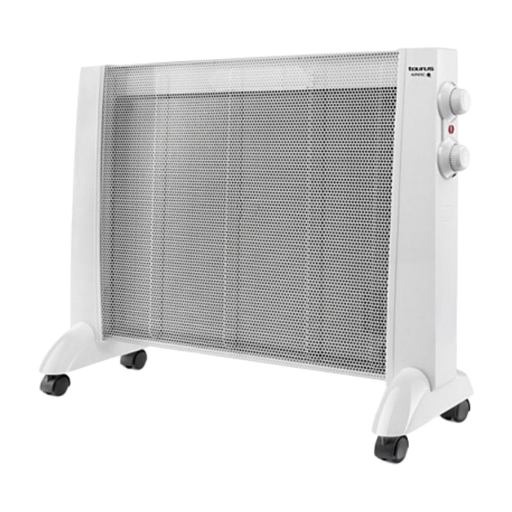
Why this choice suits this profile: A portable panel that's easy to move from bedroom to office or living room, with three heat settings and an adjustable thermostat.
Its 1600 W power stops you automatically choosing a 2000 W model for a modest space. The castors make it easy to store away once the heater has cooled down.
MICA radiant panel technology, adjustable thermostat, three heat settings, power indicator light and overheat protection.
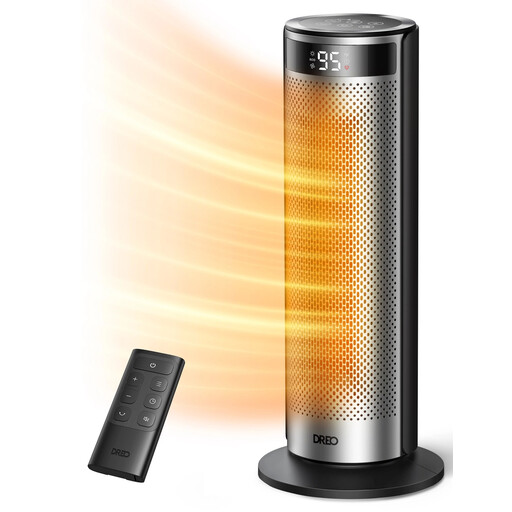
Why this choice suits this profile: A comfort-focused solution for rooms of 15 to 25 m², with a precise thermostat, remote control and oscillation.
The adjustable range of 5 to 35 °C and adaptive power settings let you tailor operation to your needs, rather than leaving the heater running at full power all the time.
2000 W power, 70° oscillation, 12-hour timer, stated noise level of 25 to 42 dB and multi-layer protections as indicated by the manufacturer.
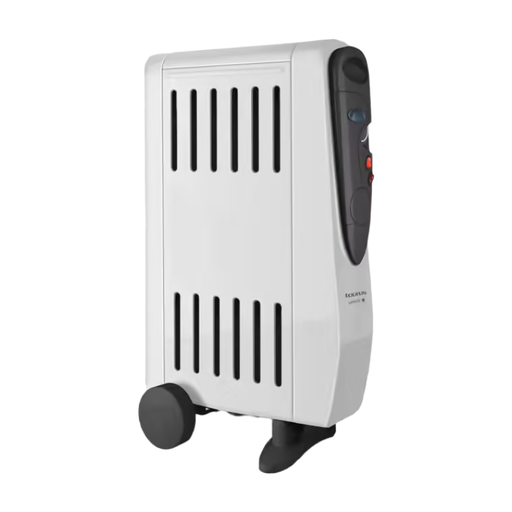
Why this choice suits this profile: It's aimed at those who prefer gradual heat distribution and a heater designed to stay in place for longer periods.
Because it runs without a fan, it stays quiet. The trade-off is that it takes longer to heat up than a fan heater.
Two heat settings, mechanical thermostat, seven heating elements, castors, handle and overheat protection.
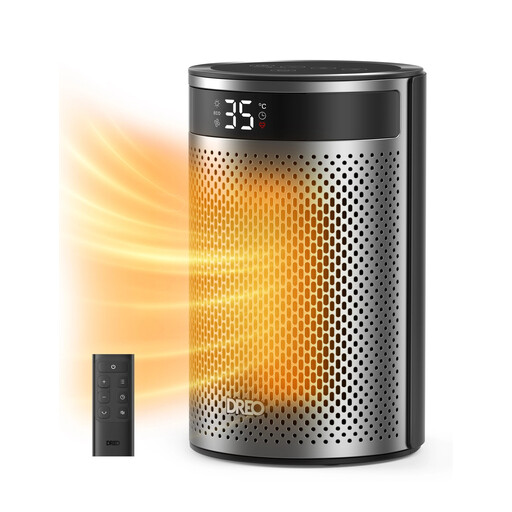
Why this choice suits this profile: Its compact size and stated noise level of 25 to 42 dB make it suitable for an office or bedroom.
Its 1500 W power and precise adjustment stop you automatically choosing a 2000 W model to heat a personal space.
Adjustable thermostat from 5 to 35 °C, 12-hour timer, remote control, tip-over protection and overheat protection.
We've put together a comprehensive, real-time updated list of products that meet these strict selection criteria and European safety requirements.
It's best to use a timer and make sure the heater is on a hard, stable, clear surface. Follow the safety distances, never cover the heater and avoid fan models if the manual advises against prolonged use unattended.
At the same wattage, consumption depends mainly on the number of kilowatt-hours used. A thermostat, ECO mode and timer can reduce running time. So compare the available settings rather than relying on the phrase 'low consumption' alone.
In a small, well-insulated room, a 1000 to 1500 W heater may be enough, depending on conditions. Models of 1800 to 2000 W are better suited to larger spaces, cold rooms or when you need quick heat. The room size quoted by the manufacturer should remain a simple guide, weighed against your home's actual insulation.