
Livraison le jour même ou le lendemain

Qualité garantie

Débloquez vos offres de bienvenue: Livraison GRATUITE | Jusqu'à -80 % | 30 jours d'essai gratuits à JoyPlus
Téléchargez l'application
An electric crêpe maker can turn an afternoon treat or a weekend meal into a genuinely sociable occasion. However, not every appliance meets the same needs. A compact model with several cooking wells is ideal for sharing, while a large round plate is better suited to fans of traditional crêpes.
Before you buy, there are three common pitfalls to avoid:
The cooking diameter should match the recipes you prepare most often:
A 6-person crêpe maker allows everyone to prepare their portion in one of the six cooking wells, but the resulting crêpes are generally small in diameter. For a classic family meal, compare the number of users with the crêpe size rather than relying solely on the product’s commercial description.
A 1500 W crêpe maker will generally heat up quickly, but power cannot replace precise adjustment. An adjustable thermostat lets you adapt the temperature for thin batter, thicker pancakes or a keep-warm function.
Models with a mechanical dial are straightforward to use. An indicator light or temperature indicator, such as the Thermo-Spot found on some Tefal appliances, makes it easier to tell when preheating is complete. However, these indicators do not replace reading the instructions or remaining cautious around hot surfaces.
A non-stick crêpe maker should be used with wooden or silicone spatulas, or with the supplied accessories. Also check whether the plate is removable and dishwasher-safe. The electrical base, cord and any components not designed for this purpose must never be immersed in water.
When choosing an easy-to-clean crêpe maker, look for:
Electrical safety also deserves your attention: use a suitable wall socket, with an earth connection where specified in the instructions, and avoid extension leads that are not designed to handle the appliance’s power.
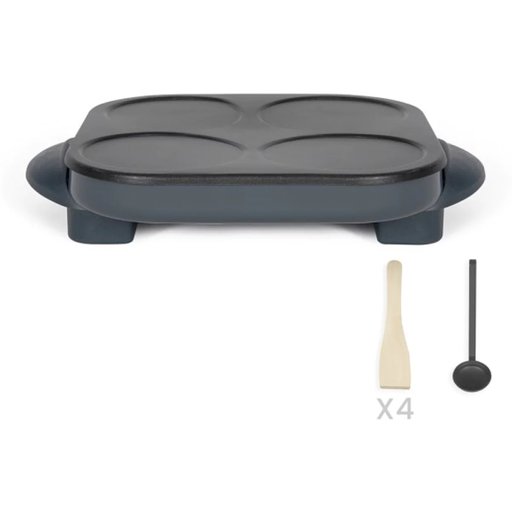
Why this suits this type of user : Its four independent cooking zones allow several people to cook together without bringing out a large round plate. With its 1500 W output, the appliance remains relatively compact.
The number and diameter of the cooking wells are clearly stated, so you are less likely to mistake a party crêpe maker for an appliance designed for large crêpes.
Four 12 cm cooking zones, a ceramic coating advertised as free from PTFE and PFOA, a mechanical dial and four wooden batter spreaders included.
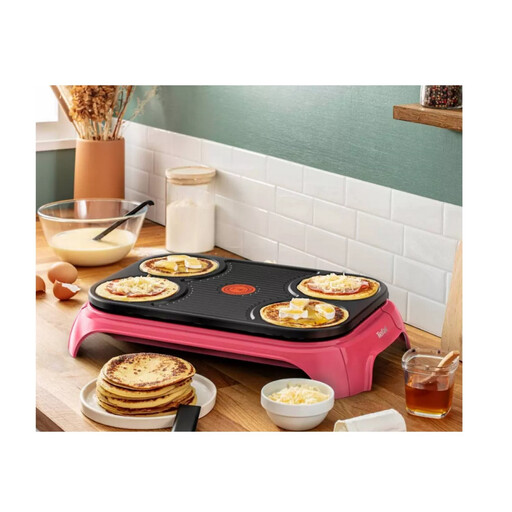
Why this suits this type of user : This multifunctional crêpe maker is designed for households that want to switch between mini crêpes, pancakes, blinis and grilled food using a single appliance.
The two removable plates and adjustable thermostat make the different uses clearer than a simple surface marketed as versatile without dedicated accessories.
1000 W output, six spatulas, ladle and batter spreader included, integrated storage, with plates and accessories advertised as dishwasher-safe.
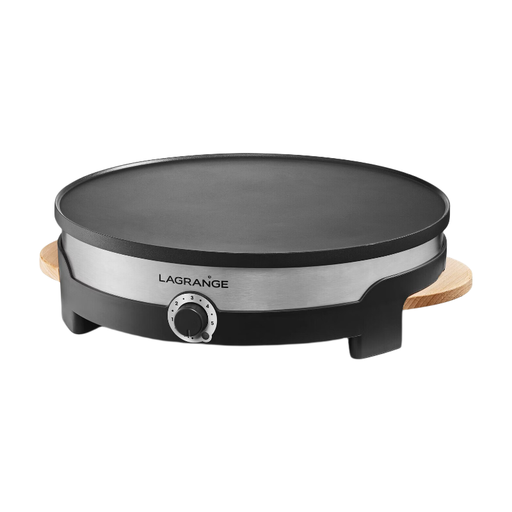
Why this suits this type of user : Its large plate is ideal for people who regularly prepare traditional crêpes and also want to make four small crêpes using the supplied mould.
The 35 cm diameter, five settings and keep-warm function are listed separately, so your choice is based on concrete information directly linked to how you plan to use it.
Removable aluminium plate with non-stick coating, five-position thermostat, 2 m detachable cord and accessories for both large and small crêpes.
Place the appliance on a stable, level, heat-resistant surface. Leave the recommended clearance around the base and keep curtains, tea towels and other flammable materials away. Preheating varies between models: some indicate that the temperature has been reached with an indicator light, while others simply require a few minutes of waiting.
After cooking, unplug the crêpe maker and allow it to cool completely. Clean the plate with a soft sponge, following the manufacturer’s instructions regarding dishwasher use. Do not use a knife, steel wool or metal utensil on a ceramic or non-stick coating. Keep the electrical base and cord away from water.
For an appliance intended for the whole family, storage is worth considering too. A party crêpe maker with several cooking wells is great for sociable meals, but a 35 cm plate takes up more space in a cupboard. The most suitable choice therefore depends on how often you use it, the size of your recipes and the space available to you.
For domestic use, the models featured here range from 1000 to 1500 W. Higher power can be useful for a large plate or several cooking zones, but the thermostat, diameter and heat distribution are just as important. Always compare the power with the cooking surface and format.
Consumption depends on the appliance’s power and how long it runs. A 1500 W model used for 30 minutes theoretically consumes 0.75 kWh at full power, excluding periods when the temperature is being regulated. The actual cost then depends on the tariff charged by your electricity supplier.
There is no universal lifespan. Longevity depends on how often the appliance is used, how it is stored and cleaned, and whether you follow the recommendations regarding utensils. Allow the plate to cool before washing it, avoid thermal shock and replace the appliance if the cord, plug or coating shows visible signs of damage.